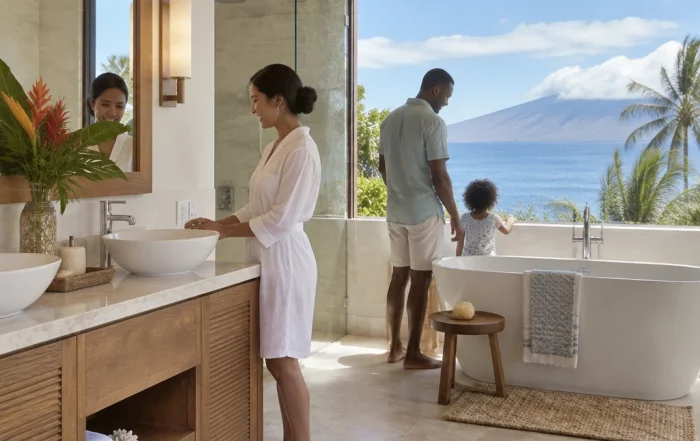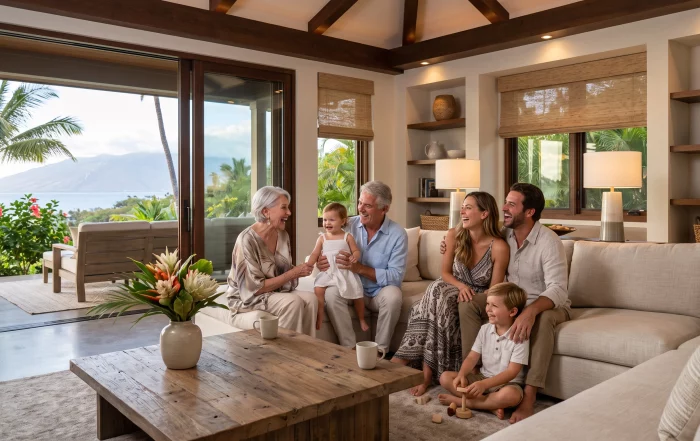
You’ve found the perfect home on Maui. Now comes the exciting part: making it truly yours. But as you scroll through mainland design inspiration and consider hiring a firm from the continent, you might wonder: does it really matter if my designer is local? The answer is a resounding yes. A Maui interior designer understands challenges that off-island firms simply cannot replicate from thousands of miles away. From how tropical light transforms color indoors to which fabrics survive salt air, local design expertise shapes the difference between a beautiful home and one that actually works in Hawaii. In this article, we’ll explore what off-island firms miss about your Maui home and why hiring a local design firm gives your project an irreplaceable advantage.
Hawaii’s Unique Light Changes Everything
Mainland designers work in a completely different light environment than Hawaii. The equator’s proximity to Maui means sunlight behaves differently here—it’s more intense, arrives at different angles, and hits your walls with a warmth that mainland designers rarely encounter in their own studios. This isn’t just about brightness; it fundamentally changes how color reads in your space.
A paint color that looks sophisticated in a Portland showroom can read flat or washed out in Maui’s equatorial light. Conversely, a shade you love in a magazine might feel overwhelming once installed in your island home. A local design firm has tested hundreds of color combinations under actual Maui conditions. They know which neutrals hold their warmth, which blues avoid looking cold, and how natural fiber textures respond to this specific quality of light.
Indoor-Outdoor Living Requires Island Expertise
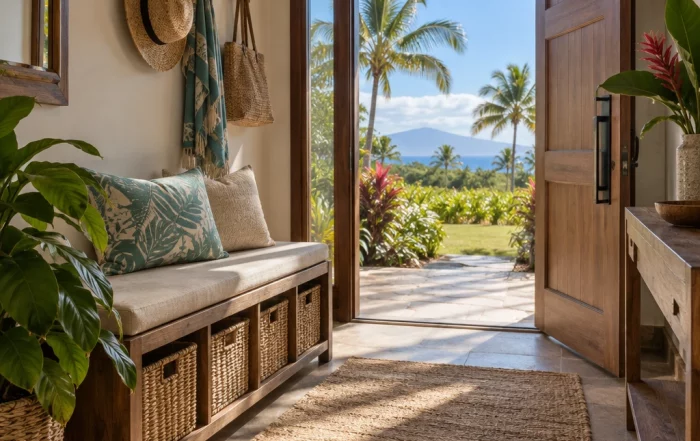
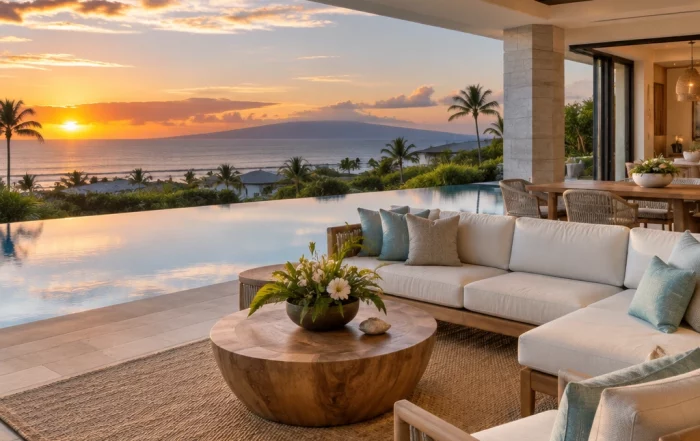
Maui homes blur the line between inside and outside in ways mainland properties rarely do. Your lanai isn’t just a covered porch—it’s an extension of your living space, used year-round. Furniture, lighting, and finishes must perform in both zones simultaneously. Off-island designers often treat outdoor spaces as afterthoughts. Local Maui home furnishing specialists design these transitions as integral to the whole, selecting pieces and materials that work beautifully whether they’re technically indoors or out.
Salt Air, Wind, and Sun Demand Material Expertise
Hawaii’s climate is unforgiving on furnishings. Salt air corrodes metal hardware and degrades finishes faster than anywhere else in the continental U.S. Wind carries that salt deeper into fabrics and wood grain. Intense sun fades colors and weakens fibers in ways that mainland climates simply don’t replicate. An off-island designer might specify a beautiful sofa fabric or outdoor chair that looks perfect in a showroom but deteriorates within two years in Hawaii.
A local design firm advantage lies in material selection born from real experience. Which wood species resist salt air degradation? Which fabrics hold their color longest under tropical sun? Which finishes won’t blister or peel in humidity? These aren’t theoretical questions for a Maui interior designer—they’re lessons learned from decades of client homes. IDS Maui, for example, has 27 years of island-specific experience and regularly refreshes resort properties every 5–7 years, giving the team unparalleled insight into what actually lasts.
Fabric and Fiber Selection Matters More Than Anywhere Else
Not all fabrics are created equal in Hawaii. Natural fibers like linen and cotton, while beautiful, can deteriorate faster in salt air than performance fabrics engineered for tropical conditions. A local designer knows which fiber blends offer longevity without sacrificing aesthetics, and which brands have proven track records in Hawaiian homes. This expertise directly protects your investment.
Logistics, Shipping, and Supply Chain Realities
Furnishing a Maui home involves complexities that mainland designers often underestimate. Freight to Hawaii adds 10–15% to item costs and requires careful coordination. Damage claims, shipping delays, and custom lead times all demand local knowledge and relationships. An off-island firm might spec beautiful pieces without fully accounting for Hawaii logistics or managing the freight process effectively, leaving you frustrated and over budget.
A local design firm manages every step of the supply chain. They know reliable freight partners, understand customs and shipping timelines, and handle damage claims directly on your behalf. They also maintain relationships with manufacturers and showrooms, giving you access to lines not otherwise sold on Maui—often at better pricing than you’d find ordering independently. When your designer is local, logistics become their problem to solve, not yours.
Why Hire Local Designer: Direct Manufacturer Relationships
IDS Maui’s senior designer travels yearly to the High Point furniture market in North Carolina, plus kitchen, bath, and stone trade shows. These direct manufacturer relationships mean access to curated collections at wholesale pricing. Off-island firms might offer generic lines available everywhere; a local firm brings exclusive options tailored to your home and Hawaii’s specific needs.
Real-World Example: When Local Expertise Prevents Costly Mistakes
Consider a recent vacation rental renovation. A mainland designer recommended a beautiful linen sectional and natural wood coffee table for the main living area. The owner loved the aesthetic but didn’t think to question whether these materials would survive the salt air and constant guest traffic. After one season, the linen showed significant fading and the wood surface had begun to warp.
A local Maui home furnishing specialist would have immediately flagged these concerns and offered alternatives: a performance fabric that mimics linen’s texture, or a sustainably sourced wood species with proven durability in island conditions. The cost difference was minimal, but the longevity difference was dramatic. This is what Hawaii-specific design expertise delivers—not just beautiful spaces, but spaces that age gracefully in Hawaii’s unique climate.
Another common scenario: a new homeowner on Oahu hired an off-island firm to design their master bedroom. The designer specified a gorgeous but delicate area rug in a natural fiber. Within months, salt air had degraded the rug’s fibers, and the color had faded unevenly. A local designer would have recommended a performance rug or suggested placement strategies that minimize exposure to salt-laden breezes coming through the lanai.
Conclusion: Why Local Matters for Your Maui Home
Hiring a local Maui interior designer isn’t just about supporting your community—though that’s valuable too. It’s about protecting your investment and ensuring your home actually performs in Hawaii’s climate. Off-island firms bring talent and fresh ideas, but they can’t replicate 27 years of island-specific experience or the deep material and logistics expertise that comes from working in this environment year after year.
Ready to work with a designer who understands Maui homes inside and out? Contact IDS Maui today at 808-891-8800 or visit our showroom at 3031 Old Haleakala Hwy, Makawao. We offer paid consultations, design services, and access to furniture lines unavailable elsewhere on the island. Let’s create a home that’s not just beautiful—it’s built to thrive in Hawaii.
Need Help With Your Space?
Ask us anything — furniture, design, or where to start.