Creating a home gym in Maui is about more than placing a treadmill in an empty room. The best spaces support consistent movement, feel visually connected to the rest of the home, and remain comfortable despite salt air, humidity, intense sunlight, and year-round indoor-outdoor living. Thoughtfully selected Maui furniture for home gyms can provide storage, seating, organization, and personality without competing with the equipment that makes the room functional.
Whether you are furnishing a private residence, upgrading a vacation rental, or designing a wellness area in a second home from the mainland, the right choices matter. In this guide, you will learn how to select durable materials, create a more motivating fitness environment, integrate recovery and relaxation areas, and coordinate your home gym with your broader interior. IDS Maui brings 27 years of Hawaii-specific experience to furniture, lighting, rugs, accessories, and complete interior design solutions.
Maui Furniture for Home Gyms: Start with Durability
A home gym has different demands from a living room or bedroom. Furniture may be exposed to perspiration, cleaning products, moving equipment, repeated impact, and heavy daily use. In Maui, the environment adds another layer of consideration. Coastal air can accelerate corrosion, while strong sun and fluctuating moisture levels may affect upholstery, finishes, wood, and natural fibers.
Choose materials for Hawaii’s climate
When planning a fitness room, look beyond appearance. Upholstery should be selected for performance, cleanability, and resistance to fading. Tightly woven fabrics, solution-dyed fibers, and other performance textiles can be practical choices for benches, lounge chairs, and recovery seating. The best fabric depends on the room’s ventilation, location, frequency of use, and exposure to direct sunlight.
Wood selection and finish are equally important. A well-made console, storage cabinet, or side table can bring warmth to an exercise space, but it should be appropriate for Maui’s conditions. Finishes that are easy to maintain and hardware designed for repeated use help furniture remain attractive over time. Metal components should also be evaluated carefully, particularly in homes close to the ocean or in spaces with open windows and strong airflow.
Flooring deserves attention as well. Heavy equipment, weights, and frequent foot traffic can mark or wear a surface quickly. A design plan should account for protective mats, equipment clearances, traffic patterns, and the transition between the gym and adjacent rooms. This is especially important when a workout area opens onto a lanai or shares space with a media room, guest suite, or pool area.
Furniture that works hard
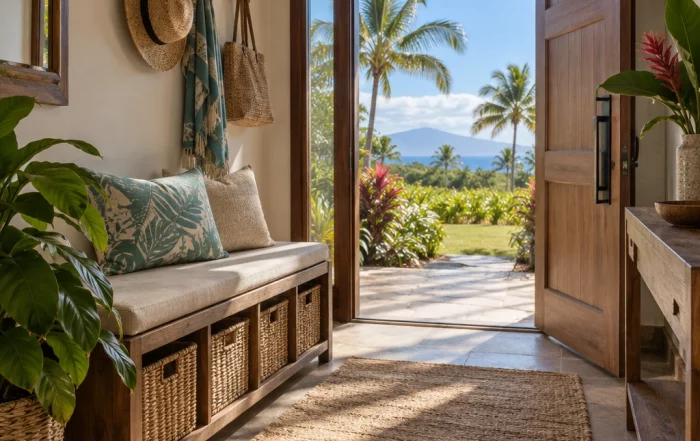
Durable exercise room furniture does not need to look commercial. A refined storage cabinet can conceal resistance bands, towels, yoga props, and recovery tools. A tailored bench can provide a place to change shoes or stretch, while a compact chest can organize smaller accessories. Side tables keep water, a phone, or a towel within reach without creating clutter around exercise equipment.
- Storage cabinets and chests: Keep accessories organized and protect them from dust and moisture.
- Benches and settees: Add seating for changing, stretching, or post-workout recovery.
- Console tables: Create a landing zone for towels, speakers, water bottles, or decorative objects.
- Mirrors: Support form checks and make a compact room feel more open.
- Performance rugs: Define zones and add visual warmth where appropriate, while keeping clear of moving equipment.
IDS Maui can help coordinate these practical pieces with the rest of your home rather than treating the fitness room as an afterthought.
Fitness Room Design Hawaii Homeowners Can Live With
Successful fitness room design in Hawaii balances performance with a sense of calm. A room filled exclusively with machines and hard surfaces can feel cold, noisy, and disconnected from the home. By contrast, a layered design with carefully selected furniture, lighting, color, and accessories can make exercise feel like a natural part of daily life.
Create zones for movement and recovery
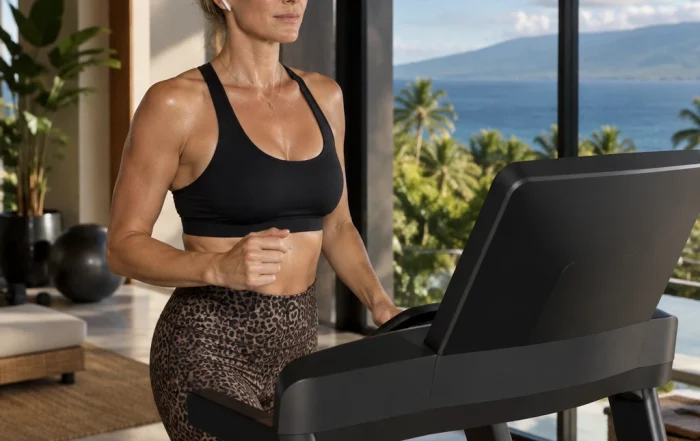
Begin by identifying how the room will be used. A space for strength training may need clear equipment spacing, durable flooring, and closed storage. A yoga or Pilates room may benefit from open floor area, soft lighting, and minimal visual clutter. A multi-purpose wellness room might include a bike or elliptical, a stretching zone, a reading chair, and a small beverage station.
Furniture should support those activities without interrupting circulation. Keep pathways open, allow doors and drawers to operate fully, and avoid placing occasional tables where they could become trip hazards. If a room serves as both a gym and guest area, select furniture that can transition easily. A sophisticated lounge chair or upholstered bench may work beautifully for reading, meditation, or recovery after a workout.
For larger homes, a connected suite can be especially effective. A bedroom, dressing area, bath, and exercise room can share a consistent palette and finish story. This approach makes the gym feel intentional and encourages its use as part of a complete wellness routine.
Use light, color, and texture strategically
Natural light can make a Maui workout space energizing, but direct sun may fade upholstery and damage certain finishes. Window treatments, UV-conscious fabric selection, and thoughtful furniture placement can protect the room while preserving its connection to the outdoors. Layered lighting is also essential: overhead illumination for equipment areas, focused task light for storage or stretching, and softer accent light for recovery.
Color requires particular sensitivity in Hawaii. Because Maui is closer to the equator, daylight can change how paint, upholstery, wood, and accessories appear compared with mainland interiors. A color that feels balanced in a sample room may look significantly brighter or warmer in intense island light. IDS Maui’s experience with color and fabric helps homeowners test combinations in context, rather than relying on generic mainland advice.
Natural textures can reinforce a wellness mood. Wood, woven materials, stone, linen-inspired textiles, and botanical accents add depth without overwhelming the space. However, every material should be evaluated for humidity, maintenance, and sun exposure. Beauty and durability need to work together.
Wellness Design for Maui Homes
Wellness design is not limited to a room’s equipment. It considers how the entire environment affects energy, comfort, focus, rest, and recovery. In Maui homes, the strongest wellness spaces often acknowledge the landscape and the island’s indoor-outdoor lifestyle while providing shelter from glare, moisture, and salt air.
Bring the outdoors in thoughtfully
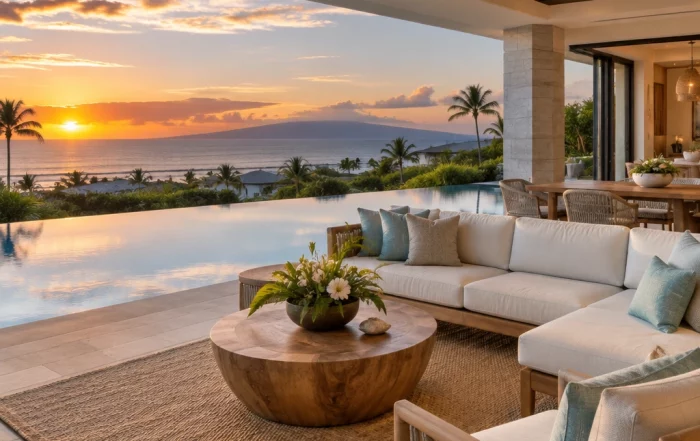
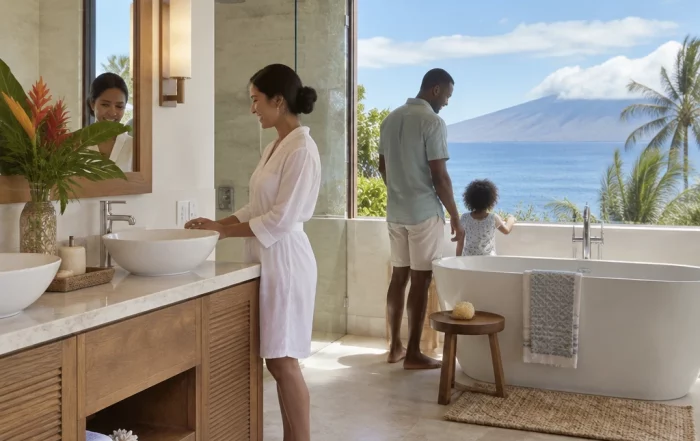
Views, daylight, ventilation, and natural materials can make a home gym more inviting. If the room opens to a lanai, arrange furniture and equipment to preserve sightlines and create a smooth transition between indoor and outdoor areas. A low-profile console, a carefully placed mirror, or a sculptural accent piece can frame the view instead of blocking it.
Biophilic design elements may include plants suited to the room’s light and humidity, organic forms, natural wood, stone details, and colors drawn from the surrounding landscape. These features should be selected with maintenance in mind. Not every plant, finish, or textile performs well in a humid fitness environment, so local knowledge is valuable.
Design for restoration, not just exertion
A home gym can support both high-energy workouts and quiet recovery. Consider adding a comfortable chair, chaise, or settee where you can cool down, stretch, meditate, or read. A small table can hold water and personal items. Soft, dimmable lighting can shift the mood after an early-morning workout or evening training session.
Custom details can make the room more comfortable and accessible. Made-to-order furniture may be specified with particular dimensions, cushion firmness, arm styles, legs, finishes, and fabrics. That flexibility is useful for aging-in-place planning, accommodating different body types, or creating a room that multiple generations can use comfortably.
Sound and visual calm also matter. Closed storage reduces distraction, while rugs and upholstered pieces can soften echoes when used safely outside equipment zones. A restrained palette helps the eye rest, but carefully placed color can add energy and reflect the homeowner’s personality. IDS Maui’s design approach combines wellness principles with the expressive use of color, texture, and proportion.
Planning Home Gym Furniture in Maui
The right furniture begins with a clear plan. Before ordering, consider the room’s dimensions, ceiling height, window placement, electrical needs, ventilation, equipment specifications, and access route. Large items may need to pass through narrow hallways, stairways, gates, or elevator doors. Planning these details early helps prevent costly surprises.
A practical selection checklist
- Define the primary activities. Identify whether the room is intended for cardio, strength training, yoga, mobility, recovery, or several uses.
- Measure equipment and clearances. Include space for safe movement, maintenance, doors, drawers, and storage access.
- Assess climate exposure. Note direct sun, open-air connections, humidity, salt air, and ventilation patterns.
- Select performance materials. Compare upholstery, wood finishes, metals, rugs, and hardware based on maintenance and longevity.
- Plan the lighting layers. Combine functional light with adjustable illumination for stretching, meditation, and recovery.
- Coordinate the whole-home palette. Use related finishes and colors so the gym feels connected to adjoining spaces.
- Confirm lead times and delivery needs. Made-to-order furniture commonly requires several weeks, while freight to Hawaii is priced separately.
IDS Maui offers furniture from respected manufacturers including Bernhardt, Baker, Caracole, Century, Kravet, McGuire, Janus et Cie, Global Views, Luonto, and other established lines. Depending on the piece, clients may be able to specify dimensions, fabric, finish, cushions, arms, or legs. Custom and made-to-order selections generally require approximately 8–12 weeks, while Quick Ship options may arrive in about 2–3 weeks and standard orders can take up to 8 weeks.
For clients furnishing remotely, IDS coordinates ordering, freight, delivery, and damage claims. Freight to Hawaii is often approximately 10–15% of an item’s cost and is calculated by cubic footage. Accurate specifications and a well-organized purchasing plan are particularly valuable when furnishing a vacation rental or second home from off-island.
Design Your Maui Home Gym with IDS Maui
A home gym should be durable enough for daily use, refined enough to belong in your home, and calming enough to support recovery. The right combination of furniture, materials, lighting, storage, and color can turn an underused room into a wellness destination that works in Maui’s climate.
IDS Maui has served Hawaii for 27 years, offering furniture, lighting, rugs, accessories, custom bedding, and comprehensive interior design services. The team serves Maui, Lanai, Molokai, Oahu, the Big Island, and continental U.S. clients, with access to manufacturer lines that are often unavailable elsewhere on Maui.
Call 808-891-8800 or visit the IDS Maui showroom at 3031 Old Haleakala Highway, Makawao, Monday through Friday from 10 a.m. to 6 p.m. Bring your room dimensions, equipment list, photographs, or preliminary plans, and discuss furniture options for your project. You can also contact IDS Maui through idsmaui.com to request a consultation or quote.
Need Help With Your Space?
Ask us anything — furniture, design, or where to start.