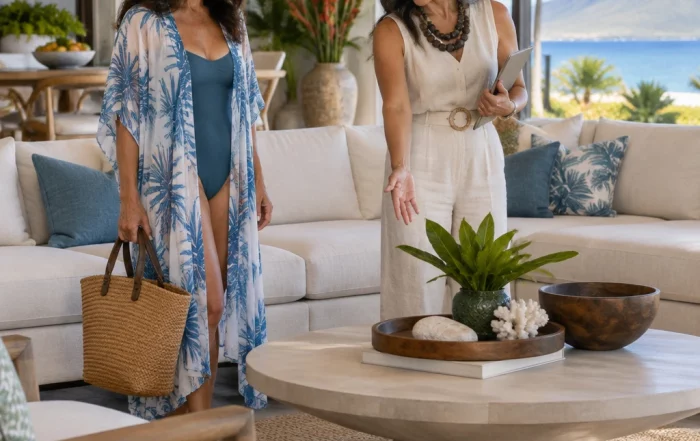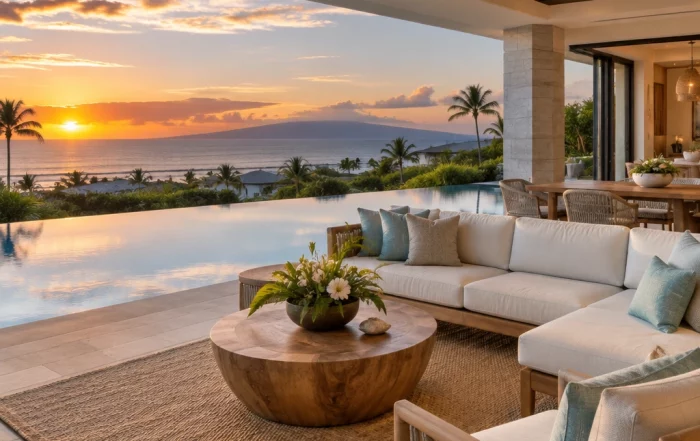
Choosing cocktail tables for Maui homes is about more than finding a beautiful surface for drinks, books, or décor. The right table must fit the scale of your sofa, leave comfortable walkways, complement island furniture, and stand up to sunlight, humidity, salt air, and year-round indoor-outdoor living. A table that looks balanced in a mainland showroom can feel too heavy in a breezy Maui living room—or too delicate for a vacation rental or lanai.
This guide explains how to choose the right size, height, shape, and material for a Maui home. You will learn practical measurements, how to coordinate a cocktail table with sectionals and accent chairs, which center table materials make sense for coastal conditions, and what to ask about finishes before ordering. For homeowners furnishing remotely or renovating an entire property, thoughtful proportions and durable construction can make the difference between a room that feels collected and one that feels crowded.
Cocktail Tables for Maui Homes: Start With Proportion and Traffic Flow
The most attractive cocktail table is not necessarily the largest one that will fit. In Maui homes, generous windows, open floor plans, wide lanais, and ocean or garden views often make visual breathing room especially important. Begin by measuring the seating area—not simply the room itself.
Use the two-thirds guideline carefully
A useful coffee table size guide is to choose a table roughly two-thirds the length of the main sofa. Architectural Digest also recommends leaving approximately one foot of breathing room around a coffee table, while noting that standard coffee table height commonly falls between 16 and 18 inches. See its current coffee table shape, size, and material guidance for a helpful comparison of rectangular, round, square, and sculptural designs.
For example, a 90-inch sofa often works well with a table approximately 54 to 66 inches long. That is a starting point, not a rigid rule. A deep sectional may need a wider table, while a narrow sofa in a condominium may need a smaller, lighter design. Measure the full outside dimensions of the seating, including chaise sections and unusually deep arms.
- Small living room: Consider a round table between 30 and 42 inches wide, or a compact rectangular table around 36 to 48 inches long.
- Standard sofa arrangement: A rectangular table approximately 48 to 60 inches long often provides useful surface area without overwhelming the room.
- Large sectional: Look at tables 60 to 72 inches long, an oversized round design, or two coordinated tables that can be separated when needed.
- Conversation grouping with chairs: Round and oval shapes can improve circulation by eliminating sharp corners along common walking paths.
Protect the walkway
Leave approximately 12 to 18 inches between the edge of the table and the front of the sofa or chairs. Tighter spacing can work in a small room, but guests should not have to turn sideways to sit down. If the living room connects directly to a lanai, kitchen, or entry, allow additional clearance along the main route.
This is particularly important for vacation rentals. A table may look perfectly proportioned in a staged photograph but become an obstacle when guests carry luggage, children move through the room, or several people gather around the seating group. Good Maui furniture proportions account for real movement, not just the view from one angle.
Choose the Right Cocktail Table Height for Sofas, Sectionals, and Chairs
Height affects comfort as much as appearance. The table should be easy to reach without forcing people to lean forward, and it should relate visually to the seat height and arm height of the surrounding furniture.
Match the table to the seat
For most sofas and lounge chairs, a cocktail table that is level with the seat cushion or slightly lower feels natural. The familiar 16- to 18-inch range works for many contemporary and traditional sofas, but Maui homes often include a wide variety of furniture: low-profile sectionals, deep resort-style seating, slipcovered sofas, and indoor-outdoor pieces.
Measure from the floor to the top of the seat cushion, not the frame. If the cushion compresses significantly when someone sits down, account for that drop. A table that is several inches taller than the seat can feel like a dining surface rather than a relaxed center table. Conversely, a very low table may disappear beside a high-backed sofa and become inconvenient for serving.
Consider arm height and everyday use
If the table will hold drinks, remote controls, books, or snacks, compare its height with the sofa arms. A table slightly below the arms usually creates a clean, comfortable line. For homes used frequently by older adults, a modestly taller table may be easier to reach, especially when paired with firm seating and clear walking paths. Rounded corners and stable bases are also sensible choices for aging-in-place interiors.
Think about the room’s primary purpose:
- Conversation and entertaining: Choose a stable, accessible surface with enough room for several glasses and small serving pieces.
- Television seating: Prioritize reach, storage, and a surface that will not reflect glare toward the screen.
- Vacation rentals: Favor durable finishes, rounded edges, and a height that works for a broad range of guests.
- Lanai or indoor-outdoor living: Confirm that the manufacturer rates the table for the intended exposure rather than assuming any wood or metal table is suitable outside.
When ordering custom or made-to-order furniture, height can often be adjusted along with leg style, finish, and top material. That flexibility is valuable when a room includes an unusually low sectional, a thick area rug, or a combination of seating from different collections.
Which Center Table Materials Work Best in Maui?
Material selection should reflect both the design direction and the room’s environmental conditions. Hawaii’s trade winds, moisture, sunlight, and salt exposure can affect wood, metal, fabric, and finishes over time. NOAA describes Hawaii as having persistent trade-wind conditions and major differences in rainfall between windward and leeward areas, so the ideal finish for a dry upcountry room may not be the same as the best choice for a coastal property. Read NOAA’s Pacific Islands climate overview for background on these regional patterns.
Wood: warm, versatile, and finish-dependent
Wood is often the easiest way to connect a cocktail table with island furniture. Walnut, oak, teak, mahogany, reclaimed woods, and mixed wood finishes can introduce warmth without making the room feel themed. However, wood is not automatically maintenance-free. Direct sun can change its color, standing water can leave marks, and fluctuating moisture can stress poorly finished components.
For a Maui living room, ask about the species, veneer or solid construction, topcoat, and care instructions. A high-quality protective finish is usually more important than choosing a particular “coastal” wood. Use coasters, avoid placing the table directly in intense afternoon sun when possible, and rotate decorative objects so the surface ages evenly.
Stone, glass, metal, and mixed materials
Stone creates visual weight and can be an excellent counterpoint to soft upholstery. Marble, travertine, limestone, and engineered stone each have different porosity and care requirements. Natural stone may need sealing and can etch from acidic liquids, so it is beautiful but not completely carefree in a rental property.
Glass keeps a compact room visually open and allows a distinctive rug or sculptural base to remain visible. Tempered glass is the practical choice, but fingerprints and water spots may be more noticeable. Metal bases can bring a crisp contemporary note or a refined resort feel; specify corrosion-resistant construction when a table will be exposed to lanai air or frequent humidity.
A mixed-material table—such as wood and stone, rattan and glass, or metal and leather—can bridge different pieces of living room furniture in Hawaii. It also gives you a way to layer texture: smooth stone against woven upholstery, or a dark metal base beneath a pale wood top. The goal is not to match every finish, but to repeat one or two colors, shapes, or textures elsewhere in the room.
Account for Salt Air, Sun, Humidity, and Indoor-Outdoor Living
Coastal furniture choices should be based on exposure, not just style. A living room near open doors may receive salt-laden air, windblown moisture, sandy feet, and stronger sunlight than a protected interior room. Lanai furniture faces even more demanding conditions.
Ask the right questions about salt air furniture finishes
Before purchasing, ask whether the table is rated for indoor use, covered outdoor use, or full outdoor exposure. Those categories are not interchangeable. Confirm whether metal components are stainless steel, powder-coated, aluminum, or another corrosion-resistant material. For wood, ask whether the finish is designed for exterior exposure and whether the manufacturer recommends seasonal maintenance.
For indoor cocktail tables, placement still matters. Keep solid wood and lacquered surfaces away from direct spray, regularly wipe away condensation, and use felt pads beneath accessories. In homes that remain closed for part of the year, make sure air-conditioning, ventilation, or dehumidification is managed appropriately before selecting highly moisture-sensitive materials.
The U.S. Environmental Protection Agency recommends controlling indoor moisture and keeping relative humidity below 60 percent, ideally between 30 and 50 percent, to help reduce mold risk. Its guidance on moisture, ventilation, and remodeling materials is useful for homeowners managing second homes or renovation projects.
Design for flexible island living
A cocktail table should support how your home actually works. If the living room opens to a lanai, select a table with enough visual presence to anchor the indoor seating but not so much mass that it blocks the transition. Rounded corners can soften circulation, while nesting tables allow you to expand the surface for guests and separate the pieces when the room needs more open floor space.
For vacation rentals, choose finishes that tolerate frequent cleaning and avoid fragile edges or overly porous tops. For a primary or second home, you may prioritize a more distinctive stone, hand-finished wood, or sculptural base. The best choice balances beauty, maintenance, and the amount of use the room receives.
How to Coordinate a Cocktail Table With Island Furniture
Island style does not require every item to be made from rattan, teak, or wicker. A sophisticated Maui interior may combine tailored upholstery, natural fibers, polished wood, stone, woven accents, and artful color. The cocktail table should help unify those elements without becoming a theme prop.
Start with the room’s strongest visual feature. If the sofa is a bold color or the rug has a strong pattern, choose a quieter table shape and finish. If the seating is neutral, a sculptural wood base, richly grained top, or colorful stone can provide a focal point. In a room with substantial architecture—high ceilings, exposed beams, or dramatic views—a lighter table may preserve a sense of openness.
Color deserves special attention in Hawaii. Proximity to the equator and intense natural light can make paint, fabric, and finish colors read differently than they do in a mainland showroom. Request finish samples and view them at different times of day, especially near windows. A warm wood that looks balanced under showroom lighting may appear orange in strong sun, while a blue-gray finish may shift noticeably beside ocean light.
IDS Maui brings 27 years of Hawaii-specific experience to these decisions, including furniture, lighting, rugs, custom bedding, and made-to-order pieces from manufacturers such as Bernhardt, Baker, McGuire, Kravet, Janus et Cie, Theodore Alexander, and others. Custom options may include dimensions, legs, arms, fabric, finish, and cushions, with typical made-to-order lead times of approximately 8 to 12 weeks depending on the line.
Conclusion: Find a Cocktail Table That Fits Your Maui Lifestyle
The right cocktail table combines comfortable clearance, appropriate height, durable materials, and a finish that supports the way your home is used. Measure the sofa and seating first, leave room for circulation, compare the table with the seat and arm heights, and consider exposure to sun, moisture, salt air, and lanai traffic. Then use shape and material to create balance rather than relying on a single “island” style.
If you are furnishing a new Maui home, refreshing a vacation rental, or coordinating a second-home project remotely, IDS Maui can help narrow the choices and manage the details. Visit the showroom at 3031 Old Haleakala Highway in Makawao, Monday through Friday from 10 a.m. to 6 p.m., or call 808-891-8800 to discuss cocktail tables, living room furniture, rugs, lighting, finishes, shipping, and installation. IDS serves Maui, Lanai, Molokai, Oahu, the Big Island, and the continental United States, with freight quoted separately.
Need Help With Your Space?
Ask us anything — furniture, design, or where to start.