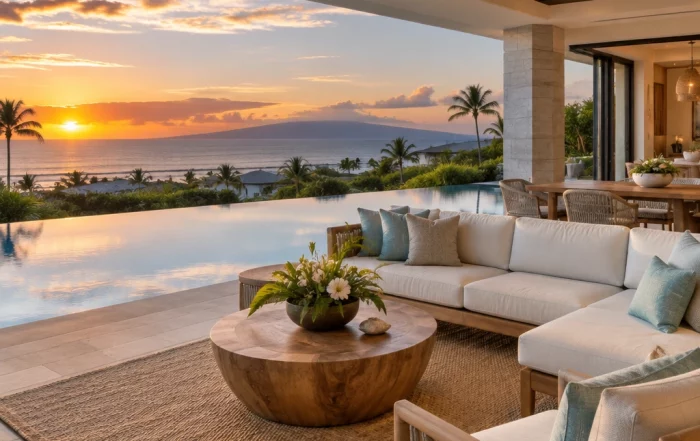
Choosing the right Maui Furniture Frame Materials is about much more than selecting a beautiful silhouette. On Maui, furniture must contend with intense sunlight, salt air, humidity, trade winds, and the easy movement between indoor rooms and outdoor lanais. A frame that performs well in a dry mainland climate may warp, corrode, loosen, or fade sooner in a Hawaii home. The good news is that the right materials, construction methods, and protective finishes can create furniture that is both elegant and resilient.
In this guide, you will learn how solid wood, engineered wood, metal, rattan, teak, aluminum, and mixed-material frames perform in Maui interiors. You will also discover what to consider for vacation rentals, second homes, primary residences, and lanai furnishings. IDS Maui has spent 27 years helping Hawaii homeowners and hospitality clients select furniture that suits the climate, the architecture, and the way each space is used.
Maui Furniture Frame Materials: What Matters in a Hawaii Home?
The best frame material depends on the furniture’s location, exposure, construction quality, and expected use. A dining table in an air-conditioned interior has different requirements from a sectional on a covered lanai. Likewise, a rarely used second-home guest room can be furnished differently from a vacation rental that welcomes a new group of guests every week.
Maui’s climate creates several specific challenges:
- Salt air: Coastal air can accelerate corrosion on metal components and degrade some finishes.
- Humidity: Moisture may cause poorly sealed wood to swell, shrink, or develop finish problems.
- Ultraviolet exposure: Strong sunlight can fade upholstery and damage unprotected wood, leather, and coatings.
- Wind and airborne grit: Outdoor and lanai furniture may experience abrasion, movement, and dirt accumulation.
- Heavy use: Vacation rentals and resort-style homes often require commercial-quality construction and replaceable components.
For these reasons, “durable” should not mean simply heavy or expensive. A durable frame is designed for its setting. It has properly joined components, appropriate hardware, a suitable protective finish, and enough structural strength for the furniture’s intended use. Upholstery, cushion construction, and fabric selection matter as well, because the frame and soft goods must perform as a complete system.
Indoor and outdoor furniture require different standards
Interior furniture can use a wider range of materials because it is protected from direct rain and weather. However, rooms with large windows, sliding doors, or strong afternoon sun still require thoughtful selection. A beautiful wood finish may need UV protection, and a delicate upholstery fabric may not be the best choice near a lanai entrance.
Outdoor furniture demands more specialized construction. Teak, powder-coated aluminum, stainless steel, marine-grade materials, and carefully selected synthetic fibers are commonly used because they handle moisture and sun better than ordinary indoor construction. Covered outdoor areas offer additional protection, but they are not climate-controlled. A lanai still experiences humidity, salt, dust, and temperature changes.
Wood Frames: Warmth, Strength, and Proper Sealing
Wood remains one of the most desirable Maui furniture frame materials because it brings warmth, texture, and natural character to a room. It is especially effective in Hawaii furniture design, where interiors often benefit from a connection to the landscape. Wood can complement stone, woven materials, natural fibers, architectural beams, and tropical views without making a room feel overly themed.
Solid wood versus engineered wood
Solid wood offers strength and can often be repaired or refinished. Hardwoods such as maple, oak, walnut, mahogany, and teak are valued for their durability, although each species behaves differently in changing humidity. Teak is particularly useful for outdoor applications because its natural oils help it resist moisture and decay. Depending on the design, teak may be left to weather into a silver-gray tone or maintained to preserve its original color.
Engineered wood includes plywood, veneer panels, and other layered or composite products. High-quality engineered wood is not automatically inferior to solid wood. In fact, it can be more dimensionally stable because its layers are designed to reduce movement caused by moisture changes. Well-made case goods, cabinets, dressers, entertainment units, and tables may combine solid wood framing with engineered panels and decorative veneers.
The key is construction quality. Poorly made particleboard with thin laminate is very different from precision-cut plywood with a durable veneer and sealed edges. At IDS Maui, the material specification is considered alongside joinery, hardware, finish, and the furniture’s intended location.
Wood selection for Maui conditions
Wood furniture should be properly sealed on all sides, including areas that are not immediately visible. Unfinished edges and undersides can absorb moisture and contribute to movement. Joinery should allow for normal expansion and contraction rather than forcing panels to remain rigidly fixed.
For Maui homes, consider:
- UV-resistant finishes in bright rooms and near large windows.
- Sealed end grain and exposed edges, where moisture can enter easily.
- Stable construction for humid areas, including kitchens, entries, and lanais.
- Finishes that can be cleaned without harsh chemicals.
- Designs with enough visual weight for breezy spaces but not so much bulk that rooms feel closed in.
Wood is not completely humidity proof, and no finish makes furniture maintenance-free. Nevertheless, properly specified wood can provide decades of service while delivering a level of beauty that many synthetic materials cannot match.
Metal, Teak, and Synthetic Frames for Lanais and Coastal Spaces
For covered lanais, pool areas, beachfront homes, and other exposed settings, salt air resistant furniture requires careful material selection. The frame may look attractive in a showroom yet perform poorly if it uses unprotected steel, low-grade hardware, or a finish that is not intended for coastal conditions.
Aluminum and stainless steel
Powder-coated aluminum is a popular outdoor frame material because it is lightweight, strong, and resistant to rust. A quality powder-coated finish creates a protective surface in a broad range of colors. Aluminum is also easier to move when homeowners want to reconfigure a lanai or secure furniture before a storm.
Stainless steel can offer excellent strength and corrosion resistance, especially when the correct grade is selected. However, “stainless” does not mean immune to every coastal condition. Surface contamination, standing salt, and neglected hardware can still create problems. Regular cleaning and appropriate detailing remain important.
When evaluating metal furniture, inspect the entire construction rather than focusing only on the visible frame. Screws, brackets, welds, glides, and connection points may be the first areas to show wear. High-quality outdoor furniture uses compatible components so that one vulnerable metal does not compromise the entire piece.
Teak, outdoor wicker, and performance materials
Teak is a classic choice for outdoor dining tables, benches, loungers, and occasional tables. Its natural oils help it withstand moisture, while its substantial weight can keep it stable in breezy conditions. It still benefits from routine cleaning and should be positioned to allow airflow and drainage.
Outdoor wicker is generally woven over an aluminum or similarly durable frame. The synthetic fiber should be designed for outdoor use and tested for UV resistance. Natural rattan and indoor wicker can be beautiful in protected interiors, but they should not be assumed to be suitable for an exposed Maui lanai.
Performance fabrics and quick-drying cushion systems complete the outdoor furniture package. The frame may survive the climate, but cushions that retain water or fabric that fades rapidly can shorten the useful life of the furniture. A coordinated specification considers the frame, finish, sling or weave, cushion fill, fabric, and maintenance plan together.
How Frame Construction Affects Longevity and Comfort
Material is only one part of furniture performance. Two chairs made from the same wood or metal can have very different lifespans because of their joinery and internal construction. This is especially important when comparing premium furniture with mass-market pieces or when furnishing a high-use vacation rental.
Look for strong joinery
Wood frames may use mortise-and-tenon joints, dowels, corner blocks, screws, bolts, or a combination of methods. Upholstered seating should have a stable internal frame, securely attached suspension, and properly supported stress points. Dining chairs need reinforced joints because they are repeatedly pulled away from tables and shifted across floors. Sofas and sectionals require strong corner construction, particularly when people sit on the arms or use the piece for sleeping.
Metal frames should have clean welds, well-protected connection points, and level, replaceable feet or glides. Outdoor pieces should be designed to drain water rather than trap it inside tubing or around fasteners. Tables need sufficient bracing to prevent racking, while beds and case goods should remain stable when moved or loaded.
Consider repairability and replacement parts
Furniture intended for a Maui home should be practical to maintain over time. Ask whether cushion covers can be replaced, whether glides are available, and whether the finish can be touched up. For commercial or vacation rental use, modular designs can be valuable because one damaged component may be replaced without discarding an entire grouping.
Before purchasing, evaluate:
- Where the piece will be used and how much sun, salt, and moisture it will encounter.
- How often it will be moved, cleaned, or used by guests.
- Whether the frame, hardware, and finish are rated for that environment.
- Whether replacement cushions, covers, glides, or hardware can be ordered.
- How the furniture will be delivered, assembled, and positioned in the room.
IDS Maui works directly with established manufacturers and offers access to brands such as Bernhardt, Baker, Century, Hancock & Moore, Janus et Cie, McGuire, Theodore Alexander, Woodbridge, and others. Many pieces can be made to order with selected dimensions, legs, arms, finishes, cushions, and fabrics. This allows the furniture to suit the room instead of forcing the room to accommodate a standard product.
Choosing Frames for Your Lifestyle, Property, and Budget
The right choice also depends on the property itself. A primary residence may prioritize heirloom-quality materials and personalized comfort. A vacation rental may need stain-resistant fabrics, robust frames, easy-clean finishes, and designs that appeal to a broad range of guests. A remotely furnished second home may benefit from a coordinated package that is specified, shipped, received, and installed by one experienced team.
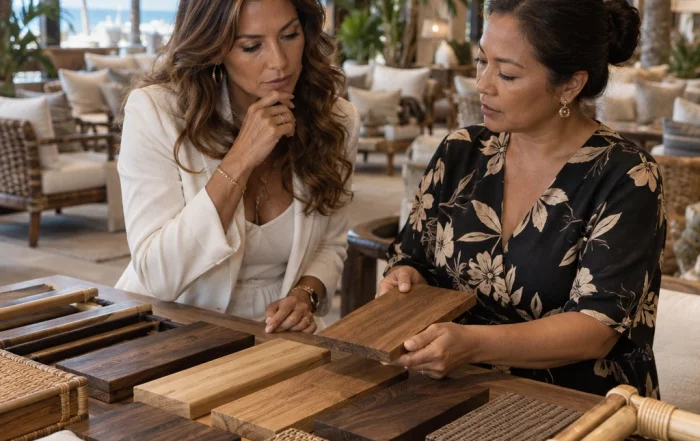
Color and finish deserve special attention in Hawaii. Because Maui sits close to the equator, natural light can make colors appear more vivid and alter how warm or cool a finish feels throughout the day. A frame that looks balanced under mainland showroom lighting may appear too orange, too dark, or too visually heavy in a sun-filled Maui room. Samples should be viewed with the home’s flooring, wall color, stone, window exposure, and surrounding landscape.
At IDS Maui, furniture selections can be coordinated with rugs, lighting, custom bedding, artwork, accessories, and window treatments. The objective is not merely to find durable frame materials, but to create a comfortable, cohesive interior that reflects the property and supports daily living.
Furniture can be ordered directly from manufacturers, including custom and made-to-order options. Quick Ship items may arrive in approximately two to three weeks, while standard made-to-order pieces can take up to eight weeks; custom work may require eight to twelve weeks depending on the manufacturer. Freight to Hawaii is generally about 10–15% of the item cost and is priced by cubic footage. IDS Maui also manages freight and damage claims for clients, an important advantage when purchasing substantial furniture from off-island sources.
Conclusion: Find Durable Maui Furniture Frames with Local Guidance
The best Maui furniture frame materials balance beauty, strength, climate performance, and maintenance. Solid and engineered wood can create inviting interiors when properly sealed and specified. Powder-coated aluminum, stainless steel, teak, and outdoor-grade synthetic materials are strong options for lanais and coastal spaces. Just as importantly, quality joinery, compatible hardware, UV protection, and repairable construction help furniture withstand real Hawaii living.
IDS Maui brings 27 years of Hawaii-specific experience to furniture selection for primary homes, vacation rentals, resorts, and second residences. Visit the showroom at 3031 Old Haleakala Highway in Makawao, open Monday through Friday from 10 a.m. to 6 p.m., or call 808-891-8800 to discuss your project. Whether you need one durable sectional, a complete bedroom, outdoor furnishings, or a whole-home package, IDS Maui can help you select furniture and finishes made for your space.
Need Help With Your Space?
Ask us anything — furniture, design, or where to start.