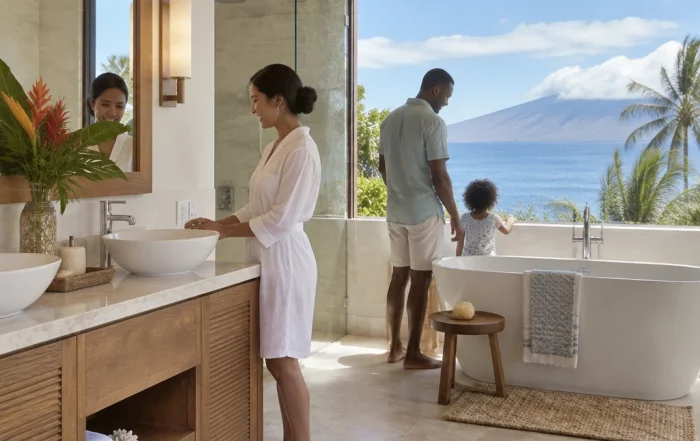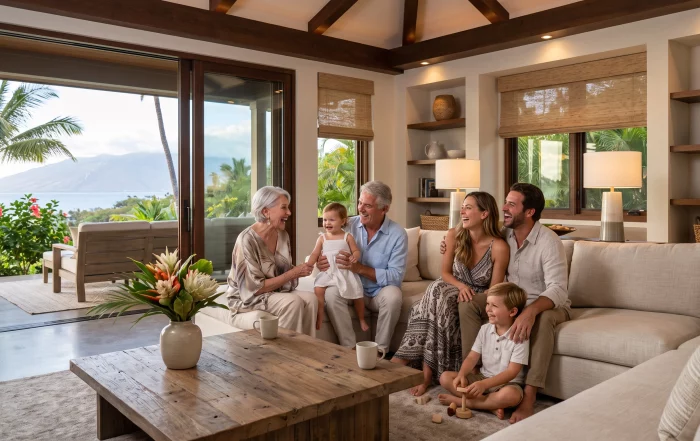
When you think of Hawaii-inspired interiors, what comes to mind? If it’s bamboo furniture, tiki torches, and palm-print throw pillows, you’re not alone—but you’re also missing the real magic of biophilic design the Maui way. True biophilic design isn’t about slapping tropical clichés on every surface. It’s about creating a deep, authentic connection between your indoor spaces and the natural world outside your windows. For Maui homeowners and vacation rental owners, this approach doesn’t just look beautiful—it enhances wellness, reduces stress, and creates spaces that feel genuinely rooted in place. In this article, you’ll discover how to bring the island indoors with sophistication and intention, leveraging Hawaii’s unique light, climate, and natural materials without falling into the tourist-trap aesthetic.
Understanding Biophilic Design in Hawaii’s Unique Context
Biophilic design Maui style goes far beyond adding a few houseplants to your living room. It’s the practice of incorporating natural elements, patterns, and processes into built environments to support human health and well-being. But here’s what makes Hawaii different: our proximity to the equator fundamentally changes how color, light, and materials behave indoors.
The intense UV exposure, salt air, and year-round humidity mean that design choices that work beautifully in Seattle or Boston can fail spectacularly here. Natural materials need careful selection—certain wood species warp or fade quickly, fabrics can mildew, and finishes degrade faster than on the mainland. This isn’t a disadvantage; it’s an opportunity to be more intentional about what we bring inside.
The Science Behind Biophilic Wellness
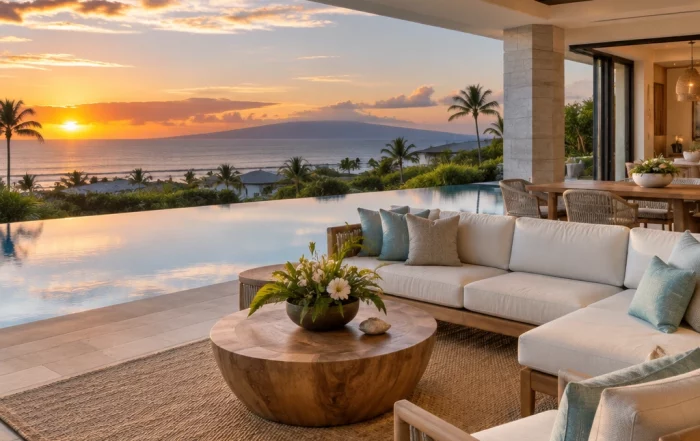
Research consistently shows that biophilic environments reduce cortisol levels, lower blood pressure, and improve cognitive function. In Hawaii, where indoor-outdoor living is a year-round lifestyle rather than a seasonal luxury, these benefits compound. When your lanai seamlessly flows into your living space, and your interior palette echoes the colors visible through your windows, you’re not just decorating—you’re creating an environment that supports your nervous system.
Natural Materials That Actually Work in Maui’s Climate
The foundation of wellness home design Hawaii style is selecting materials that honor both aesthetics and practicality. Not every “natural” material belongs in a tropical climate, and this is where 27 years of Hawaii-specific experience makes all the difference.
Wood Species and Finishes
Teak, mahogany, and certain hardwoods perform beautifully in Hawaii’s humidity, while others split or warp within months. The finish matters as much as the species—marine-grade treatments and proper sealing are non-negotiable for pieces that will live near open windows or on covered lanais. Brands like Theodore Alexander and Hancock & Moore offer collections specifically engineered for coastal climates, with joinery techniques and finish formulations that account for moisture fluctuation.
Stone, Lava Rock, and Natural Textures
Incorporating local stone elements—whether as accent tables, decorative objects, or architectural features—grounds your space in place without resorting to kitschy tikis. Black lava rock, coral stone (ethically sourced), and volcanic basalt bring literal pieces of the island inside. These materials also help regulate indoor temperature naturally, absorbing heat during the day and releasing it slowly as evening cools.
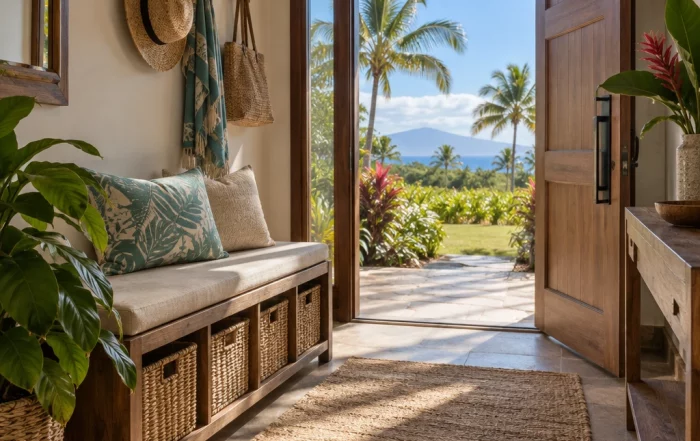
- Natural fiber rugs: Sisal, jute, and seagrass work well in high-traffic areas and complement rather than compete with ocean views
- Organic upholstery: Linen and performance fabrics in earth tones resist fading from our intense sun while maintaining breathability
- Rattan and wicker: When properly treated and sourced from quality manufacturers like McGuire or Janus et Cie, these materials offer durability and authentic island elegance
- Live-edge wood: Dining tables and console pieces that preserve the natural edge of the wood celebrate organic forms without artificial “beachy” styling
Color Palettes Inspired by Hawaii Natural Interior Design
Here’s where biophilic design Maui style diverges most dramatically from mainland approaches: color behaves differently under our equatorial sun. What reads as a soft sage green in a Portland showroom can appear washed-out and gray in Upcountry Maui’s brilliant light. What looks like a safe neutral beige in Chicago can turn jaundiced yellow in a West Maui condo.
Authentic Hawaii natural interior design draws from the landscape you actually see—not the postcard version. Think the deep charcoal of wet lava rock, the silvery sage of ahinahina plants, the warm terracotta of upcountry soil, the countless shades of green from forest to sugarcane, and the blue-grays of ocean depth rather than shallow lagoon turquoise.
Layering Color Like the Landscape
The most successful biophilic interiors in Hawaii use color the way nature does—in layers, with subtle variation and unexpected depth. A living room might feature a sofa in the deep green-gray of ti leaves, accent chairs in the warm brown of koa wood, and throw pillows that echo the rust and cream tones of native grasses. This approach creates visual richness without the chaos of pattern-on-pattern tropical prints.
Working with a designer who understands Hawaii’s light—and who has a fashion background that informs sophisticated color layering—ensures your palette will look intentional rather than accidental, elegant rather than themed.
Bringing It All Together: Real-World Application
The difference between biophilic design and tropical theme-park décor comes down to restraint and authenticity. A recent project for a Wailea second-home owner illustrates this perfectly. Instead of rattan everything and palm-print curtains, we created a master suite that featured a custom bed from Bernhardt in a finish that echoed driftwood, bedding in organic linen the color of sand, and a sitting area with Caracole chairs upholstered in a textured fabric reminiscent of volcanic rock.
The room’s biophilic elements were subtle but powerful: a large mirror from Global Views that reflected the garden view, maximizing natural light; blackout shades that could disappear completely during the day; a live-edge console table from Phillips Collection that brought organic form without kitsch; and strategically placed potted palms—the real kind, not printed on fabric.
For a vacation rental renovation in Kihei, we focused on durability without sacrificing the wellness benefits of natural materials. Performance fabrics in ocean-inspired colors, furniture with marine-grade finishes, and accessories that referenced local flora created a space guests described as “peaceful” and “authentically Hawaiian” rather than “decorated.”
Create Your Own Biophilic Sanctuary
Biophilic design the Maui way requires more than good intentions—it demands knowledge of how materials perform in our unique climate, understanding of how our equatorial light affects color, and access to furniture lines engineered for coastal living. After 27 years of creating Hawaii-specific interiors, we’ve learned that the most successful spaces are those that honor the island’s natural beauty without trying to recreate it literally indoors.
Whether you’re furnishing a new Maui home, refreshing a vacation rental to boost bookings, or simply want your space to feel more connected to the incredible natural environment outside your windows, the right approach makes all the difference. Our showroom at 3031 Old Haleakala Highway in Makawao features furniture and accessories specifically curated for Hawaii living—pieces from manufacturers like Holly Hunt, Sossego, and Jonathan Charles that combine biophilic principles with the durability our climate demands.
Ready to bring the island indoors the right way? Call us at 808-891-8800 or stop by Monday through Friday, 10 AM to 6 PM. Let’s create a space that celebrates Hawaii’s natural beauty with the sophistication it deserves.
Need Help With Your Space?
Ask us anything — furniture, design, or where to start.