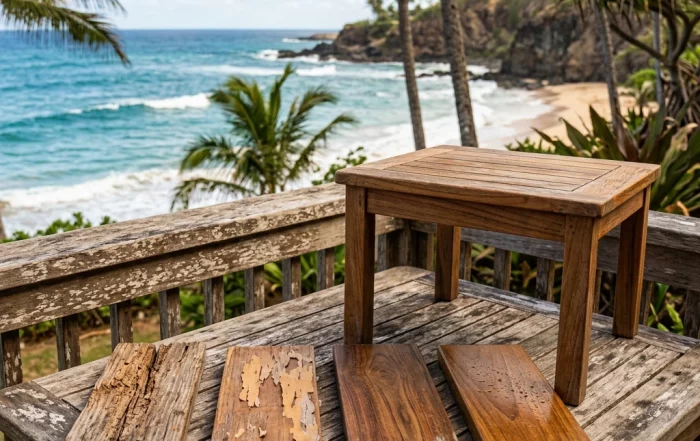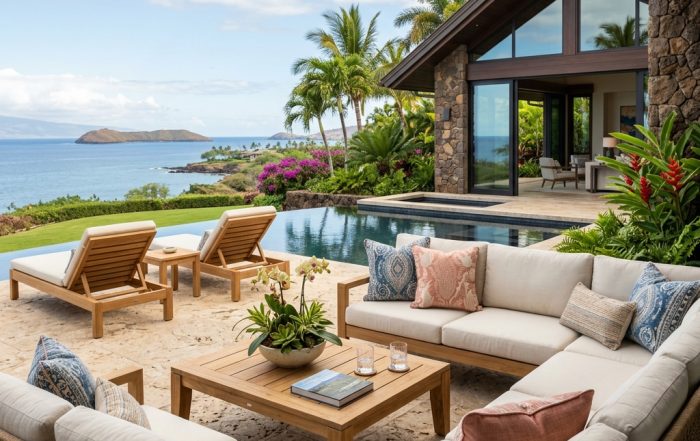
Maui’s salt air and wood can create a beautiful relationship—or an expensive maintenance problem. In coastal homes, lanais, and vacation rentals, salt carried by wind settles on furniture, while intense sunlight, humidity, and daily indoor-outdoor living accelerate wear. Even carefully selected pieces may fade, crack, corrode, or develop finish damage when their materials are not suited to Hawaii’s climate.
This Maui furniture materials guide explains how to compare wood species, finishes, and construction details before investing in new furniture. You’ll learn why teak is not always the only answer, when marine-grade finishes Hawaii homes may benefit from, and how to choose durable pieces for bedrooms, living rooms, dining areas, and covered lanais. At IDS Maui, we help homeowners select furniture that is both refined and practical, with solutions shaped by 27 years of Hawaii-specific design experience.
Maui’s Salt Air and Wood: Why Material Selection Matters
Salt air furniture Maui homeowners choose must withstand more than occasional moisture. Salt particles can settle into joints, hardware, woven materials, and porous finishes. When combined with humidity, they may encourage corrosion or leave a residue that attracts additional dirt. Strong Hawaiian sunlight can also fade upholstery and dry or discolor exposed wood, particularly near large windows and open lanais.
Color behaves differently close to the equator, too. A warm stain or saturated fabric can appear more intense in Maui’s bright natural light than it does in a mainland showroom. That makes sampling essential—not only for appearance, but also for understanding how a finish will perform in its intended location.
Furniture durability in a tropical climate depends on the complete piece, not just the species listed on a product sheet. Consider:
- Where the furniture will sit and how directly it receives sun, wind, and salt air
- Whether the wood is solid, veneered, sealed, or designed for outdoor use
- How joints, feet, drawer hardware, and fasteners are constructed
- Whether upholstery and cushions are rated for the conditions they will experience
- How easily the surface can be cleaned and periodically refinished
A beautiful dining table placed beside open doors may need a different finish than a bedroom dresser in an interior hallway. Thoughtful placement and material matching are the first lines of protection.
Wood Species for Hawaii’s Climate
Teak versus hardwood in Maui
The question of teak vs hardwood Maui clients often ask does not have one universal answer. Teak contains natural oils that help it resist moisture and outdoor exposure, making it a strong choice for covered or open-air living areas. It can weather to a silver tone over time, or it can be maintained to preserve a warmer appearance. However, teak still benefits from appropriate cleaning, drainage, and protection from constant direct sun.
Other hardwoods can perform beautifully indoors when properly kiln-dried, sealed, and constructed. Walnut, oak, maple, mahogany, and other species each have different grain patterns, densities, movement characteristics, and finishing requirements. A hardwood used in a dry interior bedroom may be an excellent choice, while the same material in an exposed lanai could require more maintenance.
Look beyond the species name
Wood species Hawaii climate conditions can support depend on location and finish. A well-made piece with stable construction and a suitable protective coating may outperform a lower-quality piece made from a theoretically more weather-resistant wood. Examine end grain, joinery, veneer quality, hardware, and the manufacturer’s intended use.
For coastal interiors, we also consider whether the design can tolerate normal seasonal movement. Solid wood naturally responds to humidity. Properly designed panels, drawer fronts, and table tops allow that movement rather than trapping it, which helps reduce splitting and warping over time.
Finishes, Hardware, and Maintenance for Coastal Homes
Corrosion-resistant wood finishes and appropriate hardware can significantly extend the life of furniture, but “water-resistant” does not mean maintenance-free. Finishes create a protective barrier against moisture and stains; they cannot eliminate the effects of direct sunlight, standing water, or airborne salt.
Marine-grade finishes Hawaii homes may use are most appropriate when the product and location call for a higher level of moisture and UV resistance. However, a marine coating should not automatically be applied to every indoor wood piece. It may change the sheen, color, texture, or future repairability of a surface. The manufacturer’s recommendations and the furniture’s construction should guide the decision.
For indoor and covered outdoor pieces, practical protection includes:
- Using coasters, placemats, and breathable protective covers where appropriate
- Wiping salt residue with a soft, slightly damp cloth rather than abrasive cleaners
- Keeping furniture away from persistent drips, sprinkler spray, and standing water
- Rotating accessories and cushions so sunlight does not affect one area unevenly
- Inspecting metal hardware, glides, and fasteners before corrosion spreads
Ventilation matters as well. Furniture pushed tightly against damp exterior walls or placed where wet cushions cannot dry may deteriorate faster regardless of wood species. In vacation rentals, simple care instructions and scheduled inspections are especially valuable between guests.
Choosing Durable Furniture for Real Maui Projects
A bedroom near the coast
Consider a primary bedroom with ocean-facing windows. Instead of selecting every piece for outdoor-level performance, a designer might specify a stable hardwood bed and case goods with a durable low-sheen finish, then use UV-conscious window treatments and strategic furniture placement. Performance textiles and custom bedding can add comfort without making the room feel overly commercial.
A high-use vacation rental lanai
For a rental property where guests move between the living room and lanai all year, teak or another appropriately rated outdoor material may be suitable for exposed seating. Cushions should be selected for moisture management and easy care, while indoor furniture should have resilient upholstery and finishes that tolerate frequent cleaning. Durable does not have to mean generic; refined proportions, layered color, and quality construction can still create a memorable guest experience.
These decisions are best made as a coordinated plan. IDS Maui sources medium-high to super-high-end furniture directly from manufacturers, including custom and made-to-order pieces. Depending on the line, clients may select dimensions, fabric, finish, legs, arms, and cushion details. Standard made-to-order lead times can be up to eight weeks, while Quick Ship items may arrive in two to three weeks. Freight to Hawaii is priced separately and is commonly about 10–15% of item cost, based on cubic footage.
Protect Your Investment with IDS Maui
The right furniture for Maui should reflect your style while responding intelligently to salt, sun, humidity, and indoor-outdoor living. Teak can be excellent in the right setting, while carefully finished hardwood may be preferable indoors. Construction quality, upholstery, hardware, placement, and maintenance all matter just as much as the species name.
IDS Maui brings 27 years of Hawaii-specific experience to furniture selection, custom bedding, lighting, rugs, and complete interiors. Our team can help you evaluate materials for a coastal residence, vacation rental, second home, or resort-style project—and coordinate purchasing, shipping, and installation. Call 808-891-8800 or visit the showroom at 3031 Old Haleakala Highway in Makawao, Monday through Friday from 10 a.m. to 6 p.m., to discuss your scope and budget. You can also contact IDS Maui to request a consultation or furniture quote.
Need Help With Your Space?
Ask us anything — furniture, design, or where to start.