Beautiful lighting can change the way a Maui home feels from the first light of morning through a relaxed evening indoors. Yet Hawaii’s strong sun, salt air, open floor plans, and year-round indoor-outdoor living create lighting challenges that mainland advice often overlooks. Thoughtful Maui home lighting design should do more than brighten a room: it should support daily routines, highlight architecture and furnishings, reduce glare, and create a welcoming atmosphere after sunset. In this guide, you’ll learn how to build layered lighting for Maui homes, choose fixtures for specific rooms, and balance natural light with adjustable illumination. Whether you are furnishing a new residence, updating a vacation rental, or renovating a second home remotely, the right combination of ambient, task, and accent lighting can make every space more comfortable and functional.
Maui Home Lighting Design Starts With Natural Light
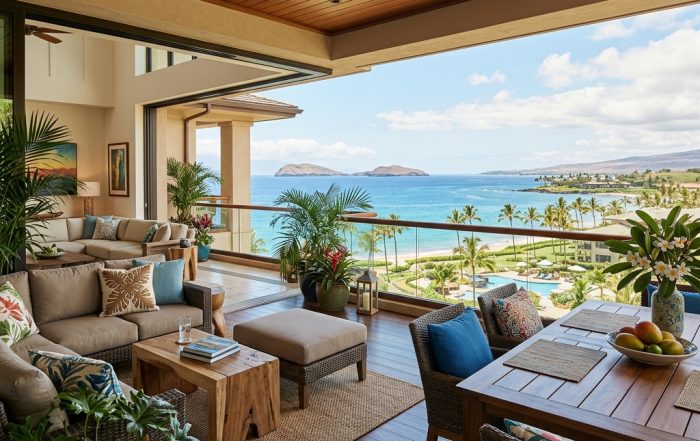
Maui homes receive abundant daylight, but that light is not always even or predictable. Rooms facing different directions may have dramatically different brightness levels, while large windows and sliding doors can introduce glare and heat. Because Hawaii sits closer to the equator than most of the mainland, colors and finishes can appear more vivid in natural light. That makes lighting design especially important when selecting upholstery, paint, rugs, wood finishes, and artwork.
Plan for Sunrise, Midday, and Sunset
Begin by observing how sunlight moves through each room. A bedroom may need soft, low-glare lighting in the early morning, while a kitchen may require stronger task lighting during midday preparation. In a living room, direct afternoon sun can make television viewing uncomfortable even when the room feels bright.
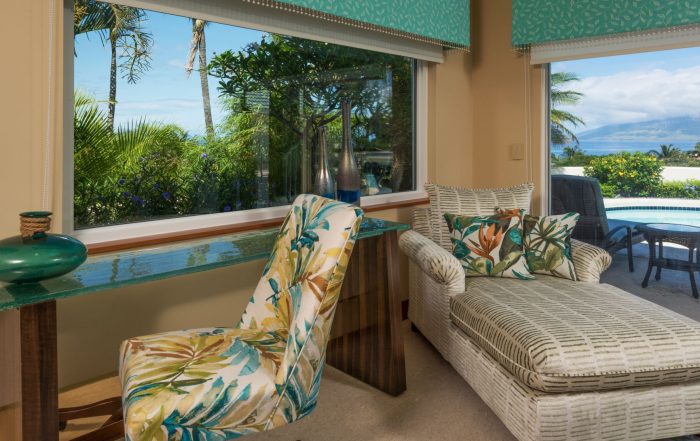
Window treatments are part of the lighting plan. Solar shades, woven shades, drapery, or layered treatments can filter harsh sunlight while preserving a connection to the landscape. Meanwhile, dimmable fixtures allow the room to transition smoothly as daylight fades instead of shifting abruptly from bright sun to a single overhead light.
Use Three Layers of Light
The most flexible approach combines:
- Ambient lighting: General illumination from ceiling fixtures, recessed lights, or well-distributed lamps.
- Task lighting: Focused light for reading, cooking, grooming, working, or entertaining.
- Accent lighting: Decorative or directional light that highlights art, architectural details, collections, or textured materials.
These layers should work independently and together. For example, a Maui living room might use a dimmable ceiling fixture for ambient light, a floor lamp beside a reading chair, and picture lights or adjustable spots to emphasize artwork. This layered approach creates depth and keeps the room from feeling flat after dark.
Choosing Fixtures for Hawaii Interior Lighting
Fixtures are both functional elements and furnishings. Their scale, finish, and shade material should complement the room while standing up to Hawaii’s climate. In homes near the coast, salt air can affect metal finishes over time, while open lanais expose fixtures to wind, humidity, and changing weather conditions. Interior fixtures still benefit from durable construction because doors and windows are frequently open.
Match the Fixture to the Room
In a kitchen, combine ceiling or recessed lighting with illumination beneath cabinets and over islands. Pendant lights can define an island or dining area, but their height and shade material should be selected carefully to avoid glare across polished counters. In a bedroom, bedside lamps or wall-mounted reading lights provide more useful illumination than relying on a central fixture alone.
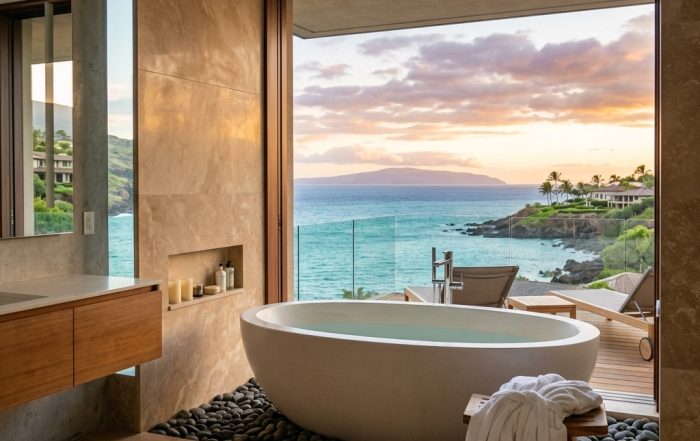
Bathrooms require even, flattering light around mirrors. A fixture above the mirror may cast shadows on the face, so side lighting or a carefully designed integrated solution is often more effective. For a home office, position task lighting to reduce reflections on screens and use adjustable fixtures for changing daylight conditions.
Select Finishes and Bulbs Thoughtfully
Warm-to-neutral LED bulbs generally create a welcoming residential atmosphere, but color temperature should be consistent within connected spaces. Choose bulbs with strong color-rendering performance so fabrics, artwork, and wood finishes look as intended. This matters particularly in Maui, where bright daylight can make a poorly matched artificial light source feel noticeably too yellow, blue, or harsh at night.
For coastal homes, consider finishes that are easy to maintain and less vulnerable to visible corrosion. In covered outdoor areas, verify that every fixture is rated for its exact location. A fixture appropriate for a dry interior room is not automatically suitable for a lanai or damp environment.
Layered Lighting for Maui Homes: Room-by-Room Ideas
Good lighting responds to how a room is used rather than simply filling it with brightness. The same residence may need calm, low-level illumination in a primary suite, bright task light in a kitchen, and flexible entertaining light in an open living area.
Living rooms: Use a combination of floor lamps, table lamps, discreet ceiling fixtures, and accent lighting. Place lamps near sofas and chairs so conversation areas remain comfortable after sunset. If the room includes a high ceiling, select a fixture with an appropriate scale instead of using multiple small lights that compete visually.
Dining areas: A chandelier or linear pendant can anchor the table, but it should provide comfortable illumination without shining directly into diners’ eyes. Add dimming for casual breakfasts, family meals, and evening entertaining.
Bedrooms: Use individual bedside lighting, especially when two people have different reading schedules. Soft accent light behind a headboard, beneath a floating cabinet, or inside a display niche can provide gentle nighttime visibility without overwhelming the room.
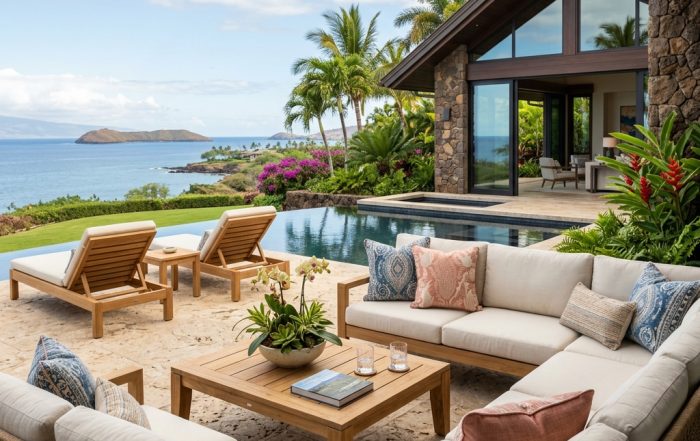
Lanais and transitional spaces: Covered outdoor areas should feel connected to adjacent interiors. Use appropriately rated ceiling fixtures, wall sconces, and low-level lighting near steps or pathways. Avoid excessive brightness, which can reduce views of the night sky and make the interior feel disconnected from the landscape.
Vacation rental owners should also prioritize intuitive controls. Clearly labeled switches, dimmers, and strategically placed pathway lighting help guests feel comfortable without needing detailed instructions.
Bring Your Maui Lighting Plan Together
Consider a real-world example: an open-concept Maui residence with strong afternoon sun, a large kitchen island, and a living room that transitions to a lanai. During the day, filtered window treatments reduce glare while preserving the view. In the kitchen, under-cabinet lights support food preparation without competing with decorative pendants. In the living room, lamps create intimate seating zones, while adjustable accent lights bring out the texture of artwork and furnishings.
After sunset, the homeowner can dim the ambient fixtures, keep task lighting active where needed, and add warmer accent illumination for entertaining. The result is not one brightly lit room, but several coordinated experiences within the same open plan.
Because fixture placement affects electrical plans, cabinetry, ceiling details, and furniture layouts, lighting should be considered early in a renovation or furnishing project. IDS Maui can help coordinate lighting with finishes, fabrics, built-ins, furniture, and the way each room will actually be used. With 27 years of Hawaii-specific experience, the team understands how sun exposure, salt air, and indoor-outdoor living influence design decisions.
Whether you need a few statement fixtures or a complete lighting plan, call IDS Maui at 808-891-8800 or visit the showroom at 3031 Old Haleakala Highway in Makawao, Monday through Friday from 10 a.m. to 6 p.m. Bring your scope, budget, or room dimensions, and start creating Hawaii interior lighting that feels beautiful from sunrise to evening.
Need Help With Your Space?
Ask us anything — furniture, design, or where to start.