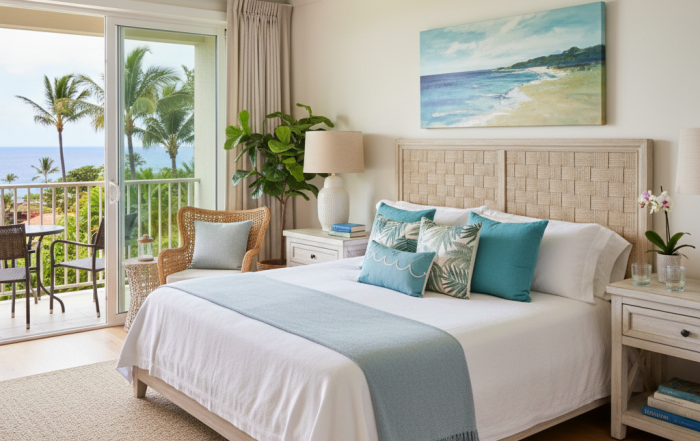
In a Maui home, luxury is not only about how a room looks on installation day. It is also about how thoughtfully it performs through salt air, intense sunlight, humidity, and year-round indoor-outdoor living. Sustainable luxury brings those priorities together: well-made furniture, responsible material choices, adaptable design, and lasting beauty. For homeowners and vacation-rental owners, this approach can create a more comfortable space while supporting long-term resale value.
Eco-friendly furniture does not have to look rustic, minimal, or predictable. With the right fabrics, woods, finishes, and proportions, it can feel polished, layered, and distinctly suited to Maui. Here is how to choose pieces that reflect an environmental ethos without sacrificing elegance—and how an experienced Maui designer can help you make decisions that remain valuable for years.
Sustainable Luxury Starts with Quality That Lasts
The most sustainable furnishing choice is often a piece you will not need to replace soon. Well-constructed furniture can remain beautiful through changing styles, changing occupants, and the demanding conditions of island living. Instead of choosing inexpensive pieces that may warp, fade, or fail after a few seasons, consider investing in sofas, dining tables, beds, and case goods designed for long-term use.
Choose enduring construction
Look for solid joinery, repairable components, durable finishes, and upholstery that can be cleaned or replaced. Made-to-order furniture offers another advantage: dimensions, cushions, legs, finishes, and fabrics can often be customized for the room and the way your household uses it. A correctly scaled sectional, for example, is less likely to be discarded simply because it blocks a walkway or does not suit a future layout.
Buy fewer, better pieces
A sustainable Maui home design is not necessarily sparsely furnished. Rather, it is intentionally furnished. A beautiful console, substantial dining table, or comfortable accent chair can serve a purpose while adding character. High-quality pieces also tend to transition more easily between a primary residence, second home, and vacation rental.
IDS Maui sources furniture directly from established manufacturers, including lines such as Bernhardt, Baker, Caracole, Century, McGuire, Theodore Alexander, and others. This access helps clients consider materials and construction beyond what is typically available locally, while professional planning reduces costly mismatches and unnecessary replacements.
Make Eco-Friendly Furniture Work for Maui’s Climate
Maui’s environment changes how sustainable choices should be evaluated. Bright sun, salt air, wind, and moisture can degrade fabrics, wood, and finishes faster than they might on the mainland. A material that appears environmentally responsible on paper may not be the most sustainable option if it needs frequent replacement.
Evaluate fabrics and finishes carefully
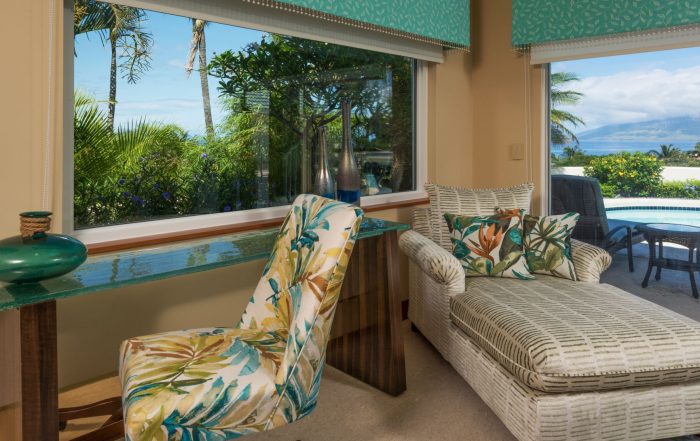
For rooms exposed to strong light or frequent use, performance fabrics can help extend the life of upholstered furniture. The best selection depends on fiber content, weave, colorfastness, cleanability, and the room’s exposure. Natural fibers may be appropriate in some spaces, while engineered performance textiles may offer better durability in a busy vacation rental or lanai-connected living room.
Color matters, too. Maui’s proximity to the equator affects how colors read indoors. Intense natural light can make pale tones feel brighter and warm hues more saturated. An experienced designer can help coordinate fabric, paint, flooring, and wood tones so that the room remains balanced rather than visually washed out or overly bright.
Design for indoor-outdoor living
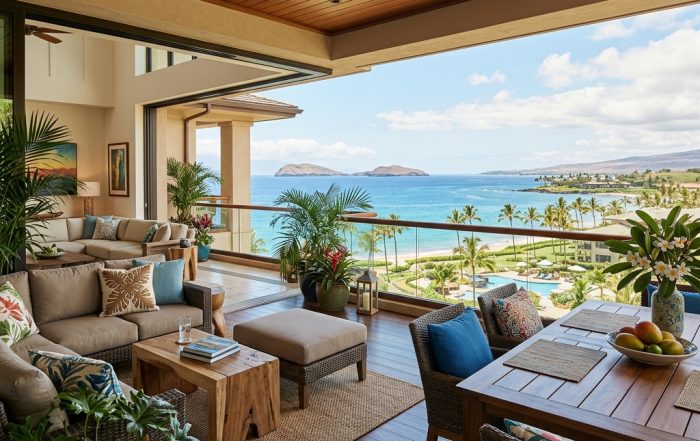
Furniture near a lanai door should support the way people actually live. Select durable upholstery, easily maintained surfaces, and layouts that allow airflow and clear circulation. In some cases, using fewer indoor pieces and choosing appropriate outdoor furniture for covered areas is more practical than placing delicate furnishings in a harsh exposure.
- Identify direct sun, wind, and salt-air exposure before selecting materials.
- Prioritize cleanable, colorfast upholstery in high-use spaces.
- Choose wood species and finishes suited to the room’s moisture and traffic levels.
- Plan circulation so furniture is less likely to be damaged or constantly rearranged.
- Consider repair, reupholstery, and future adaptability—not only the initial purchase price.
Use Sustainable Luxury to Support Resale Value
Thoughtful furniture choices can contribute to resale value by making a home feel cohesive, comfortable, and easy to maintain. Buyers often respond to rooms that appear finished rather than temporarily furnished. In a vacation property, durable and attractive pieces may also support guest satisfaction, reviews, and repeat bookings.
Create a timeless foundation
Resale-friendly design begins with versatile major pieces: a well-proportioned sofa, a quality dining table, practical bedroom storage, and lighting that adds warmth without being overly specific to one trend. Personality can come through in art, accessories, rugs, and accent chairs, which are easier to update than built-in elements or a complete furniture package.
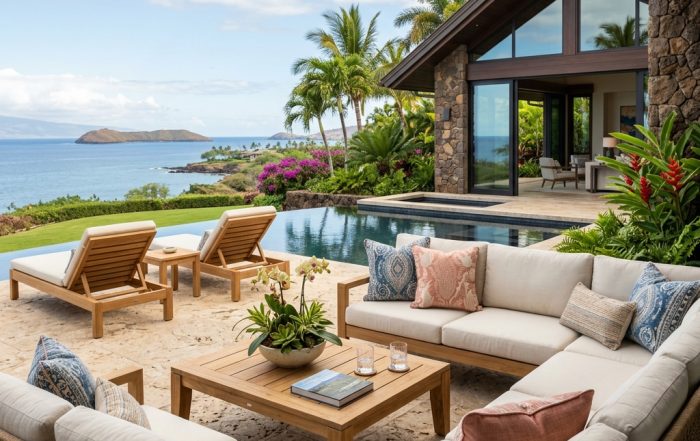
For example, imagine a Maui vacation rental with a neutral performance-fabric sectional, a solid dining table, woven accent chairs, durable indoor-outdoor rugs, and layered lighting. The result can feel relaxed and elevated without relying on a literal beach theme. If the property changes ownership, the furnishings still offer a flexible foundation for another owner’s style.
Think beyond appearance
Resale value also depends on function. Clear pathways, comfortable seating, adequate storage, and well-planned lighting make a home feel more usable. IDS Maui can coordinate furniture, rugs, lamps, accessories, custom bedding, and related selections so that each room works as a complete composition.
For remote second-home owners, professional sourcing is especially helpful. IDS serves clients across Maui and the neighboring islands, as well as the continental United States, and manages freight and damage claims. Quick Ship items may arrive in approximately two to three weeks, while made-to-order pieces commonly require several weeks. Planning early helps avoid rushed purchases that compromise quality or design cohesion.
Bring Your Environmental Ethos into a Personalized Plan
Sustainable luxury should reflect your priorities, not follow a rigid formula. One homeowner may value durable natural materials and heirloom-quality case goods. Another may prioritize low-maintenance fabrics for a rental, adaptable furniture for aging in place, or pieces that can move between indoor and covered outdoor areas.
At IDS Maui, design decisions are considered in context—from programming and layouts through purchasing, shipping, and installation. Valorie Spence, ASID, brings 27 years of Hawaii-specific experience, along with a background in fashion, color, and texture. That perspective helps create rooms that feel sophisticated without becoming generic or overly themed.
A consultation can address your scope, budget, climate exposures, and priorities before you begin ordering. Whether you are furnishing one bedroom or an entire home, the goal is to select furniture and accessories that perform beautifully, age gracefully, and support the way you live on Maui.
Call IDS Maui at 808-891-8800 or visit the showroom at 3031 Old Haleakala Highway in Makawao, Monday through Friday from 10 a.m. to 6 p.m. Share your project goals, and let the team help you create an eco-conscious, enduringly elegant home with furniture chosen for both today and the years ahead.
Need Help With Your Space?
Ask us anything — furniture, design, or where to start.