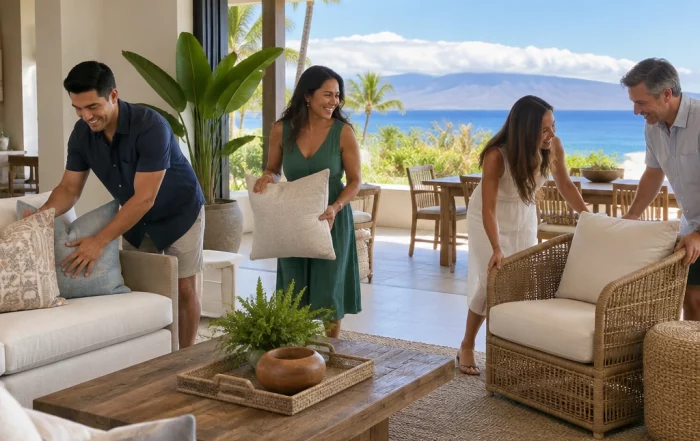
Vacation rental furniture ROI is no longer just a question of finding the lowest purchase price. In 2026, Maui property owners are furnishing homes for discerning travelers in a competitive market where appearance, comfort, durability, and maintenance costs all influence profitability. A beautiful sectional that stains easily, a dining table that cannot withstand daily turnover, or outdoor furniture that deteriorates in salt air can quickly erase the savings of a bargain purchase.
The best rental property furnishing ROI comes from selecting pieces that perform under real hospitality conditions while still creating a memorable guest experience. This guide explains how to balance durable materials with guest appeal, where to invest first, how to evaluate lifecycle cost, and why Hawaii-specific expertise matters when choosing furniture, lighting, rugs, and accessories for a vacation rental upgrade 2026 project.
Vacation Rental Furniture ROI Starts With the Right Performance Equation
Furniture contributes to revenue in several ways. It helps photographs look compelling, supports positive reviews, reduces maintenance calls, and keeps the property operational between bookings. However, furniture rarely produces a measurable return by itself. Its value is connected to the entire guest experience and to the avoided cost of premature replacement.
That distinction matters in Maui. According to the Hawaiʻi Department of Business, Economic Development & Tourism February 2026 vacation rental report, Maui County vacation rentals recorded a 62.3% occupancy rate and a $698.43 average daily rate in February 2026. At the same time, available supply increased 12.8% compared with February 2025. In other words, owners are competing for bookings while operating in a market capable of supporting substantial nightly rates.
That environment rewards strategic furnishing rather than indiscriminate luxury. A useful calculation considers:
- Purchase cost: the initial price, freight, delivery, and installation.
- Useful service life: how long the piece remains attractive, comfortable, and structurally sound.
- Maintenance cost: cleaning, repair, refinishing, replacement cushions, and damage claims.
- Revenue contribution: the piece’s effect on photos, reviews, occupancy, nightly rate, and repeat bookings.
- Replacement disruption: lost booking days or rushed purchasing when an item fails.
A lower-priced sofa that must be replaced every two years may cost more over a seven-year ownership period than a better-constructed sofa with commercial-grade upholstery. Conversely, paying for the highest specification everywhere may not be necessary. Bedrooms, owner-use spaces, accent areas, and seldom-used rooms can often receive a different level of investment than living rooms, dining areas, lanais, and primary suites.
Think in terms of lifecycle cost
For each major item, ask: “What will this cost me per year of reliable use?” Include shipping to Hawaii, professional installation, cleaning, and likely repairs. Then consider whether the item is visible in listing photography or central to the guest experience.
This approach makes it easier to justify investment in a high-performance sectional or dining table while avoiding unnecessary overspending on decorative pieces that experience little wear.
Why Durability Matters More in Vacation Rental Furniture Maui Projects
Vacation rentals experience concentrated use. A private home may host one household for years, while a rental property may welcome dozens of households annually. Guests eat, swim, work, relax, entertain children, bring luggage indoors, and move furniture in ways the original homeowner may never anticipate.
Maui adds another layer of environmental stress. Salt air, intense sunlight, wind, humidity, and the constant connection between indoor and outdoor living can affect upholstery, wood, metal, finishes, flooring, and rugs. A material that performs well in a mainland showroom may not be the best choice for an exposed Maui lanai or a bright room with strong afternoon sun.
Choose materials by room and exposure
Performance fabrics are a practical starting point for rental homes, but “performance” should not be treated as a universal guarantee. Review the manufacturer’s cleaning instructions, abrasion information, stain resistance, fiber content, and warranty. The best fabric depends on whether the furniture is exposed to wet swimsuits, sunscreen, pets, red wine, children, or direct sunlight.
For high-use seating, prioritize:
- Tightly woven upholstery that resists snagging and abrasion.
- Cleanable finishes appropriate for the fabric manufacturer’s instructions.
- Textured or patterned fabrics that disguise minor marks without looking busy.
- Replaceable cushions or serviceable components when available.
- Frames and joinery designed for repeated use rather than occasional seating.
For dining and occasional tables, consider finishes that tolerate frequent wiping and avoid delicate surfaces in areas where guests are likely to place wet glasses, beach gear, or heavy luggage. For rugs, select constructions that are practical to vacuum, easy to spot-clean, and appropriate for the amount of sand and outdoor traffic entering the home.
Plan for the lanai lifestyle
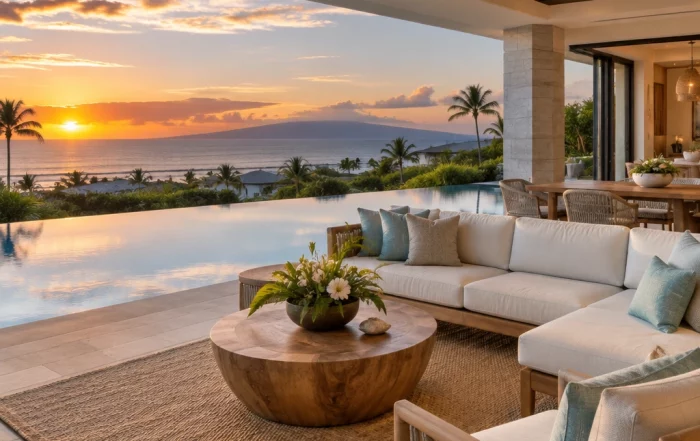
Indoor/outdoor living is a defining part of the Hawaii guest experience. Outdoor furniture should be selected for its exposure level, not simply for its appearance in a catalog. Look for appropriate outdoor-rated fabrics, corrosion-resistant hardware, UV-conscious finishes, and cushions that can be removed or protected during storms.
Even durable furniture needs a maintenance plan. Shade structures, covers, ventilation, routine cleaning, and prompt drying can extend service life. Furniture placement matters, too: moving a sofa away from direct sun or preventing standing water beneath a table can protect the investment without compromising the design.
Guest Appeal Is an Economic Asset, Not a Decorative Extra
Durability protects the owner’s budget, but guest appeal helps the property earn attention. Travelers typically see the listing before they see the home. Furniture scale, lighting, color, texture, and layout determine whether photographs communicate comfort and quality or make the property look generic.
Airbnb’s current host guidance emphasizes the importance of high-quality photos and complete amenity information because guests use listing details and filters when comparing homes. Its 2026 amenities guidance, based on internal data from January through December 2025, lists pools, free parking, Wi-Fi, air conditioning or heating, kitchens, hot tubs, laundry, self check-in, televisions, and grills among the most frequently searched amenities. Furniture supports several of these expectations indirectly by making kitchens, workspaces, living rooms, and outdoor areas more functional and attractive. See Airbnb’s 2026 guidance on amenities guests want for the full list.
Design for the photograph and the stay
A successful room needs to look distinctive in listing photography while remaining comfortable in person. A dramatic accent chair may create a strong visual moment, but it should also be genuinely usable. A statement bed should have practical nightstands, reading lights, outlets, and enough clearance for housekeeping. A dining table should comfortably seat the advertised number of guests rather than simply fill an empty area.
Consider investing in the elements guests touch and photograph most:
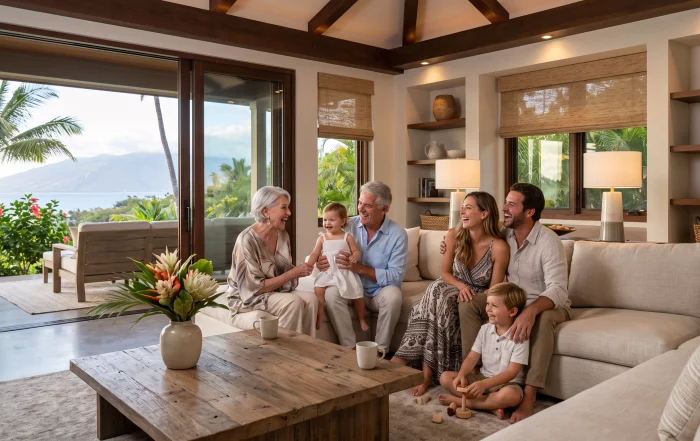
- A comfortable, well-scaled living room sectional or sofa.
- Layered lighting, including ambient, task, and bedside lighting.
- A dining area that supports meals, games, and remote work.
- Thoughtful bedside tables with accessible charging and lighting.
- Distinctive artwork, mirrors, rugs, and accessories that reinforce the property’s identity.
- Outdoor seating that makes the lanai feel like an additional room.
Color can also create a competitive advantage. Hawaii’s intense natural light changes how paint, upholstery, wood, and finishes appear compared with mainland interiors. A color that feels warm and balanced in a northern showroom may look washed out or overly bright in Maui sunlight. Professional material selection helps create a cohesive look that feels local without relying on predictable tropical clichés.
How to Allocate a Rental Property Furnishing Budget in 2026
Rather than furnishing every room to the same specification, divide the project into investment tiers. This makes a whole-home renovation more efficient and helps owners direct funds toward the areas most likely to influence bookings and reviews.
Tier one: high-visibility, high-use spaces
Start with the living room, primary bedroom, dining area, kitchen-adjacent seating, and lanai. These spaces should receive the strongest combination of comfort, durability, and visual impact. If the budget is limited, it is generally more effective to purchase one excellent sofa and coordinate the room around it than to fill the space with several disposable pieces.
Tier two: operational essentials
Next, address beds, mattresses, nightstands, dining chairs, task lighting, window treatments, and storage. These items affect guest comfort and housekeeping efficiency. Choose furniture with enough clearance to clean properly and enough storage to prevent clutter. In a remote second-home or vacation rental, simple maintenance is part of the design brief.
Tier three: finishing layers
Finally, add rugs, artwork, mirrors, accessories, lamps, and decorative accents. These details can significantly improve photographs and create a more memorable sense of place. However, they should be selected after the major furniture and lighting decisions are resolved. Accessories cannot compensate for an uncomfortable sofa, poor circulation, or an undersized dining table.
Custom and made-to-order furniture can be especially useful when a room has unusual dimensions or when the property needs a more distinctive identity. Custom options may include fabric, finish, cushion firmness, legs, arms, and exact dimensions. Planning is essential, since made-to-order pieces can require approximately 8–12 weeks, while quick-ship selections may arrive in two to three weeks.
Hawaii freight must also be included in the budget. Shipping can represent approximately 10–15% of item cost, depending on cubic footage and delivery requirements. A professional furniture partner can coordinate purchasing, freight, installation, and damage claims, reducing the administrative burden for owners furnishing from the mainland.
Build a Measurable Vacation Rental Upgrade 2026 Plan
The strongest rental property furnishing ROI comes from connecting the design plan to operating data. Before ordering, document the property’s current condition and performance:
- Record occupancy, average daily rate, review comments, and maintenance issues.
- Photograph damaged, stained, uncomfortable, or visually dated furniture.
- Identify which rooms appear most often in listing photos.
- Separate guest-facing improvements from owner-preference purchases.
- Set a target budget and a realistic installation schedule.
- Reassess performance after the renovation rather than relying on assumptions.
Review guest feedback for repeated phrases such as “uncomfortable,” “dated,” “not enough seating,” “poor lighting,” or “beautiful space.” These comments can point to investments with a clearer return than purely aesthetic changes.
Also check local rules, insurance requirements, and property restrictions before purchasing. Furniture cannot solve an occupancy or legality issue, and a profitable furnishing plan must operate within county regulations, building requirements, and the property’s permitted use.
For owners serving guests across Maui, Lanai, Molokai, Oahu, the Big Island, or the continental United States, an experienced design and purchasing team can simplify the process. IDS Maui has spent 27 years working with Hawaii-specific conditions, hospitality environments, color, fabric, furniture, lighting, rugs, and installation logistics. The team can help compare durable hospitality furniture Hawaii properties need with the guest-facing details that make a home feel special.
Conclusion: Invest Where Durability and Desire Meet
Vacation rental furniture ROI is strongest when durability and guest appeal are planned together. The goal is not to create a sterile commercial environment or to fill a home with delicate showpieces. It is to select furniture that looks inviting in photographs, feels comfortable during a stay, withstands repeated use, and remains practical to maintain in Hawaii’s climate.
For a new furnishing project or a 2026 rental upgrade, begin with the rooms that influence first impressions and daily comfort. Evaluate fabrics, wood species, finishes, lighting, rugs, and outdoor materials according to actual exposure. Then build a phased purchasing plan that accounts for freight, lead times, installation, and long-term replacement costs.
IDS Maui can help you furnish a single bedroom, refresh a vacation rental, or coordinate a complete property from concept through purchasing, shipping, and installation. Visit the showroom at 3031 Old Haleakala Highway in Makawao, open Monday through Friday from 10 a.m. to 6 p.m., or call 808-891-8800 to discuss your furniture, lighting, rug, and accessory needs.
Need Help With Your Space?
Ask us anything — furniture, design, or where to start.