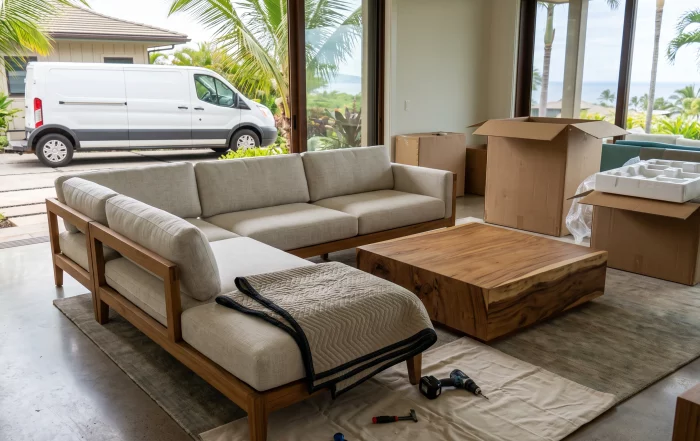
Choosing Maui condo furniture is about more than finding pieces that fit through a doorway. A condo must feel comfortable, function efficiently, and stand up to Maui’s strong sunlight, salt air, humidity, and year-round indoor-outdoor lifestyle. The wrong sectional can overwhelm a living room, while an undersized dining table may make entertaining feel awkward. Fabrics, finishes, circulation paths, and delivery logistics matter just as much as style.
This room-by-room guide explains how to select furniture for a Maui condo, from compact living areas and guest bedrooms to lanais and entryways. You’ll learn how to measure, choose durable materials, balance scale with comfort, and create a cohesive look without making a smaller home feel crowded. Whether you are furnishing a Maui condo for personal use, preparing a vacation rental, or furnishing remotely, the right plan makes every square foot work harder.
Maui Condo Furniture: Start With Scale, Measurements, and Lifestyle
Before shopping, create a practical furniture plan. Measure each room, doorway, hallway, elevator, stairwell, and lanai access point. In a condo, a piece that technically fits the room may still be impossible to deliver or may block an important passage. Note windows, sliding doors, outlets, vents, kitchen islands, and built-in cabinetry as well.
Use clearances to protect comfort
As a general starting point, allow approximately 30 to 36 inches for major walkways. Leave enough space between a sofa and cocktail table for comfortable movement, and avoid placing furniture where it interferes with sliding doors or views. In a small condo, visual breathing room is equally important. Furniture with raised legs, open bases, or tailored silhouettes can make the floor area feel larger than heavy, fully enclosed pieces.
Scale should also reflect how the condo is used. A second home may need generous seating for family and guests, while a vacation rental benefits from durable, flexible pieces that are easy to maintain. If the home is intended for aging in place, prioritize stable seating, supportive arms, appropriate seat heights, and unobstructed paths from the bedroom to the bathroom and kitchen.
Create a written scope before selecting pieces
List the rooms, required functions, preferred style, approximate budget, and installation deadline. Then rank purchases by importance. A typical furnishing plan may include:
- Living room seating and tables
- Dining furniture and bar stools
- Primary and guest bedroom furnishings
- Lanai or outdoor furniture
- Lighting, rugs, mirrors, and accessories
- Window treatments, custom bedding, or storage pieces
Ordering directly from quality manufacturers creates more options for dimensions, upholstery, finishes, and configurations. Custom condo furniture can be specified with different legs, arms, cushions, fabrics, and finishes, which is especially useful when standard retail sizes do not suit a Maui floor plan.
Living Room Furniture for a Compact Maui Condo
The living room is usually the visual and social center of a condo. It should support conversation, relaxation, television viewing, and access to the lanai without competing with the view. Begin with the largest item—typically a sofa or sectional—and build outward from its proportions.
Choose seating that fits the room and the view
A compact sofa, apartment-scale sectional, or tailored settee can provide substantial comfort without dominating the room. If the floor plan is narrow, consider a sofa paired with one or two accent chairs rather than a deep sectional. Swivel chairs are particularly useful because they can face the television, conversation area, or ocean view as needed.
Measure both the overall width and the depth. Deep seating may feel luxurious in a showroom but leave too little circulation space at home. Also check arm width: narrow arms can provide several additional inches of usable seating without sacrificing comfort. For vacation rentals, select upholstery with strong performance characteristics and removable or replaceable cushions whenever possible.
Layer tables, lighting, and texture
A cocktail table should be proportional to the seating arrangement, with enough room for drinks and books while leaving comfortable clearance around it. C-shaped or nesting tables can provide flexibility in smaller rooms. A slim console behind a sofa can add storage and display space without requiring another bulky case piece.
Rugs help define the seating area and soften tile or wood flooring. Ideally, the front legs of the primary seating should rest on the rug so the arrangement feels connected. Add table lamps, floor lamps, mirrors, and artwork in layers rather than filling every surface. Maui’s intense natural light can make colors appear brighter and cooler than expected, so evaluate upholstery, paint, and finishes in the actual room at different times of day.
For a distinctly island-appropriate look, avoid relying on obvious tropical motifs. Instead, combine natural textures, refined woods, woven accents, quiet patterns, and carefully chosen color. IDS Maui brings 27 years of Hawaii-specific experience to these decisions, including expertise in how sun, salt air, and local light affect furniture and finishes.
Dining Areas, Kitchens, and Entryways: Make Every Transition Work
Open-concept condos require furniture that looks good from multiple angles. Dining tables, bar stools, sideboards, and entry pieces should complement the living room while preserving an easy path through the home. Because these zones often experience heavy traffic, choose finishes and fabrics for both appearance and daily durability.
Select dining furniture for real entertaining
Round or oval dining tables can improve circulation in compact rooms because they eliminate sharp corners. A rectangular table may be preferable when you need maximum seating or want to align furniture with the architecture. Extendable designs are useful for owners who host occasionally but do not want a large table taking up space every day.
Allow room to pull out dining chairs comfortably and maintain a clear route to the kitchen or lanai. Upholstered dining chairs add softness and comfort, while wood or metal chairs may be easier to maintain in a vacation property. Performance textiles and thoughtfully selected finishes can help protect against spills, sunscreen, wet swimwear, and frequent use.
Use vertical storage without visual heaviness
A narrow sideboard can store serving pieces, linens, games, or rental supplies while providing a surface for lighting and accessories. In a condo, one well-proportioned cabinet is often more effective than several small storage units. A mirror near the entry can reflect light and make the arrival area feel more spacious, while a slim bench offers a practical place to remove shoes.
Bar stools deserve careful attention to both seat height and support. Counter-height and bar-height stools are not interchangeable, so measure from the floor to the underside of the counter. Swivel stools can improve usability, but select a stable base and a durable finish if the kitchen is a high-traffic area.
When furniture connects the kitchen, dining, and living spaces, repeat one or two elements—such as a wood tone, metal finish, or accent color—rather than matching every item exactly. This creates a collected Maui interior design look instead of a showroom set.
Bedroom and Lanai Furniture for Comfort, Durability, and Flexibility
Bedrooms should feel restful, uncluttered, and easy to use. Start with the bed size and confirm that there is adequate clearance on the sides and at the foot. In smaller rooms, choose nightstands that provide storage without extending into walkways. Wall-mounted lighting or appropriately scaled lamps can preserve surface space.
Build a calm, durable bedroom
Bed frames, dressers, chests, and nightstands should be selected as a coordinated group, but they do not have to be identical. A lighter finish can keep a compact bedroom airy, while a textured or darker piece may add grounding contrast. For guest rooms, a chest or dresser with reliable drawers is often more useful than decorative furniture with limited storage.
Custom bedding is a worthwhile consideration for Maui homes because it allows the bed to look finished while accommodating unusual mattress sizes, decorative pillows, and preferred laundering needs. Choose breathable, washable textiles and consider how direct sun reaches the room. Strong exposure can fade fabrics and damage finishes over time, particularly near windows.
Treat the lanai as an additional room
In Hawaii, the lanai is not an occasional outdoor space—it often functions as a dining room, lounge, and entertaining area throughout the year. Select outdoor furniture according to actual exposure. Salt air, wind, moisture, and intense sunlight can degrade unsuitable fabrics, wood, and metal finishes quickly.
Look for outdoor-rated upholstery, corrosion-resistant hardware, appropriate wood species, and finishes designed for the climate. Consider the wind pattern before choosing lightweight chairs or accessories. A compact dining set may be ideal for morning coffee, while a deep seating arrangement works better for sunset gatherings. If the lanai is partially enclosed, indoor-outdoor materials can create a seamless transition while still providing needed durability.
IDS Maui carries outdoor furniture as well as indoor collections, lighting, rugs, accessories, and custom options. Its senior designer regularly attends High Point furniture market and other trade events, helping clients access current materials and lines that are often unavailable elsewhere on Maui.
How to Order Maui Condo Furniture With Fewer Surprises
Furniture planning in Hawaii requires attention to more than design. Lead times, freight, delivery access, installation, and damage handling should be addressed before an order is placed. This is particularly important when furnishing remotely or coordinating a renovation with a fixed rental launch date.
Quick Ship items may arrive in approximately two to three weeks, while standard made-to-order pieces can take up to eight weeks. More customized specifications may require an eight- to twelve-week lead time. Freight to Hawaii is commonly about 10–15% of the item cost and is priced according to cubic footage. Confirm the full landed cost, including delivery and installation, before approving the order.
A professional furniture plan can also prevent expensive mistakes. IDS Maui manages freight and damage claims for its clients and serves Maui, Lanai, Molokai, Oahu, the Big Island, and the continental United States, with freight billed separately. Its broader design process can include AutoCAD drawings, 3D renderings, lighting and cabinet planning, purchasing, shipping, and installation.
For homeowners and rental owners, a useful checklist includes:
- Confirm every room’s measurements and delivery access.
- Identify sun, wind, moisture, and salt-air exposure.
- Choose performance fabrics and climate-appropriate finishes.
- Approve a scaled furniture layout before ordering.
- Review lead times, freight, installation, and warranty details.
Conclusion: Furnish Your Maui Condo With a Plan
The best Maui condo furniture combines the right scale with lasting comfort, practical storage, and materials suited to Hawaii’s environment. A room-by-room approach helps you prioritize purchases, protect circulation, and create a cohesive style that feels personal rather than predictable. It also makes it easier to decide where custom dimensions, performance fabrics, or made-to-order finishes will deliver the greatest value.
IDS Maui has served Hawaii for 27 years, offering medium-high to super-high-end furniture, lighting, rugs, accessories, outdoor pieces, and custom condo furniture through direct manufacturer relationships. Visit the showroom at 3031 Old Haleakala Highway in Makawao, open Monday through Friday from 10 a.m. to 6 p.m., or call 808-891-8800 to discuss your rooms, scope, and budget. Whether you need one bedroom furnished or a whole condo coordinated, the IDS Maui team can help turn measurements and ideas into a comfortable, durable home.
Need Help With Your Space?
Ask us anything — furniture, design, or where to start.