Maui furniture for master closets must do more than create a beautiful place for clothing. In an island home, closets are affected by humidity, salt air, intense sunlight, wind, seasonal moisture, and the relaxed movement between indoor and outdoor living. A storage solution that works in a mainland showroom may not deliver the same performance in Maui.
The right combination of wardrobes, dressers, benches, vanities, mirrors, lighting, and custom closet storage can make a primary suite feel calmer while protecting valuable clothing and accessories. This guide explains how to choose climate-smart materials, plan practical storage, and create an elegant master closet that complements your home. Whether you are furnishing a new residence, renovating a vacation rental, or managing a second home remotely, IDS Maui can help you select furniture designed for both island living and lasting style.
Maui Furniture for Master Closets: Start With the Island Climate
Climate is one of the most important considerations in master closet design Maui homeowners should address early. Maui’s environment is beautiful, but it can be demanding on furnishings. Humidity may cause some wood products to swell or shift, while salt air can accelerate corrosion on metal hardware. Strong sunlight can fade textiles and finishes, especially in closets with windows, skylights, or glass doors.
Color also reads differently in Hawaii. Because Maui is closer to the equator, natural light is often brighter and more direct than homeowners expect. A warm neutral that feels soft and understated on the mainland may appear noticeably more saturated or yellow in an island interior. Likewise, dark finishes can feel richer and more dramatic, but they may show dust, salt residue, and fingerprints more readily.
Choose materials for moisture, light, and use
A climate-smart closet does not require sacrificing luxury. It does require thoughtful specifications. Durable hardwoods, stable engineered materials, properly sealed veneers, corrosion-resistant hardware, and performance textiles can all contribute to a longer-lasting design. Finishes should be selected according to exposure and maintenance needs rather than appearance alone.
For upholstered benches, ottomans, and occasional chairs, consider fabrics with strong abrasion resistance, stain protection, and colorfastness. Natural fibers can be beautiful, but the best choice depends on ventilation, direct sun, household routines, and whether the closet connects to a bathroom or lanai. A designer familiar with Hawaii can compare fiber content, backing, finish, and cleaning requirements before you order.
Allow the closet to breathe
Good organization also supports air circulation. Avoid packing garments tightly against exterior walls or filling every shelf to its maximum capacity. Leave room around furniture, use ventilated storage where appropriate, and plan doors and drawers so that daily access does not obstruct airflow. If the closet includes a dressing island, maintain comfortable circulation on all sides rather than treating every available inch as storage.
These decisions are especially relevant when selecting humidity-resistant closet furniture. The goal is not merely to find a product labeled “resistant,” but to create a coordinated system in which the furniture, room layout, ventilation, lighting, and maintenance routine work together.
Build a Master Closet Around How You Actually Live
The most attractive closet can become frustrating if it is organized around an imaginary lifestyle. Before selecting furniture, consider what you store, how often you use it, and how you get dressed. A Maui homeowner with resort wear, swimwear, hats, linen garments, and outdoor clothing may need a different arrangement from someone whose wardrobe is primarily business attire.
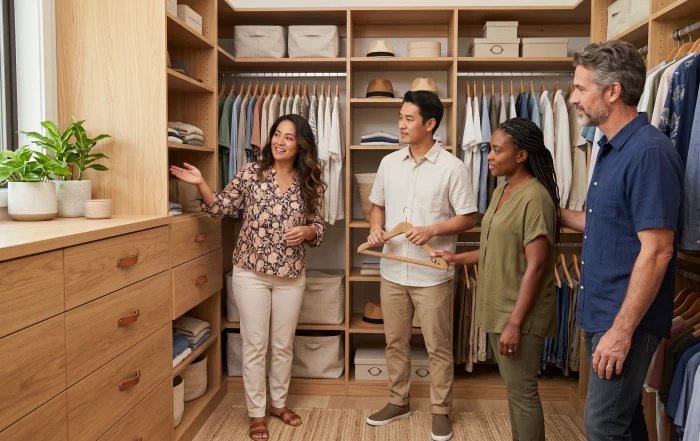
Begin with an inventory of clothing, shoes, handbags, jewelry, luggage, linens, and seasonal items. Measure long garments, folded stacks, footwear, and accessories. Then identify what should be visible, what should be protected behind doors, and what can be stored higher or farther from the main dressing area.
Furniture pieces that add function
Custom cabinetry is valuable, but freestanding and semi-custom furniture can add warmth, flexibility, and character. A well-scaled dresser can handle folded clothing and smaller accessories. An armoire can conceal less frequently used items while adding architectural presence. A chest may provide efficient vertical storage without overwhelming the room.
A bench or settee gives you a comfortable place to sit while putting on shoes, sorting laundry, or preparing for the day. In a larger suite, a compact accent chair can create a quiet dressing corner. A vanity with a mirror and task lighting can support grooming while keeping the bathroom less crowded. These pieces also prevent the closet from looking like a purely utilitarian storage room.
For homeowners seeking custom closet storage Maui solutions, made-to-order furniture can be specified with different dimensions, legs, arms, fabrics, finishes, cushions, and hardware. This is particularly helpful when a closet has angled walls, unusual ceiling heights, architectural columns, or a connection to a primary bathroom.
Use zones to simplify daily routines
Organize the room into practical zones instead of relying on a single long run of shelving. For example:
- Everyday dressing: Keep frequently worn clothing, undergarments, and accessories at an easy-to-reach height.
- Long-hanging storage: Reserve taller sections for dresses, robes, coats, and other garments that should not be folded.
- Folded clothing: Use drawers or adjustable shelves for knits, swimwear, resort wear, and casual pieces.
- Shoe and accessory storage: Provide dedicated areas for shoes, handbags, hats, belts, and jewelry to reduce clutter.
- Travel and seasonal items: Store luggage and infrequently used belongings in a ventilated, accessible location.
This approach makes closet organization Hawaii homeowners can maintain over time much easier. The best plan is not the one with the most compartments; it is the one that makes putting away and retrieving belongings feel effortless.
Layer Lighting, Mirrors, and Finishes for a Refined Dressing Room
Lighting is essential in a master closet because it affects both function and color accuracy. A single ceiling fixture often creates shadows beneath shelves and makes it difficult to distinguish navy from black or ivory from bright white. Instead, use layers of illumination: general ambient light, focused task lighting, and decorative fixtures that add personality.
Design lighting for visibility
Recessed or flush-mounted fixtures can provide even overall light, while under-shelf or interior cabinet lighting helps illuminate folded clothing and accessories. At a vanity, fixtures placed to reduce facial shadows are more useful than a bright light directly above the mirror. Dimmers allow the room to shift from energetic morning lighting to a softer evening atmosphere.
When selecting bulbs, pay attention to color temperature and color rendering. High-quality light with strong color fidelity helps fabrics and finishes appear closer to their true tones. This matters in Maui, where intense daylight can make interior colors appear different from how they looked during selection.
Make mirrors do more than reflect
A full-height mirror is practical for evaluating an outfit and can visually expand a compact closet. A framed mirror above a vanity adds a decorative focal point, while mirrored doors can brighten a darker area. However, placement should be considered carefully near windows. Direct sunlight reflected into the room may create glare and increase heat on nearby furnishings.
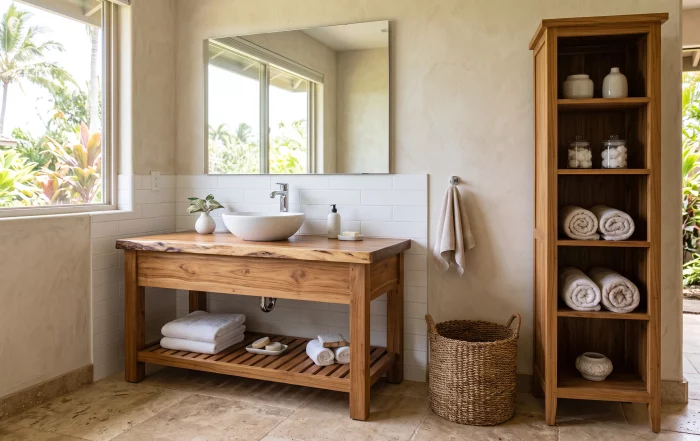
Finish selection should follow the same climate-aware thinking as furniture selection. Light and medium wood tones can create a relaxed island feel, while painted cabinetry, textured laminates, lacquer, or carefully sealed veneer can deliver a more tailored appearance. Hardware in appropriate finishes should be selected for durability, especially in homes exposed to ocean air.
IDS Maui brings extensive color and fabric expertise to these decisions. The showroom works with furniture and accessory lines including Bernhardt, Baker, Caracole, Century, Global Views, Jonathan Charles, Kravet, McGuire, Theodore Alexander, and others. Direct manufacturer relationships provide access to pieces and finishes that may not otherwise be available on Maui.
Plan an Island Home Closet That Supports the Whole Suite
A master closet should feel connected to the bedroom and bathroom rather than like an afterthought. Repeating a finish, metal tone, textile, or color from nearby spaces creates continuity. At the same time, the closet can have its own personality through a distinctive bench, patterned upholstery, statement pendant, art, or carefully chosen accessory.
This is especially important in vacation homes and rental properties. Guests value storage that is intuitive, durable, and easy to clean. Open hanging areas, generous luggage space, accessible drawers, and a comfortable place to sit can improve the experience without making the room feel institutional. For private residences, the same features support a more relaxed daily routine.
Consider maintenance and long-term performance
Island homes benefit from a realistic maintenance plan. Select surfaces that can be dusted and wiped without special products, and avoid placing delicate upholstery where wet swimwear or sandy clothing will frequently land. Use trays or small boxes for jewelry and accessories, and keep footwear separated from clean garments.
In homes with strong sun exposure, use window treatments or UV-filtering solutions where appropriate. Rotate or reposition movable pieces if fading is a concern. Periodically inspect hardware, drawer operation, and finish condition, particularly in properties near the coast. Thoughtful furniture selection at the beginning can reduce replacement and repair costs later.
Coordinate furniture, storage, and installation
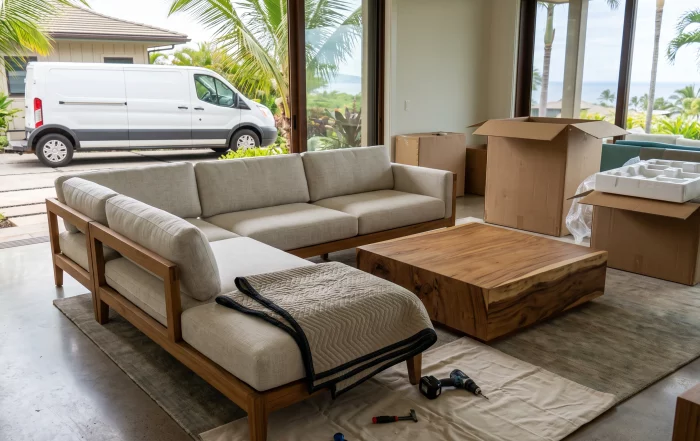
For a complete renovation, IDS Maui can support cabinet and closet design, lighting plans, AutoCAD drawings, furniture selection, custom bedding, and installation coordination. The design process may include programming, schematic design, design development, construction documentation, purchasing, shipping, and installation. That coordination is valuable when items are ordered from multiple manufacturers and transported to an island location.
Standard made-to-order pieces may take up to eight weeks, while Quick Ship items can arrive in approximately two to three weeks. Freight to Hawaii is generally about 10–15% of the item cost and is priced by cubic footage. IDS manages freight and damage claims for clients, helping simplify the process for homeowners furnishing remotely.
Conclusion: Create a More Comfortable Maui Master Closet
A successful island closet combines beauty, organization, and material intelligence. By accounting for humidity, salt air, sunlight, ventilation, and real daily routines, you can create storage that performs well without losing the character of a refined Maui home. The right dresser, armoire, bench, mirror, lighting, and custom elements can transform a crowded wardrobe into a calm dressing experience.
IDS Maui has served Hawaii for 27 years, with experience in residential interiors, hospitality environments, furniture, lighting, rugs, accessories, and custom solutions. Visit the showroom at 3031 Old Haleakala Highway in Makawao, open Monday through Friday from 10 a.m. to 6 p.m., or call 808-891-8800 to discuss your project. Whether you need one statement piece or a complete master suite plan, the IDS Maui team can help you request a quote, arrange a design consultation, and select furniture suited to island living.
Need Help With Your Space?
Ask us anything — furniture, design, or where to start.