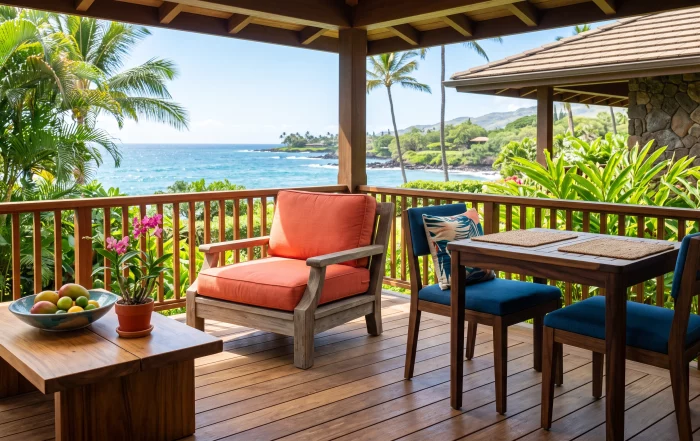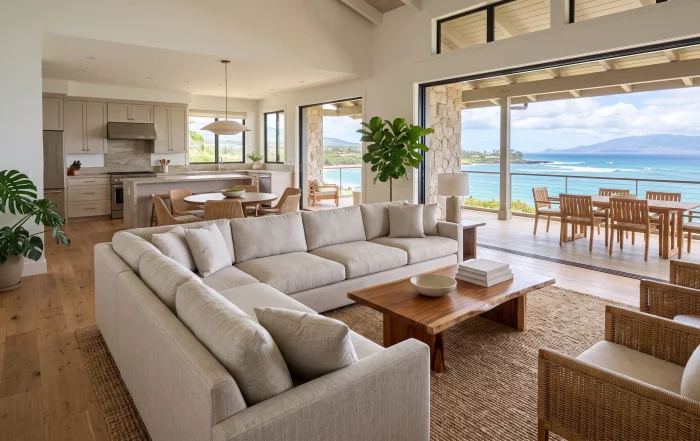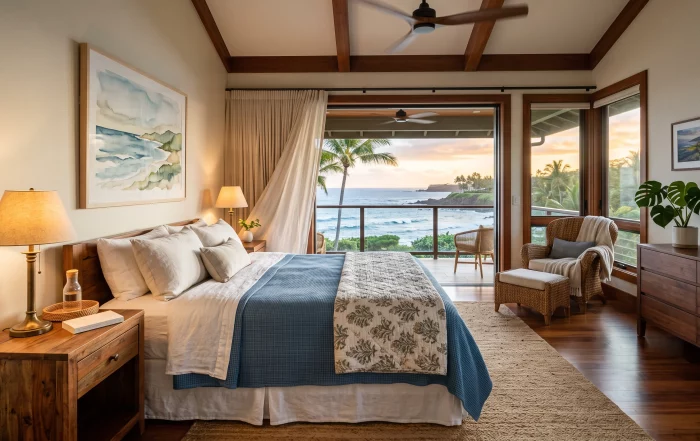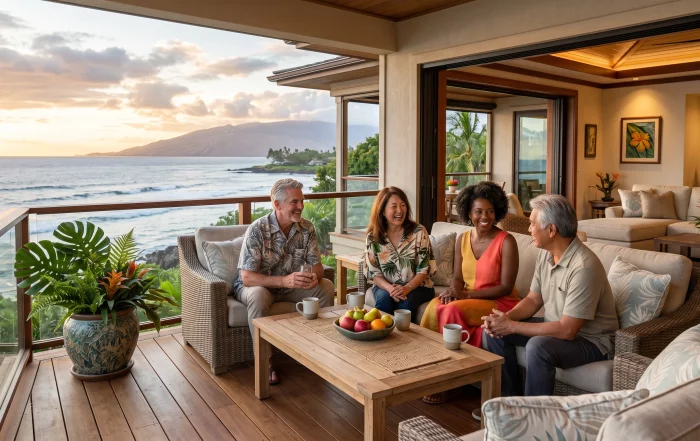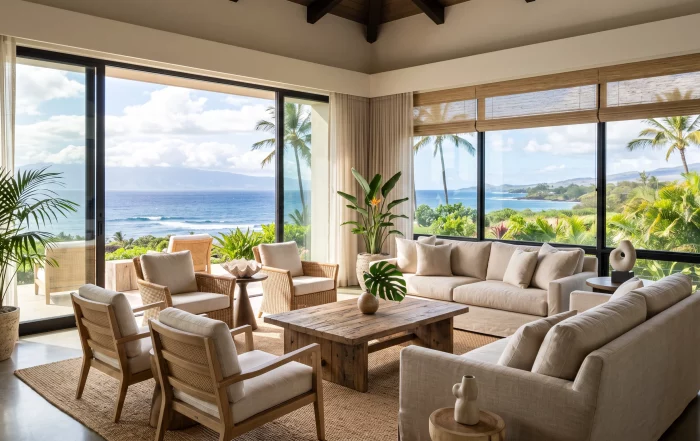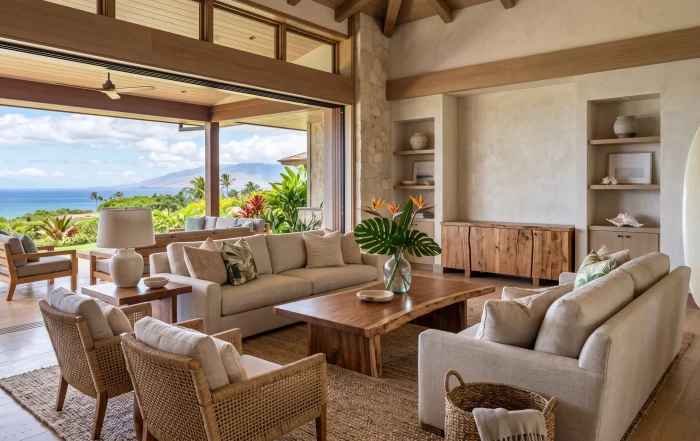
Choosing furniture color in Maui is not the same as choosing furniture color on the mainland. In Maui furniture color selection, the island’s intense, high-angle sunlight, brilliant skies, ocean reflections, and year-round indoor-outdoor lifestyle can make familiar neutrals look unexpectedly bright, cool, yellow, or washed out. A fabric that appears soft and sophisticated in a mainland showroom may feel stark in a Maui living room, while a warm wood finish can become exceptionally rich—or visually heavy—under island light.
This is why successful Hawaii interiors begin with the environment, not a trend board. The right colors must work with natural light, flooring, views, salt air, humidity, traffic, and the way your household actually lives. In this guide, you’ll learn how equatorial light influences furniture color, which undertones are most reliable, how to coordinate upholstery and wood, and why fabric and finish performance matter in Maui homes and vacation rentals. With 27 years of Hawaii-specific experience, IDS Maui helps homeowners select furniture, rugs, lighting, and accessories that remain beautiful in the real conditions of island living.
Maui Furniture Color Selection Begins with Equatorial Light
Maui is not directly on the equator, but it is far closer to it than most of the continental United States. That difference matters. Sunlight arrives with greater intensity for much of the year, and rooms can receive strong illumination through windows, sliding doors, skylights, and open lanai connections. Instead of reading color under subdued northern light or changing seasonal conditions, Maui interiors often experience a brighter, more consistent visual environment.
This affects both color and contrast. Light neutrals may appear nearly white. Pale gray can take on a blue cast beside the ocean or a green cast near lush landscaping. Cream, beige, and natural linen may become more golden in west-facing rooms. Dark furniture can look dramatic and grounded, yet it may also absorb visual light and make a smaller room feel more enclosed.
Why samples are essential
Color cards and online photographs are useful starting points, but they cannot predict how a finish or fabric will behave in your specific room. A sofa sample should be viewed near the windows, beside the flooring, and at different times of day. Morning light, midday sun, and late-afternoon warmth can all reveal different undertones.
Whenever possible, evaluate a larger sample rather than a small swatch. Scale changes perception, particularly with textured fabrics, patterned upholstery, and highly figured wood. Place samples next to existing stone, cabinetry, paint, and rugs instead of judging them in isolation. The goal is not to find a color that looks attractive in a showroom; it is to create a palette that stays balanced in your home.
Light direction changes the answer
East-facing rooms often receive clearer, cooler morning light, while west-facing spaces can become warm and intensely luminous later in the day. North-facing rooms may need warmth and reflectivity, whereas south-facing rooms can tolerate deeper tones if window exposure is carefully managed. Window treatments, glass tint, ceiling height, and surrounding landscape also influence the result.
This practical approach to equatorial light color theory is one reason professional testing is valuable. A Maui designer does not simply recommend “coastal colors.” Instead, the palette is considered in relation to orientation, views, finishes, and daily use.
How Hawaii Home Color Selection Responds to the Landscape
Maui’s landscape offers extraordinary inspiration: volcanic earth, pale sand, black lava rock, tropical foliage, cloud-softened mountains, and deep Pacific blue. However, copying those colors literally can produce a themed interior rather than a sophisticated one. The strongest palettes usually interpret the landscape through restrained undertones, varied textures, and carefully chosen accents.
For example, a room may use a warm ivory sectional, a weathered oak cocktail table, and a rug with muted charcoal and sand tones. Blue can then appear in a single accent chair, artwork, or pair of pillows. This creates a connection to the ocean without turning every surface turquoise. Similarly, botanical greens often work best as olive, eucalyptus, moss, or muted palm rather than highly saturated tropical green.
Reliable Maui palette families
- Warm mineral neutrals: Sand, putty, mushroom, limestone, and soft taupe complement wood, stone, and natural fiber rugs.
- Volcanic contrasts: Charcoal, graphite, iron, and black-brown add structure without competing with expansive views.
- Ocean-inspired accents: Smoky blue, blue-gray, deep teal, and faded indigo provide color with a more refined coastal character.
- Botanical tones: Olive, sage, fern, and muted palm connect interiors with Maui’s vegetation while remaining easy to layer.
- Sun-warmed hues: Terracotta, ochre, clay, and muted coral can bring energy to a neutral room when used selectively.
The best choice depends on the view and the room’s purpose. If windows already frame intense blue water, a quiet upholstery palette may allow the scenery to remain the focal point. If a room faces a dense green garden, warm neutrals and aubergine, rust, or charcoal accents can create definition. A rental property may benefit from a forgiving, flexible base, while a primary residence can support more distinctive color and custom upholstery.
Coordinate with fixed finishes first
Furniture should be selected after considering the elements that are expensive or difficult to change. Begin with flooring, cabinets, countertops, wall paint, stone, and architectural finishes. Then determine whether furniture should blend, contrast, or bridge the undertones.
For instance, orange-toned flooring may clash with a cool gray sofa, while a warm gray or mushroom textile can connect the two. Honey-toned wood may look more polished beside cream and olive than beside stark white. When the fixed finishes are unusually prominent, a custom rug or upholstery fabric can help unify the room rather than forcing every piece to match exactly.
Furniture Fabrics, Wood, and Finishes for Maui Conditions
Color is only one part of a durable island furnishing plan. Salt air, wind, humidity, intense sun, sand, and frequent indoor-outdoor movement can accelerate wear on fabrics, wood, leather, and finishes. A beautiful color that fades quickly or shows every mark may not be a practical choice for a busy family home or vacation rental.
That does not mean Maui furniture must look commercial or overly casual. Today’s performance textiles can offer softness, pattern, and sophisticated color while improving resistance to staining, fading, and everyday wear. The right selection depends on exposure and use. A shaded bedroom has different requirements from a lanai lounge, and a rarely used formal sitting area differs from a vacation rental great room.
What to evaluate before ordering
- Sun exposure: Identify direct sunlight, reflected glare, and rooms where furniture may sit near glass.
- Fiber performance: Ask how the fabric handles abrasion, cleaning, moisture, and fading.
- Color variation: Consider whether a subtle pattern or heathered weave will disguise normal use better than a flat solid.
- Wood species and finish: Confirm whether the tone complements the room and whether the finish is suitable for the intended location.
- Maintenance: Understand cleaning instructions before selecting upholstery, rugs, leather, or natural fibers.
- Replacement planning: For rentals and hospitality-style homes, choose core pieces that can be refreshed without redesigning the entire room.
Wood species deserve special attention. Open-grained woods bring warmth and tactile character, while darker stains can add visual weight and sophistication. Natural variation is part of the appeal, but strong sunlight may emphasize differences between surfaces over time. Protective placement, window treatments, and appropriate maintenance can help preserve the finish.
Lanai living requires a connected palette
Because Maui homes often flow directly from interior rooms to lanais, the indoor and outdoor furniture should feel related without being identical. One successful approach is to repeat a color family across both zones while changing the texture. For example, an indoor sofa might use a warm ivory performance fabric, while outdoor seating uses a related taupe or stone textile. Teak, powder-coated metal, woven materials, and indoor wood finishes can then create a gradual transition.
This continuity makes the home feel larger and more intentional. It also prevents a common problem: an interior that feels carefully designed while the lanai appears to be an unrelated afterthought. Outdoor furniture, rugs, cushions, and lighting should be selected for actual sun and weather exposure, not merely for appearance in a covered showroom.
Layering Color with Upholstery, Rugs, Lighting, and Accessories
A room rarely succeeds because of one perfect sofa color. It succeeds because color is repeated, softened, and contrasted across multiple materials. Furniture establishes the largest blocks of color, while rugs, lamps, art, pillows, drapery, and accessories add rhythm. In Maui, layering is especially useful because intense natural light can flatten pale rooms or exaggerate high-contrast combinations.
Start with a dominant color, a supporting color, and one or two accents. The dominant color may be a sectional, area rug, or wall treatment. The supporting color can appear in wood, occasional chairs, or drapery. Accent colors should be intentional rather than scattered randomly throughout the space.
Use texture to keep neutrals from feeling plain
Neutral does not have to mean bland. Linen-like upholstery, bouclé, leather, cane, woven grass, carved wood, metal, and stone can all occupy a similar color family while creating depth. This is often more successful than introducing many unrelated colors to make a room feel interesting.
Texture also helps a palette respond gracefully to changing light. A nubby fabric catches highlights differently from a smooth velvet or tightly woven performance textile. A brushed wood finish absorbs and reflects light in a different way from polished lacquer. These variations give a room movement from morning to evening.
Lighting can correct or amplify color
Artificial lighting becomes important after sunset, when the colors you selected must still feel comfortable. Warm bulbs may enhance beige, terracotta, and honey wood, but they can make some yellow undertones too strong. Cooler bulbs can sharpen blue-gray and white but may make a warm palette feel disconnected.
Use layered lighting rather than relying on one overhead fixture. A combination of ambient, task, and accent lighting allows you to control how furniture colors are perceived. Lamps, sconces, picture lights, and architectural lighting can highlight artwork or a textured wall without over-illuminating the entire room. IDS Maui provides access to lighting as well as furniture, making it easier to coordinate the entire visual environment.
For vacation rentals, color layering should also support photography. A room needs enough contrast to read clearly in listing images, but not so much visual busyness that it feels smaller or less restful. Durable, mid-tone upholstery, a well-scaled rug, and a few memorable accents often create a polished impression that appeals to a broad range of guests.
Maui Designer Color Expertise Makes the Process More Predictable
Furniture color decisions become more manageable when someone evaluates the complete setting rather than a single product. IDS Maui brings 27 years of Hawaii-specific experience to furniture, fabric, rug, lighting, and accessory selections. The showroom offers access to respected manufacturers including Bernhardt, Baker, Caracole, Century, Holly Hunt, Janus et Cie, McGuire, Kravet, Theodore Alexander, and other lines that are often unavailable elsewhere on Maui.
Many pieces can be made to order with selected dimensions, fabrics, finishes, cushions, legs, or arms. This is especially useful when a room has unusual proportions, a challenging view, or a strong existing finish that requires a precise color bridge. Quick Ship items may arrive in approximately two to three weeks, while standard made-to-order pieces commonly take up to eight weeks, with custom projects often requiring additional planning. IDS also coordinates freight and manages damage claims for clients.
For a single bedroom, furniture and accessories may range from approximately $4,000 to $14,000. Whole-home furnishing projects can range from $60,000 to $500,000 or more, depending on scope and selections. Whether you are furnishing a second home remotely, updating a vacation rental, or creating a complete primary residence, establishing a budget and priority list early helps focus the color strategy on the pieces that matter most.
Professional design support may include a focused consultation or a comprehensive process involving programming, schematic design, design development, construction documentation, administration, purchasing, shipping, and installation. The objective is not to impose a signature style. It is to help you make confident decisions that suit your architecture, lifestyle, climate, and investment.
Conclusion: Build a Maui Color Palette That Performs Beautifully
Maui’s light is one of the island’s greatest design assets, but it requires a more careful approach to color. Test fabrics in the actual room, study undertones beside fixed finishes, consider sun and salt exposure, and connect interior furniture with outdoor living areas. Warm mineral neutrals, softened ocean tones, botanical greens, and volcanic accents can create a sophisticated foundation, while texture and lighting keep the palette dimensional.
If you are planning Maui furniture color selection for a bedroom, vacation rental, lanai, or whole home, visit IDS Maui at 3031 Old Haleakala Highway in Makawao, Monday through Friday from 10 a.m. to 6 p.m. Call 808-891-8800 or contact the team through idsmaui.com to discuss furniture, rugs, lighting, accessories, custom options, or a design consultation. Serving Maui, Lanai, Molokai, Oahu, the Big Island, and the continental U.S., IDS Maui can help you turn island light into a lasting design advantage.
Need Help With Your Space?
Ask us anything — furniture, design, or where to start.