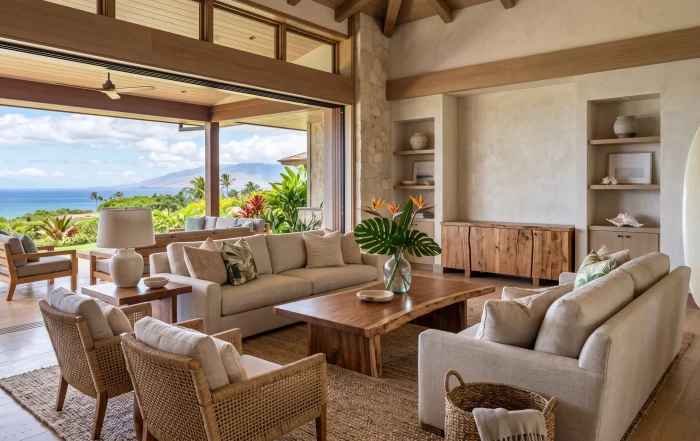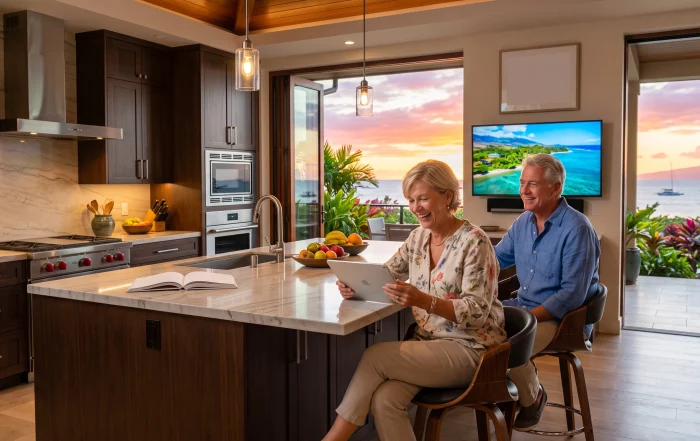
Maui Home Resilience Through Smart Furniture Choices begins with a simple idea: a beautiful home should also be prepared for the realities of island living. Salt air, trade winds, intense sunlight, humidity, indoor-outdoor transitions, and wildfire smoke can all affect how a space performs over time. The right furniture choices cannot replace structural upgrades, but they can make a home more comfortable, maintainable, flexible, and ready for changing conditions.
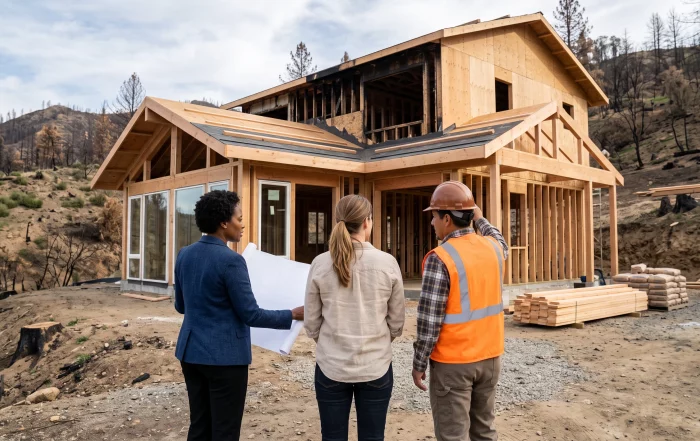
That matters especially as Maui continues rebuilding and planning for the future. In an August 2026 update, Governor Josh Green reported that 100% of wildfire debris had been cleared, 667 building permits had been issued, and 577 homes had been completed across Maui. The next phase is not simply about replacing what was lost; it is about creating homes that support safety, wellness, accessibility, and long-term livability.
In this guide, you will learn how to choose Maui furniture for coastal exposure, wildfire-conscious living, flexible room layouts, lanai use, and everyday durability. You will also see why working with a Hawaii-based showroom such as IDS Maui can make furniture selection more practical than relying on generic mainland advice.
Maui Home Resilience Through Smart Furniture Choices Starts With the Local Environment
Hawaii’s climate is comfortable, but it is not neutral from a furniture perspective. The National Weather Service describes Hawaii as having mild temperatures, moderate humidity, persistent northeasterly trade winds, and significant rainfall differences over short distances. A home in Makawao, Kula, Lahaina, Wailea, or Kapalua may therefore experience very different levels of wind, moisture, sun, and salt exposure.
Furniture needs to respond to the specific location of the home, not just its architectural style. A bright, breezy oceanfront room may require different fabrics and finishes from a protected Upcountry interior. Likewise, a vacation rental with frequent guest turnover needs more forgiving upholstery than a lightly used second home.
Think in terms of exposure zones
Before ordering a sofa, dining table, or outdoor sectional, divide the home into practical zones:
- High-exposure areas: lanais, sunrooms, ocean-facing rooms, entryways, and spaces near open doors.
- Moderate-exposure areas: living rooms with filtered light, dining areas, and bedrooms with regular ventilation.
- Protected areas: interior rooms, media rooms, closets, and spaces away from windows or exterior openings.
High-exposure areas call for fade-aware textiles, corrosion-resistant hardware, stable finishes, and easy-clean surfaces. Protected rooms offer more freedom to use delicate materials, deeper colors, polished woods, or specialty upholstery.
Choose durability without making the home feel commercial
Resilient design should not look institutional. Performance fabrics now come in sophisticated textures, subtle patterns, and layered colors that support a high-end residential aesthetic. Tight weaves, solution-dyed fibers, treated indoor-outdoor textiles, and removable cushion covers can all improve maintenance without sacrificing style.
For wood furniture, the finish and maintenance schedule matter as much as the species. In a coastal home, use coasters, avoid placing pieces directly beside open windows during wind-driven rain, and inspect exposed surfaces periodically. Metal components should be selected carefully, especially on outdoor furniture, where salt air can accelerate corrosion.
How to Select Salt Air Resistant Furniture for Maui Rooms
Salt air resistant furniture is not one universal product category. Instead, resilience comes from combining appropriate materials, construction, placement, and care. The closer a home is to the ocean—and the more often doors and windows remain open—the more important those decisions become.
Indoor furniture for coastal homes
For sofas, sectionals, and lounge chairs, ask about the fiber content, abrasion performance, cleaning code, cushion construction, and replacement availability. A durable textile is especially valuable in homes that host visiting family, pets, or vacation-rental guests.
Leather can work beautifully in Maui, but it should be protected from direct sunlight and excessive heat. Some leathers develop a desirable patina, while others may dry, fade, or show uneven color when exposed to strong sun. Upholstered furniture may offer more flexibility when the fabric is carefully selected and cushions can be rotated.
Case goods—including dressers, consoles, sideboards, nightstands, and entertainment units—benefit from stable construction and quality finishes. Veneers can be highly practical when properly manufactured, while solid wood may be preferred for certain heirloom pieces. The best choice depends on placement, maintenance expectations, and the desired visual character.
Lanai and outdoor furniture
Indoor/outdoor living is one of Maui’s greatest lifestyle advantages, but it also places furniture under greater stress. Outdoor pieces should be evaluated for:
- Powder-coated or otherwise corrosion-conscious metal finishes.
- Outdoor-rated fabrics that resist fading and moisture.
- Quick-drying cushions and breathable construction.
- Frames that can tolerate wind without becoming difficult to move.
- Replacement cushions or fabric options for future refreshes.
Even the best outdoor furniture benefits from protection. Use breathable covers rather than trapping moisture beneath plastic, and move smaller pieces during severe wind events. For open lanais, consider anchoring or positioning heavier tables and seating where they are less exposed to gusts.
IDS Maui carries indoor and outdoor furniture from respected manufacturers, including Janus et Cie, McGuire, Kravet, Bernhardt, Baker, Century, and other high-end lines. Because many pieces are ordered directly from manufacturers, clients can often explore materials, dimensions, finishes, and fabrics that are not commonly available elsewhere on Maui.
Furniture Planning for Wildfire-Aware and Healthy Maui Homes
Furniture is not a substitute for a fire-resistant roof, defensible space, protected openings, or professional building guidance. However, interior furnishings can support a more adaptable and health-conscious home. FEMA’s Maui Wildfires Mitigation Assessment Team specifically recommends a multi-hazard approach because Maui faces wildfire, high winds, flooding, tsunami, and seismic events. The agency’s 2025 residential advisory focuses on measures that reduce ignition and fire spread, particularly where setbacks and defensible space may be limited.
That broader mindset can inform interior decisions. A resilient home should be easier to clean, easier to reconfigure, and less dependent on fragile finishes.
Create a practical clean-air room
During smoke events, homeowners may need a room where doors and windows can remain closed while air filtration operates. The U.S. Environmental Protection Agency recommends high-efficiency HVAC filters and properly sized portable air cleaners as tools for reducing indoor smoke. The EPA also advises selecting air cleaners that do not produce ozone.
From a furniture standpoint, a clean-air room should have:
- Enough clearance around portable air cleaners for proper airflow.
- Minimal clutter and fewer difficult-to-clean upholstered items.
- Washable rugs or smooth flooring that can be cleaned efficiently.
- Comfortable seating for extended periods indoors.
- Storage for replacement filters, blankets, chargers, and essential supplies.
Read the EPA’s indoor air filtration guidance for wildfire smoke before finalizing the room’s layout. A designer can then help integrate filtration equipment without making the space feel temporary or utilitarian.
Favor flexibility and clear circulation
Heavy, oversized furniture can make a home harder to adapt after an emergency, during maintenance, or as household needs change. Consider sectionals with movable components, occasional tables that can be relocated, benches that provide extra seating, and storage pieces that keep pathways clear.
Accessibility is another part of resilience. Wider circulation routes, stable seating with supportive arms, appropriate table heights, and well-placed lighting can support aging in place and reduce fall risk. These choices are useful whether the homeowner is planning for future needs, welcoming older relatives, or operating a vacation property for guests of varying abilities.
Use Color, Light, and Materials to Improve Comfort
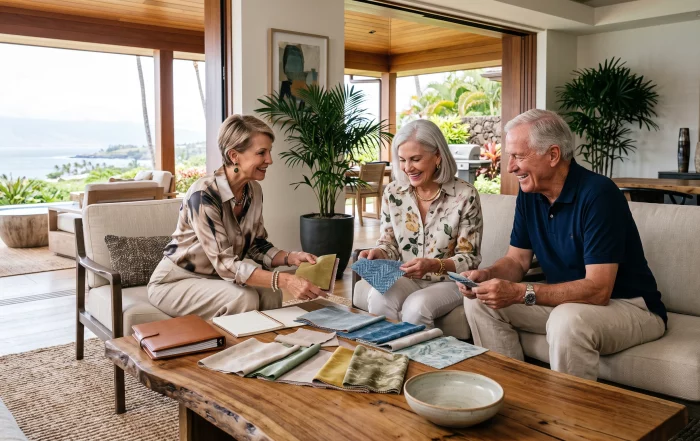
Maui’s light changes how color reads indoors. Colors that appear soft and balanced on the mainland may feel more intense under tropical sunlight. Reflective floors, pale walls, strong window exposure, and ocean views can all amplify certain undertones. This is why a color scheme should be evaluated in the actual room, at different times of day, rather than selected from a small sample under showroom lighting.
A successful Maui palette often combines a grounding base with carefully controlled accents. Natural woods, woven textures, mineral-inspired neutrals, and saturated botanical or ocean tones can create a sense of place. However, color should also support maintenance. Very pale upholstery may show dust and stains quickly, while extremely dark textiles can reveal salt residue, lint, or fading.
Balance sun exposure with furniture placement
Furniture placement can help reduce premature fading. Rotate accent chairs and smaller pieces when practical, use window treatments or solar shades, and avoid placing valuable artwork or delicate upholstery in direct afternoon sun. The U.S. Department of Energy explains that shading, glazing, and window placement influence solar heat gain and indoor comfort. Its guidance on building orientation, daylighting, and solar heat gain is useful when coordinating furniture with a larger renovation.
Lighting design matters, too. Layered ambient, task, and accent lighting reduces reliance on harsh overhead fixtures and makes rooms more comfortable after sunset. Table lamps, floor lamps, sconces, and dimmable fixtures can also highlight artwork and architectural details without requiring a complete remodel.
Make maintenance part of the design
Ask how each material will age, not only how it looks on delivery day. A resilient specification should include a care plan:
- Identify which fabrics can be professionally cleaned or spot-treated.
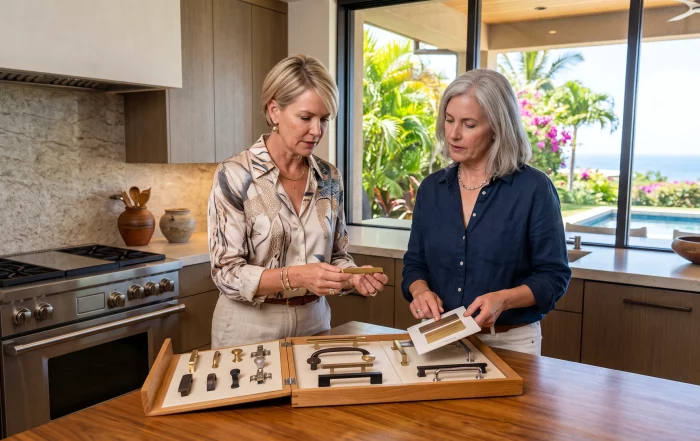
- Confirm whether replacement covers, cushions, or hardware can be ordered.
- Record finish names, fabric codes, and manufacturer information.
- Schedule periodic inspections for outdoor pieces and exposed wood.
- Use rugs and runners to protect high-traffic flooring and define circulation.
This approach is particularly valuable for vacation rentals, where small problems can become expensive between guest stays. Durable rugs, wipeable occasional tables, performance upholstery, and well-designed storage can help protect the property while maintaining a welcoming atmosphere.
Why Local Expertise Improves Maui Furniture Decisions
Ordering furniture for an island home involves more than choosing a style online. Freight, cubic footage, lead times, damage claims, installation, room dimensions, and access conditions all affect the final result. Made-to-order pieces may offer better proportions and more resilient materials, but they need to be coordinated early.
IDS Maui has served Hawaii for 27 years, with a showroom at 3031 Old Haleakala Highway in Makawao. The team works with homeowners, second-home buyers, hospitality clients, and vacation-rental owners across Maui and other Hawaiian islands. Custom furniture can be specified with different dimensions, arms, legs, finishes, cushions, and fabrics, with typical made-to-order lead times of approximately 8–12 weeks depending on the product.
That planning is especially helpful when a home requires a whole-house furnishing package. IDS can coordinate furniture, lighting, rugs, accessories, custom bedding, AutoCAD drawings, 3D renderings, and shipping. Freight to Hawaii is commonly estimated at approximately 10–15% of item cost, priced by cubic footage, while quick-ship items may arrive sooner. IDS also manages freight and damage claims for clients.
For homeowners who live off-island, this coordination can reduce guesswork. For local homeowners, visiting the Makawao showroom makes it easier to compare fabrics, finishes, seating comfort, scale, and color in person.
Build a More Resilient Maui Home With IDS Maui
Furniture is part of a home’s resilience because it shapes how comfortably, safely, and efficiently the home functions every day. In Maui, smart choices account for salt air, sunlight, trade winds, humidity, indoor-outdoor living, wildfire awareness, accessibility, and long-term maintenance.
Whether you are furnishing one bedroom, renovating a vacation rental, completing a second home, or coordinating a full-house installation, IDS Maui can help translate those conditions into practical specifications. The result can be more than a beautiful room: it can be a home with materials, proportions, and furnishings selected for the way island life actually unfolds.
Call IDS Maui at 808-891-8800 or visit the Makawao showroom Monday through Friday from 10 a.m. to 6 p.m. Discuss your furniture, lighting, rug, outdoor, or accessory needs with a team that understands Hawaii-specific design. A consultation and quote can help you create a Maui home that is welcoming today and better prepared for tomorrow.
Need Help With Your Space?
Ask us anything — furniture, design, or where to start.