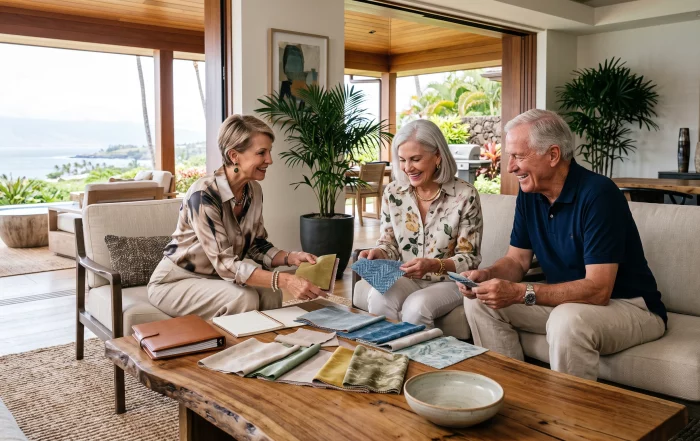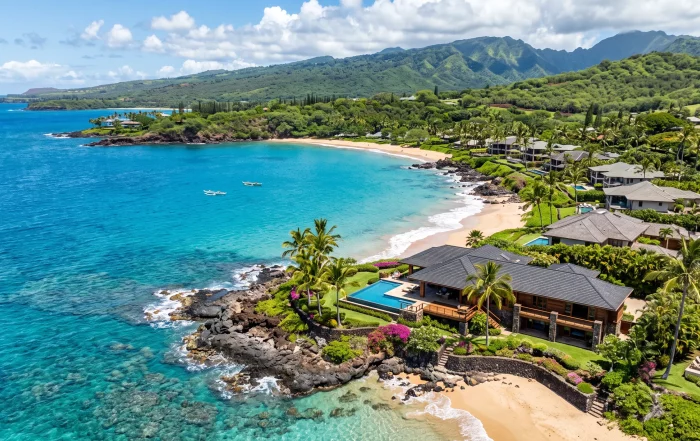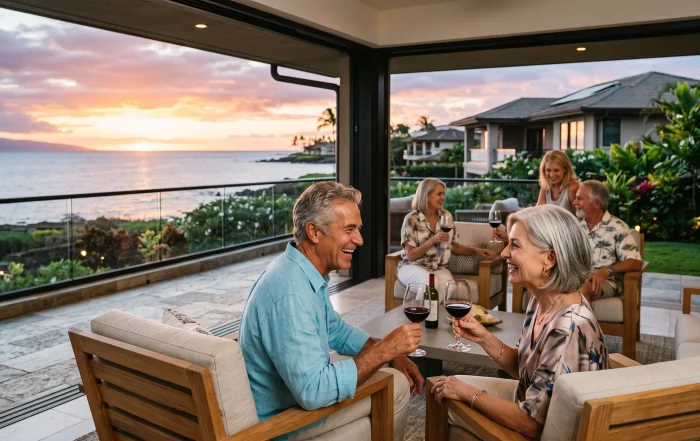
Maui Furniture Upholstery Fabrics face a tougher test than fabrics in many mainland homes. Salt carried on ocean breezes, intense UV exposure, humidity, open windows, and year-round lanai living can fade colors, weaken fibers, encourage mildew, and shorten the life of otherwise beautiful furniture. The right choice is not simply the fabric with the highest “double rub” number. Fiber type, dye method, weave, finish, cushion construction, furniture placement, and maintenance all matter.
For homeowners, vacation-rental owners, and second-home buyers furnishing remotely, this guide explains which upholstery fibers generally perform best in Maui conditions, where natural fibers still make sense, and what to ask for when selecting fabrics for sofas, dining chairs, accent chairs, sectionals, and outdoor furniture.
Maui Furniture Upholstery Fabrics: What Actually Makes a Fiber Durable?
“Performance fabric” is not one specific fiber. It is a broad category that can include solution-dyed acrylic, polyester, olefin, coated fabrics, and carefully engineered blends. Two fabrics made from the same fiber can perform very differently depending on how the yarn was dyed and how the textile was woven.
Solution-dyed acrylic: the strongest all-around choice for exposed areas
For furniture near large windows, covered lanais, pool areas, or frequently open doors, solution-dyed acrylic is usually the first fiber to investigate. In this process, color is integrated into the fiber before the yarn is spun, rather than applied only near the surface. That helps the fabric resist fading and makes it easier to clean without sacrificing color as quickly.
Sunbrella’s marine information is a useful benchmark for coastal performance. The company states that its marine fabrics are designed to resist fading during exposure to sun, salt, and chlorine, and it offers a 10-year warranty against fading on the referenced marine canvas collection. Its marine-fabric guide also reports that solution-dyed acrylic used in Sunbrella products can retain approximately 80% to 85% of its strength after more than 10 years of use. See the Sunbrella marine canvas performance information and the Sunbrella guide to choosing marine fabric for the manufacturer’s stated details.
That does not mean every acrylic fabric is indestructible. A light-colored cushion can still show sunscreen, food, dust, and mildew staining. Seams, welting, zippers, foam, and the furniture frame may fail before the fabric does. However, for UV resistant furniture fabric in a Maui living room or sheltered outdoor setting, solution-dyed acrylic offers an excellent balance of color retention, softness, cleanability, and coastal resilience.
Polyester and olefin: practical choices when specified correctly
Polyester can be a strong option for indoor upholstery, especially when it is solution-dyed, UV-tested, or blended with other performance fibers. It is often more affordable than premium acrylic and can provide good resistance to abrasion, staining, and everyday use. However, “polyester” alone does not guarantee excellent Maui climate fabric performance. Ask whether the specific textile has been tested for lightfastness and whether it is approved for indoor, outdoor, or transitional use.
Olefin is another useful fiber for selected coastal applications. It is naturally resistant to moisture and many common stains, and it can perform well in casual, high-use rooms. Its limitations vary by construction and product line, so it should not automatically be treated as a substitute for a high-quality solution-dyed acrylic in direct, all-day sun.
The Best Fabrics for Coastal Homes in Maui, Room by Room
The best fabric depends on exposure. A shaded bedroom in Kula does not need the same specification as a poolside sectional in Wailea. Instead of choosing one fiber for the entire house, divide the project into exposure zones.
Direct sun, open doors, and lanais
For a sectional facing the ocean, a breakfast nook with intense morning sun, or furniture that moves between the living room and lanai, prioritize:
- Solution-dyed acrylic or a fabric specifically labeled for outdoor or high-UV use.
- Documented colorfastness or lightfastness testing.
- Moisture-resistant construction and mildew-resistant performance.
- Removable cushion covers whenever possible.
- Textured, heathered, or multi-color patterns that disguise fine dust and salt residue.
Coated polyester can also make sense for outdoor seating, roller shades, and highly exposed applications. Phifer’s 2025–2026 outdoor collections, for example, describe vinyl-coated polyester yarns as UV- and fade-resistant. That kind of construction is particularly practical where easy cleaning and dimensional stability matter more than a soft, residential hand.
For a refined interior, however, a furniture-grade solution-dyed acrylic or performance blend often looks and feels more appropriate than a visibly coated textile. The goal is to match the technical construction to the design setting rather than putting outdoor-looking fabric on every indoor piece.
Bedrooms, dining rooms, and lower-exposure interiors
Bedrooms and enclosed rooms offer more flexibility. Linen-look performance blends, polyester chenilles, treated cotton blends, and wool-blend textiles may all work when direct sun is limited and the room is climate-controlled. Natural fibers can provide the most beautiful texture and breathability, but they require more careful placement and maintenance in Hawaii.
Cotton, linen, rayon, and silk are not automatically wrong for Maui. They are simply less forgiving in strong sun, humid conditions, and high-turnover vacation rentals. Use them for drapery, occasional chairs, decorative pillows, or protected seating rather than assuming they are ideal for a heavily used sofa beside an open ocean-facing door.
For dining chairs, consider stain resistance and cleanability as much as UV performance. A tightly woven polyester or performance blend may be more practical than a delicate natural fiber, particularly in a vacation rental where guests may not report spills immediately.
Why Salt Air and UV Exposure Require Different Tests
Salt air does not damage every textile in the same way. Salt residue can attract moisture, collect dirt, and create a gritty surface that contributes to soiling and abrasion. UV exposure, meanwhile, can fade dyes and gradually weaken fibers. Humidity adds another concern: slow drying and trapped moisture can contribute to mildew or odor if cushions are placed too close together or cleaned improperly.
Sunbrella notes that its marine fabrics are generally unaffected by fresh or salt water, but salt water can leave residue as it dries. The company recommends rinsing that residue with clean water rather than allowing it to accumulate. Its salt-water fabric-care guidance is a helpful reminder that “salt resistant” does not mean “never clean.”
Look beyond abrasion numbers
High double-rub numbers are often used as a shortcut for durability, but they do not predict every form of failure. The Association for Contract Textiles explains that fabric performance also involves abrasion, colorfastness to light, wet and dry crocking, physical properties, and flammability. Its current performance guidance distinguishes between indoor and outdoor applications rather than treating all upholstery as interchangeable. Review the Association for Contract Textiles performance guidelines when comparing specifications.
ACT also cautions that abrasion results above its guidelines are not a reliable indicator of longer service life. Inappropriate cleaning, poor maintenance, physical abuse, and incorrect application can be more important causes of field failure than abrasion alone. For Maui furniture upholstery fabrics, that is especially relevant: a fabric with a spectacular laboratory number can still fade in a sunny window or suffer from neglected salt and sunscreen residue.
Questions to ask before ordering
- Is the fabric intended for indoor, outdoor, or transitional use?
- Is the color solution-dyed, and what lightfastness information is available?
- Has the fabric been tested for mildew resistance, water resistance, or UV exposure?
- What cleaning method does the manufacturer approve?
- Are the cushion covers removable and replaceable?
- Will the frame, foam, trim, and finish perform as well as the upholstery?
Natural Fibers, Blends, and Design Trade-Offs in Hawaii
Natural fibers remain valuable in high-end interior design because they deliver depth, softness, irregularity, and visual character that synthetic fabrics sometimes struggle to replicate. Linen can create a relaxed island look. Wool offers warmth, resilience, and sophisticated texture. Cotton velvet can bring saturated color and richness to a protected room.
The key is placement. Use natural fibers where exposure is controlled, and reserve high-performance synthetics for the pieces that experience direct sun, wet swimsuits, sunscreen, pets, children, or frequent guest turnover. A layered scheme can include a durable performance sofa, natural-fiber accent pillows, a wool area rug away from the lanai opening, and a more decorative chair positioned out of direct light.
Blends can offer a useful compromise, but the percentage of each fiber is only part of the story. Construction, backing, dye method, and finish can influence performance just as much. A tightly woven, well-tested blend may outperform a loosely woven 100% synthetic fabric in everyday use, while a beautiful natural textile may be the right choice for a low-use reading chair.
Color selection matters, too. Maui’s strong natural light changes how undertones read indoors. Warm neutrals, mineral tones, greens, blues, and coral accents can appear more intense or more reflective than they do in a mainland showroom. Medium-value, complex colors and subtle patterns often hide salt dust and everyday wear better than very pale solids or saturated dark fabrics.
At IDS Maui, fabric selection is considered alongside furniture scale, window orientation, flooring, paint, wood species, and the way each room connects to outdoor living. That broader approach helps prevent a common mistake: choosing a durable upholstery fabric but placing it on a frame, finish, or cushion system that is not suited to the same environment.
How to Extend the Life of Upholstered Furniture in Maui
Even the best salt air resistant fabrics in Hawaii benefit from simple maintenance. Vacuum upholstery regularly using the appropriate attachment, especially along seams and under cushions where sand can collect. Blot spills promptly instead of rubbing them deeper into the weave. Follow the manufacturer’s cleaning instructions, because an approved fabric can still be damaged by the wrong solvent, bleach concentration, or extraction method.
For exposed seating, consider solar shades, sheer window treatments, or strategic furniture placement. Rotate loose cushions when the manufacturer permits it, and allow damp cushions to dry fully before stacking or storing them. On a lanai, breathable covers can reduce exposure, but completely airtight covers may trap moisture and create a different problem.
Furniture construction deserves equal attention. High-quality foam, properly engineered suspension, corrosion-resistant hardware, sealed wood, and suitable outdoor finishes can make a meaningful difference. Upholstery is only one part of a coastal furniture system.
Choose Maui Upholstery Fabric With a Long-Term Plan
The best answer to “Which fibers survive salt air and UV?” is usually not one fiber for every room. For direct exposure, solution-dyed acrylic is often the most dependable upholstery starting point. UV-tested polyester, olefin, and coated polyester can also perform well when selected for the right application. Natural fibers and luxurious blends remain excellent choices in protected interiors, where their texture and beauty can be enjoyed without asking them to endure constant sun, salt, and moisture.
IDS Maui has served Hawaii for 27 years, with experience specifying furniture, fabrics, finishes, and accessories for island homes, second residences, vacation rentals, and hospitality environments. The team can help compare fabric samples, coordinate custom dimensions and finishes, and identify furniture lines that are not otherwise widely available on Maui.
Call 808-891-8800 or visit the IDS Maui showroom at 3031 Old Haleakala Highway in Makawao, Monday through Friday from 10 a.m. to 6 p.m. Bring your room dimensions, photographs, budget, and exposure concerns. A thoughtful fabric decision today can help your furniture look beautiful—and perform reliably—for years in the Maui climate.
Need Help With Your Space?
Ask us anything — furniture, design, or where to start.