Three years after the devastating 2023 Maui wildfires, Lahaina homeowners are navigating one of the most complex rebuilding processes in Hawaii’s recent history. Beyond structural reconstruction and fire-code compliance, the interior design decisions you make now will determine whether your rebuilt home feels resilient, livable, and truly yours. This guide walks you through the interior design priorities that matter most for fire-damaged homes in Lahaina—from material selection and durability to the emotional comfort of a space designed for healing and everyday function.
Understanding the Lahaina Rebuild Timeline and Current Progress
The scale of the Lahaina recovery is significant. As of late 2026, 702 households were still relying on temporary FEMA housing, though 577 residential units have been rebuilt or newly constructed and 315 homes are under construction. While employment among fire survivors has climbed to 80%, up from 60% a year prior, the pace of interior finishing remains slower than many anticipated.
For homeowners, this timeline creates both a challenge and an opportunity. The extended reconstruction period means you have time to think deliberately about interior choices rather than rushing through them. However, it also means managing temporary housing, evolving budgets, and the emotional weight of planning a space from scratch. Understanding where you are in the broader recovery process helps you set realistic expectations for your own project timeline.
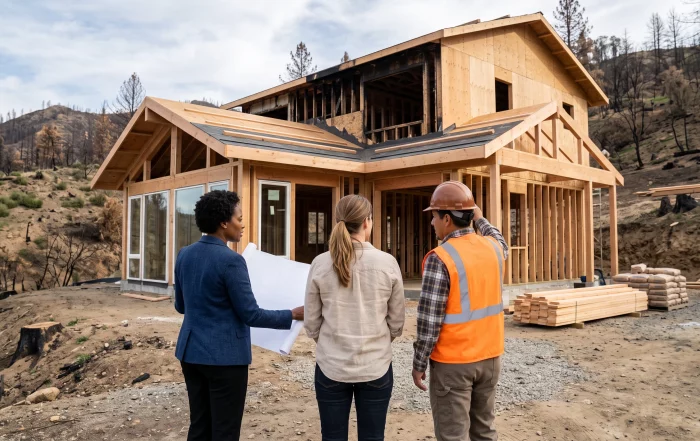
The County of Maui’s Hoʻokumu Hou Single-Family Homeowner Reconstruction Program offers twelve home design options and up to $1.2 million in assistance to eligible homeowners. If you’re working within this program or any rebuilding framework, coordinating your interior design with the architectural and construction team from the earliest stages ensures that your chosen finishes, lighting, storage, and furniture layout all work together as a complete system.
Why Interior Design Coordination Matters Before Construction Begins
One of the most common mistakes in post-fire rebuilding is treating interior design as an afterthought—something to handle once the walls are up and the roof is on. In reality, successful Lahaina home rebuilds begin with interior planning that happens in parallel with construction documents.
Coordinating with Your Building Team
Your interior choices must align with fire-resistant roofs, walls, windows, doors, vents, and exterior assemblies specified by your architect and builder. For example, if your builder has selected high-performance windows that reduce UV transmission, your fabric and artwork selections should reflect that protection level. If your floor plan includes a large lanai, the interior furniture and finishes need to transition seamlessly to outdoor-rated pieces and materials.
This coordination also affects practical systems: electrical outlets for lamps and charging, HVAC returns that influence furniture placement, plumbing rough-ins for kitchen islands or bathroom vanities, and storage solutions that must be framed during construction rather than added later. A phased design approach—starting with programming and schematic planning before selecting finishes—reduces costly changes and ensures every interior decision supports the building system.
Planning for Lahaina’s Specific Climate Challenges
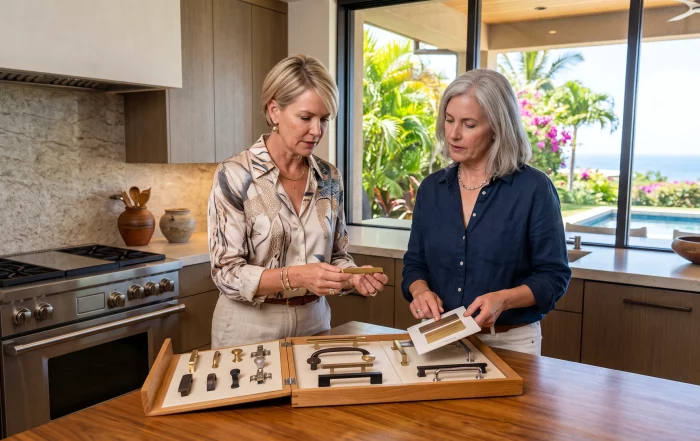
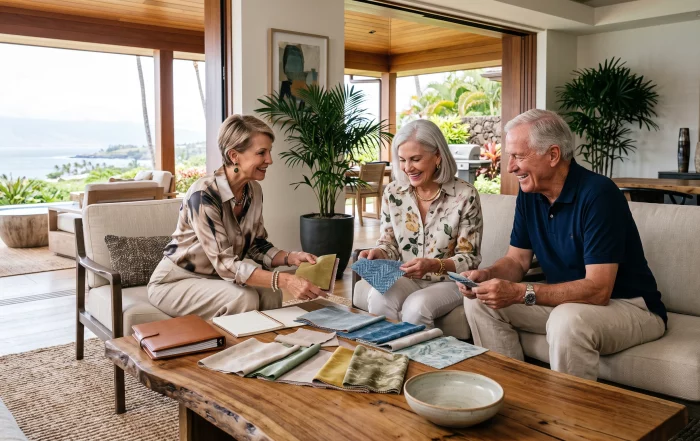
Hawaii’s position closer to the equator creates unique interior design demands that mainland advice often overlooks. Bright daylight intensifies warm tones, reveals undertones in paint and fabrics, and accelerates fading far faster than on the mainland. Salt air and wind degrade metal hardware, wood finishes, outdoor fabrics, and lanai furniture with remarkable speed. Material boards should always be reviewed in your actual home, at different times of day, and near windows where the strongest exposure occurs.
This is why fiber content, finish quality, and maintenance planning matter more in Lahaina than trend labels. A fabric marketed as “natural” or “coastal” may look beautiful in a showroom but fade or deteriorate within months if it lacks UV protection and salt-air resistance. The same applies to wood species, paint finishes, and hardware coatings.
Selecting Durable Materials for High-Traffic Spaces
Rebuilding furniture collections all at once can feel overwhelming, but a strategic material plan makes the process clearer and more manageable. Focus first on the rooms that support daily life: the primary bedroom, kitchen and dining area, living room, and essential guest or family spaces. Then layer in lighting, rugs, artwork, outdoor furnishings, and accessories in coordinated phases.
Flooring, Surfaces, and Upholstery
In high-traffic areas, porcelain or stone surfaces outperform traditional materials in Lahaina’s climate. They resist salt spray, UV exposure, and heavy use without requiring constant professional maintenance. For upholstery, solution-dyed or performance fabrics designed for rooms that open to a lanai will hold color and resist staining far better than delicate natural fibers.
- Kitchen and dining: Commercial-grade upholstery on dining chairs; hardwearing wood, stone, or high-quality composite surfaces on tables and counters
- Living areas: Performance fabrics for family rooms; outdoor-rated furniture with corrosion-resistant hardware for covered and uncovered lanai spaces
- Bedrooms: Durable bedding with dependable support; finishes that can be repaired rather than replaced after minor wear
- Flooring: Rugs that can be cleaned and replaced in sections when practical; UV-conscious window treatments that protect furnishings without eliminating natural light
- Storage: Closed storage for textiles, games, electronics, and emergency supplies to protect items from salt air and dust
The goal is not to create a generic, institutional look but to select materials that are both beautiful and practical. A Lahaina home may benefit from natural textures, relaxed proportions, shaded lighting, and colors inspired by ocean, volcanic landscape, and tropical foliage—but only when those choices are backed by finishes and fibers that actually perform in the local environment.
Creating Emotional Comfort and Personal Connection
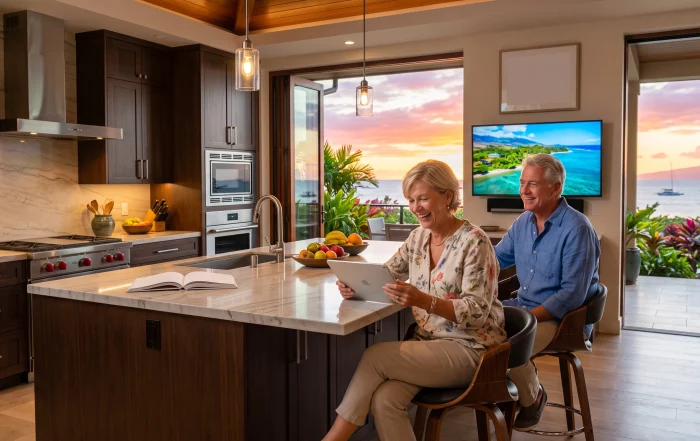
A rebuilt home should not feel like a showroom or a constant reminder of what was lost. It should support rest, privacy, connection, and a sense of control. This emotional dimension of interior design is as important as durability and function, especially for families rebuilding after trauma.
Biophilic Design and Color Layering
Biophilic design brings nature indoors through views, natural textures, indoor plants where suitable, organic forms, and visual connections to the landscape. Color and fabric layering can make a home feel distinctly personal. Some homeowners prefer a restrained palette with subtle references to Lahaina; others want saturated color, pattern, and collected objects. There is no single “Maui look”—the right design reflects the people who live there.
Consider softer lighting, acoustic rugs, and layered window treatments that create calm and reduce noise. Design an uncluttered bedroom, a reading corner, or a lanai that supports morning coffee and evening conversation. These spaces give residents control over their environment and support emotional recovery alongside physical rebuilding.
Aging-in-Place and Accessibility Planning
Wider clearances, comfortable seating heights, lever hardware, better task lighting, curbless showers, and flexible guest rooms are easier and less expensive to address during a rebuild than later. These choices support residents, visiting parents, children, and guests without making the home look clinical or institutional.
Managing Lead Times, Shipping, and Custom Furniture Options
For homeowners rebuilding in Lahaina, lead times and shipping logistics are practical realities that affect your timeline and budget. Quick Ship items typically arrive in 2–3 weeks, while standard made-to-order furniture can take up to 8 weeks or longer depending on the manufacturer and freight schedule. Shipping to Hawaii is commonly priced by cubic footage and may run approximately 10–15% of item cost.
Made-to-order furniture becomes especially valuable when rebuilt homes have unusual dimensions, tight stairways, compact bedrooms, or indoor-outdoor rooms. Custom options may include dimensions, legs, arms, fabric, finish, and cushion construction. A professional purchasing team can coordinate orders, inspect deliveries, and manage freight or damage claims when problems occur—a service that protects your investment during an already stressful time.
Next Steps: Bringing Your Lahaina Rebuild Vision to Life
Rebuilding after fire is complex, but a structured design process reduces stress and ensures your finished home works as a complete system. Start with programming: determine how many people will live in the home, how often guests will visit, whether the property is a primary residence or vacation rental, and which belongings must be accommodated. Develop a schematic furniture plan before selecting finishes or placing orders.
At IDS Maui, we’ve served Hawaii for 27 years with deep expertise in Lahaina’s climate, hospitality environments, custom furnishings, color, fabrics, lighting, and whole-home installations. We approach projects through six coordinated phases: programming, schematic design, design development, construction documentation, construction administration, and purchasing, shipping, and installation. That structure is helpful when a project includes cabinets, closets, lighting, plumbing fixtures, appliances, furniture, custom bedding, rugs, and accessories.
Whether you’re furnishing a single bedroom or an entire home, we can help you select durable, beautiful pieces from manufacturers like Bernhardt, Baker, Caracole, Century, Global Views, Janus et Cie, McGuire, Kravet, and Theodore Alexander—many of which are not otherwise available on Maui. Our showroom is located at 3031 Old Haleakala Highway in Makawao and is open Monday through Friday from 10 a.m. to 6 p.m.
Ready to start your interior design planning? Call us at 808-891-8800 or visit our showroom to discuss your Lahaina rebuild project. We’re here to help you create a home that is resilient, beautiful, and uniquely yours.
Need Help With Your Space?
Ask us anything — furniture, design, or where to start.