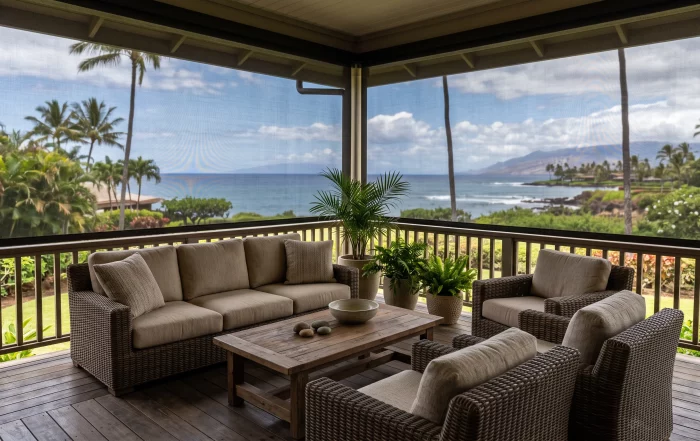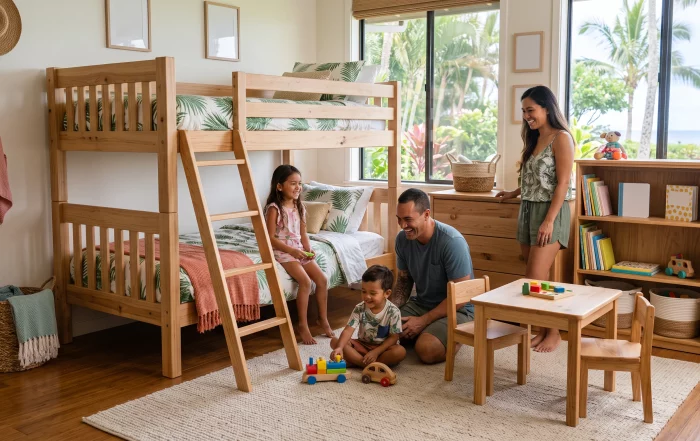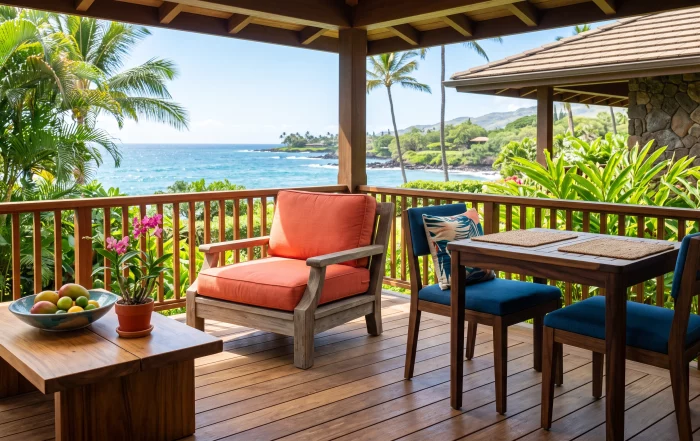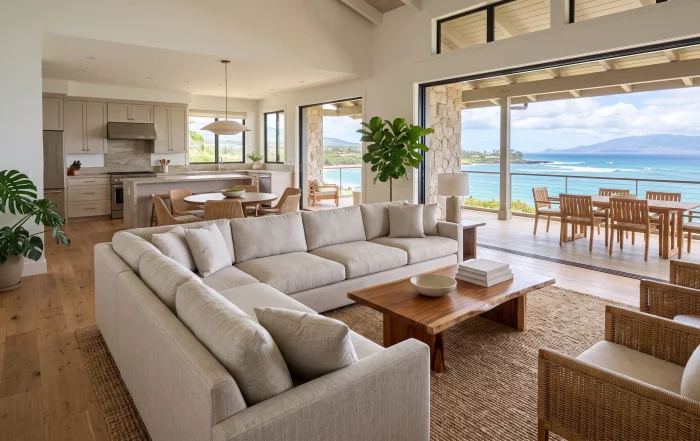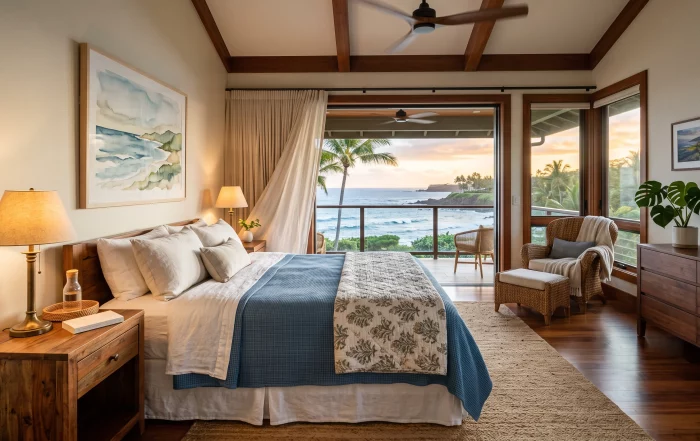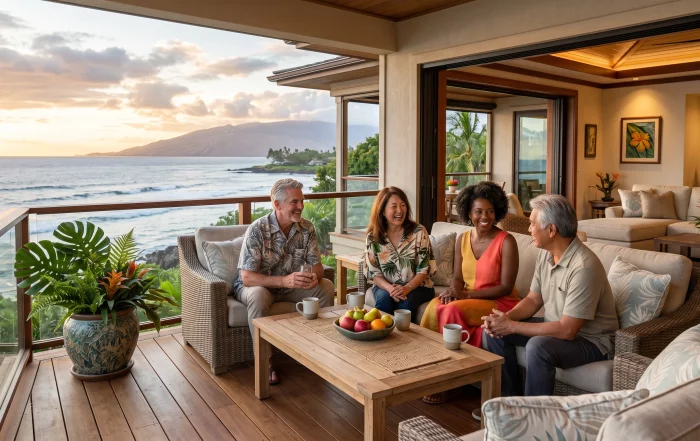
Beautiful lanai living is one of Maui’s greatest pleasures, but the same salt air, intense sunlight, wind, and humidity that make outdoor spaces inviting can quickly damage indoor furnishings. Maui furniture for lanai screens and shade must be selected with more care than a typical mainland room. Upholstery can fade, wood finishes can dry or discolor, metal can corrode, and natural fibers may deteriorate when exposed to the elements day after day.
The solution is not simply moving every valuable piece indoors. With thoughtful lanai screening, outdoor shade solutions in Maui, and furniture chosen for its fabric, finish, construction, and location, you can create a comfortable indoor-outdoor environment while extending the life of your investment. This guide explains how screens and shade work together, which materials perform best, how to protect existing pieces, and when custom furniture planning makes sense for a Maui home or vacation rental.
Maui Furniture for Lanai Screens and Shade: Start with Exposure
Before selecting a sofa, dining table, rug, or accent chair, evaluate what your lanai and adjoining rooms experience throughout the day. A lanai facing west may receive powerful afternoon sun, while an ocean-facing space may be exposed to salt spray and prevailing wind. Even a screened lanai is not completely protected: fine salt particles and humid air can move through mesh, and UV light still enters unless the screen system includes solar-control fabric or exterior shading.
Exposure also changes seasonally. A room that feels comfortable in the morning can become intensely bright and hot by midafternoon. Sliding doors may remain open for much of the year, allowing salt-laden air to circulate into living spaces. Consequently, furniture selection should be based on the actual conditions of the room—not simply whether the furniture is labeled “indoor” or “outdoor.”
What screens can and cannot do
Lanai screening helps reduce wind, insects, airborne debris, and direct contact with rain. Solar screens can also lower glare and reduce the amount of ultraviolet radiation reaching furniture. However, standard screens do not create a sealed interior. They cannot eliminate salt exposure, prevent all fading, or replace regular maintenance.
For a well-protected space, consider combining:
- Solar screen mesh selected for the direction and intensity of sunlight
- Retractable shades or exterior roller shades for peak afternoon exposure
- Operable louvers, curtains, or panels that can be closed during storms
- Ceiling fans and good airflow to reduce trapped humidity
- Furniture placement that keeps delicate fabrics away from open edges and direct sun
This layered approach is especially useful for second homes and vacation rentals, where furnishings may remain exposed while the property is unoccupied. A designer can coordinate shade hardware, upholstery, rugs, and finishes so the protection feels intentional rather than added as an afterthought.
Choosing Fabrics and Finishes for Hawaii’s Salt Air and Sun
Textiles are often the first visible sign of excessive exposure. Colors become uneven, fibers weaken, and cushions lose their fresh appearance. In Hawaii, the best upholstery decision depends on more than a fabric’s color or pattern. Fiber content, weave, backing, performance treatment, cleanability, and position in the room all matter.
Look for performance, not just a label
UV-resistant furniture fabrics in Hawaii should be evaluated for colorfastness, abrasion resistance, moisture performance, and cleaning requirements. Solution-dyed acrylics and other high-performance textiles can be strong choices in spaces with significant sun or airflow from the lanai. Some indoor fabrics may also perform beautifully when positioned away from direct exposure, particularly when they are paired with shades and removable protective covers.
Natural fibers such as linen, cotton, silk, and wool offer exceptional texture and visual richness, but they may require more careful placement. A designer may use a highly durable fabric on a sun-facing sectional while reserving a more delicate textile for a shaded accent chair or decorative pillow. Custom bedding and cushions can also be specified with removable, cleanable covers and inserts suited to the room’s humidity.
Wood, metal, leather, and finishes
Salt air furniture care in Hawaii extends beyond upholstery. Wood species and finish quality influence how a piece responds to moisture, sunlight, and repeated cleaning. Dark finishes can show fading or heat-related changes, while some lighter woods develop a softer, more varied appearance over time. Neither is automatically wrong; the important step is selecting a finish appropriate to the expected exposure.
For metal furniture and hardware, corrosion-resistant materials and protective coatings are essential near open lanais. Wipe away salt residue rather than allowing it to accumulate. Leather should be kept out of direct sun when possible, since UV exposure can dry, fade, or crack the surface. Glass, stone, and composite materials may be practical for tables, but edges, sealers, and cleaning methods still deserve attention.
At IDS Maui, material selection is grounded in Hawaii-specific experience. Fabric and finish recommendations are made with the home’s light, ventilation, traffic patterns, and maintenance expectations in mind—not generic mainland assumptions.
How to Arrange Furniture Around Lanai Shade and Screens
Protection begins with the layout. Even excellent fabric will fade if a sofa sits directly in a bright beam every afternoon. Conversely, blocking every opening with bulky furniture can restrict airflow and make the room feel disconnected from the lanai. The goal is to balance comfort, circulation, views, and exposure.
Create zones for different levels of protection
Think of the room and lanai as a series of exposure zones. The area closest to open doors or screens receives the greatest environmental impact. The center of the interior is usually more protected, while corners behind architectural elements may have the most stable conditions.
- High-exposure areas: Use performance upholstery, durable finishes, outdoor-rated pieces, or furniture that can be moved and covered.
- Moderate-exposure areas: Place sofas, dining chairs, and tables with UV protection from shades, overhangs, or filtered light.
- Low-exposure areas: Reserve delicate fabrics, antiques, artwork, and sensitive wood finishes for protected interior walls.
Use window treatments and shade controls to protect furniture even when you are not home. Automated shades can be programmed to respond to time of day or light levels, which is particularly valuable for vacation rentals. For a more relaxed space, a carefully chosen rug can define the seating area while helping visually connect an indoor sectional to outdoor furniture. Rugs should be selected for cleanability and placed where moisture will not remain trapped beneath them.
Keep circulation and airflow clear
Good lanai screening interior design also considers how people move through the home. Maintain comfortable paths between the kitchen, living room, doors, and outdoor seating. Avoid placing tall case goods where they block shade operation or restrict ventilation. Console tables, benches, and occasional chairs can provide flexibility without overwhelming the space.
Furniture with adaptable dimensions is useful when a home hosts guests or changes between personal use and rental use. IDS Maui offers custom and made-to-order options, including sofas, sectionals, dining tables, chairs, case goods, and outdoor furniture. Dimensions, legs, arms, cushions, fabrics, and finishes can often be specified for the room rather than forced into a standard size.
Maui Lanai Furniture Protection and Ongoing Care
Even the most carefully selected furniture needs routine maintenance. A simple care schedule can prevent salt and dust from becoming embedded in fabric or finish. The exact instructions should always follow the manufacturer’s recommendations, but a practical routine includes regular dusting, prompt attention to spills, and periodic inspection of areas near doors and screens.
A practical care routine
- Dust gently: Use a soft, clean cloth on wood, metal, and hard surfaces. Avoid grinding salt particles into a finish.
- Vacuum upholstery: Use an upholstery attachment to remove sand, dust, and airborne debris from cushions and seams.
- Blot spills quickly: Rubbing can spread stains or damage fibers. Use the cleaning method approved for the fabric.
- Rotate cushions: When construction allows, turn or rotate cushions to distribute wear and fading.
- Control direct sunlight: Close shades during the strongest exposure, especially when the home is empty.
- Inspect hardware: Check metal legs, fasteners, hinges, and outdoor pieces for early signs of corrosion.
- Allow airflow: Do not leave damp covers, rugs, or cushions folded in a humid area.
Protective covers can help outdoor furniture during extended absences, but they should be breathable and used correctly. A non-breathable cover may trap moisture and encourage mildew. Indoor furniture should not automatically be covered with plastic, which can also trap humidity. For high-value pieces, professional cleaning and periodic fabric inspection are worthwhile, particularly in a vacation rental where small issues may go unnoticed.
When purchasing furniture, ask about warranty coverage, cleaning codes, replacement cushions, and expected lead times. IDS Maui manages freight and damage claims for clients, an important advantage when furnishing a property from another island or from the mainland. Quick Ship items may arrive in approximately two to three weeks, while standard made-to-order furniture can take up to eight weeks; custom projects may require approximately eight to twelve weeks depending on the manufacturer and specifications.
Plan a Protected Indoor-Outdoor Look with IDS Maui
Lanai protection works best when it is planned alongside the furniture, rather than added after fading or corrosion appears. IDS Maui brings 27 years of Hawaii-specific experience to furniture, lighting, rugs, accessories, custom bedding, and full interior design. The showroom represents respected lines such as Bernhardt, Baker, Caracole, Century, Janus et Cie, McGuire, Kravet, Theodore Alexander, and others, including products that may not otherwise be available on Maui.
Whether you are furnishing one bedroom, renovating a vacation rental, or creating a whole-home indoor-outdoor plan, the team can help coordinate screen and shade considerations with fabric, wood, lighting, floor plans, and installation. IDS Maui serves clients throughout Maui, Lanai, Molokai, Oahu, the Big Island, and the continental United States, with freight billed separately.
Conclusion: Protect Your Maui Furniture Before Exposure Takes Its Toll
Salt air and sun are part of life in Maui, but premature fading, corrosion, and material damage do not have to be. The right combination of lanai screens, exterior shade, thoughtful furniture placement, durable materials, and consistent care can preserve both comfort and style. Most importantly, select pieces based on the actual conditions of your home and how you use it.
For guidance on Maui furniture for lanai screens and shade, contact IDS Maui at 808-891-8800 or visit the showroom at 3031 Old Haleakala Highway, Makawao, Monday through Friday from 10 a.m. to 6 p.m. You can also explore furnishing and design options through idsmaui.com. Bring your room dimensions, photos, project scope, and approximate budget so the team can help you choose furniture and accessories that perform beautifully in Hawaii.
Need Help With Your Space?
Ask us anything — furniture, design, or where to start.