Choosing Maui dining furniture involves more than finding a table and chairs that look beautiful in a showroom. Salt air, strong sunlight, trade winds, humidity, and year-round indoor-outdoor living all affect how furniture performs. A finish that works well in a mainland dining room may fade, swell, corrode, or show wear more quickly in a Maui home. The right dining set must also suit the way you entertain, from casual breakfasts on the lanai to large holiday gatherings and vacation-rental turnover.
This guide explains how to select dining tables, chairs, finishes, fabrics, and sizes for Maui’s climate and lifestyle. You will learn which materials require the least maintenance, how to plan for flexible seating, and why professional furniture sourcing can make a meaningful difference. With 27 years of Hawaii-specific experience, IDS Maui helps homeowners, second-home owners, and hospitality clients select dining furniture that is refined, practical, and made for island living.
Maui Dining Furniture Starts with the Room and the Climate
Before comparing styles or finishes, consider where the dining furniture will live and how much exposure it will receive. A formal dining room with air conditioning has different requirements from a breakfast area beside open lanai doors. Likewise, a covered outdoor dining area needs materials that can tolerate moisture and salt air, even if it is protected from direct rain.
Indoor, lanai, and fully outdoor locations
Indoor dining rooms offer the broadest range of materials, including veneers, solid hardwoods, lacquered finishes, upholstered chairs, and decorative metal bases. However, strong sunlight can still fade wood and fabric near large windows. Use window treatments, UV-filtering glass, or strategic furniture placement to reduce exposure.
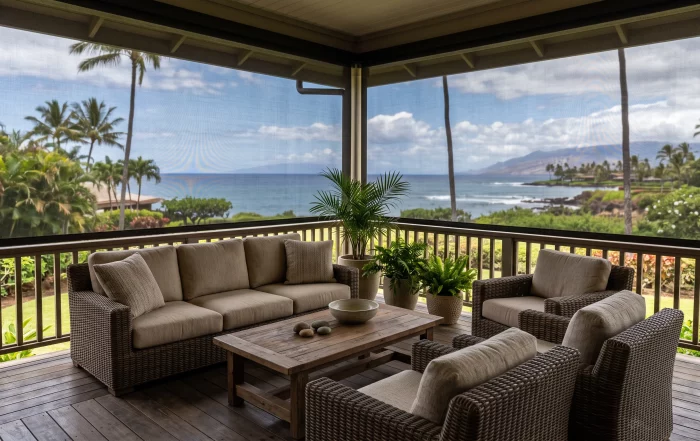
Lanai dining areas need a more durable approach. Even covered spaces experience windblown salt, humidity, temperature changes, and occasional rain. Look for outdoor-rated construction, rust-resistant hardware, quick-drying cushions, and finishes designed for exterior use. If a piece is described only as “indoor/outdoor,” ask specifically about its frame, fasteners, cushion materials, and finish warranty.
Fully outdoor dining furniture should be selected for the most demanding conditions. Covers can help, but they should not be considered a substitute for weather-resistant construction. Proper drainage, ventilation, and regular cleaning are equally important because trapped moisture and salt accelerate deterioration.
Measure for everyday comfort and entertaining
A dining table should leave enough clearance for people to sit comfortably and move around the room. As a general planning guideline, allow approximately 36 inches between the table edge and walls or furnishings, and more where a chair must be pulled out into a primary walkway. Also account for doors, sliders, kitchen islands, and serving paths.
- Allow about 24 inches of table edge per person for comfortable dining.
- Choose a pedestal or trestle base when you want more flexible legroom.
- Use an extension table if the household size changes frequently.
- Confirm that the table can pass through gates, stairways, and entry doors before ordering.
- For vacation rentals, prioritize sturdy construction and easily maintained upholstery.
These measurements are starting points rather than strict rules. A Maui dining room design should reflect the architecture, view corridors, traffic patterns, and entertaining style of the home.
Choosing the Best Wood for Hawaii Dining Furniture
Wood remains one of the most appealing choices for a dining table because it adds warmth, texture, and visual depth. Yet not all wood species or finishes respond equally well to Hawaii’s climate. The best wood for Hawaii dining furniture depends on whether the table is indoors or outdoors, how much sunlight it receives, and how much maintenance the owner is willing to provide.
Wood species and finish considerations
Teak is a popular choice for outdoor and lanai furniture because its natural oils help it withstand moisture and changing conditions. It can be left to weather to a silver-gray tone or maintained with appropriate products to retain more of its original color. Teak still benefits from cleaning and protection from standing water.
Mahogany is valued for its stability, rich color, and refined grain. It can be an excellent choice for sheltered dining areas or interior tables when paired with a high-quality finish. White oak and other carefully finished hardwoods may also perform beautifully indoors, particularly when the table is protected from direct sun and fluctuating humidity.
For many interiors, a well-made veneer table can be a practical and elegant option. Premium veneers allow designers to create a stable surface with expressive grain patterns while reducing the movement that can occur in large solid-wood panels. The quality of the core, edge construction, joinery, and finish matters more than simply choosing “solid wood.”
Dark, high-gloss finishes can show fingerprints, water marks, and scratches more readily than softly textured or lightly distressed finishes. Conversely, very pale finishes may reveal stains or discoloration in high-use settings. A professional furniture source can help match the finish to the household, rental use, and amount of daily maintenance.
How to protect a wood dining table
Use coasters, placemats, and trivets, but avoid covering a beautiful table permanently if doing so undermines the room’s design. Wipe spills promptly with a soft, slightly damp cloth, and follow the manufacturer’s cleaning instructions. Do not use harsh household cleaners, abrasive pads, or unapproved oils, since they can cloud or strip the finish.
Place dining tables away from direct air-conditioning discharge and intense afternoon sun when possible. For lanai furniture, allow air to circulate underneath and avoid positioning pieces where rainwater collects. Small habits extend the life of a finish and preserve the investment.
Finding Salt Air Resistant Dining Chairs in Maui
Dining chairs often experience more daily wear than the table. They are moved, leaned back in, exposed to food and drink, and sometimes used by children or vacation-rental guests. When selecting salt air resistant dining chairs in Maui, evaluate the frame, joints, upholstery, hardware, and replacement options as one complete system.
Frames, hardware, and construction
For covered outdoor dining, teak, powder-coated aluminum, high-quality synthetic woven materials, and appropriately treated hardwoods are common choices. Stainless steel or corrosion-resistant hardware is essential near the coast. Even stainless steel can show surface residue if salt is allowed to remain on it, so routine rinsing and wiping are worthwhile.
For indoor rooms, the chair frame may be wood, metal, or a combination of both. Look for reinforced joints, durable seat construction, and a proportion that supports comfortable long meals. A chair can be visually light while remaining structurally strong; it does not need to look bulky to withstand regular use.
Test the relationship between chair height and table height. Standard dining tables typically pair with standard dining chairs, while counter-height and bar-height seating require different proportions. Armchairs need additional clearance at the table apron and should not force guests to sit too far away from the surface.
Performance fabrics for island living
Indoor dining chairs can use performance fabrics that resist staining, fading, and abrasion without looking commercial. Solution-dyed acrylics, selected polyester blends, and other performance textiles may be suitable depending on the application. For outdoor seating, choose quick-dry cushion construction and fabrics specifically rated for exterior use.
Color and pattern deserve special consideration in Maui. Hawaii’s proximity to the equator changes how color reads in natural light; bright daylight can intensify warm tones and reveal undertones that may be subtle in a mainland showroom. A fabric that appears neutral in a sample may look significantly warmer, brighter, or more saturated beside local stone, wood, flooring, and ocean light.
Request larger samples whenever possible and view them at different times of day. IDS Maui is particularly known for color and fabric expertise, helping clients coordinate dining chairs with rugs, window treatments, lighting, and adjacent living spaces rather than treating the dining set as an isolated purchase.
Designing a Dining Room for Year-Round Entertaining
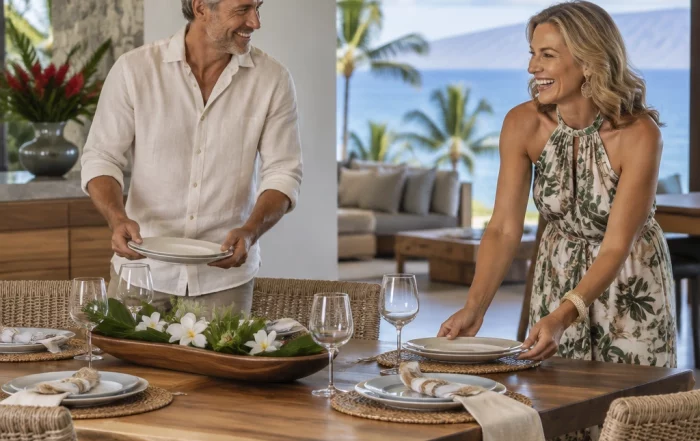
The most successful dining room design in Maui homes supports both everyday routines and spontaneous gatherings. A dining room may need to serve morning coffee, remote work, children’s homework, intimate dinners, and larger celebrations. Flexible furniture makes the room more useful without sacrificing style.
Plan for flexible seating and service
Extension tables are valuable when a household entertains several times a year but does not want a large table dominating the room every day. Leaves should store securely and be easy for one or two people to install. Butterfly leaves, self-storing mechanisms, and well-engineered extension hardware can simplify the process.
A combination of dining chairs and occasional seating can make a room feel less formal. A bench may provide efficient seating along one side of a table, especially in a breakfast nook, while upholstered armchairs can anchor the ends. Make sure the bench is comfortable enough for the expected duration of a meal and can slide completely beneath the table when not in use.
Sideboards, consoles, and bar cabinets add practical storage for serving pieces, linens, glassware, and beverages. They also reduce traffic between the kitchen and dining table. Choose case goods with finishes that coordinate with the table without requiring every piece to come from the same collection.
Connect dining areas to the rest of the home
Open-plan Maui homes benefit from a layered palette rather than a matching furniture set. Repeat one or two elements—such as a wood tone, metal finish, or upholstery color—through the dining, living, and kitchen areas. Then introduce contrast through texture, shape, or artwork.
Lighting is central to the experience. A pendant or chandelier should illuminate the table without obstructing conversation or views. Dimmers allow the room to shift from bright daytime use to a softer evening setting. A rug can define the dining zone, but it must be large enough for chair legs to remain on the rug when pulled out. In high-traffic homes, select a durable, cleanable construction and consider how sand may be tracked indoors.
For vacation rentals and second homes, specify resilient finishes and straightforward maintenance from the beginning. IDS Maui can coordinate dining furniture with lighting, rugs, accessories, and custom elements, helping the entire home feel intentional rather than assembled piece by piece.
Why Work with IDS Maui for Dining Furniture
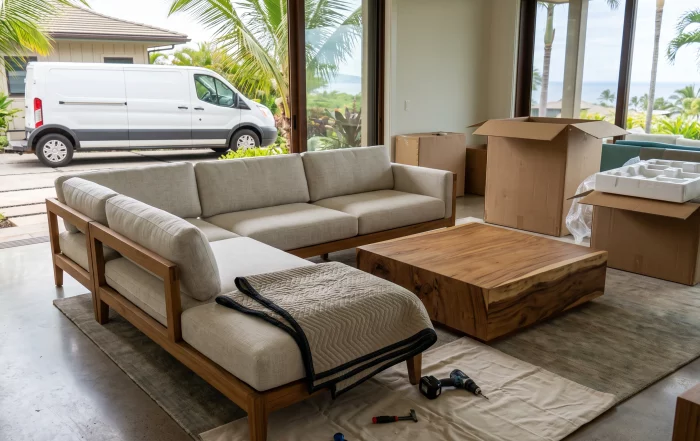
Ordering dining furniture for an island home can involve more decisions than expected: dimensions, finish samples, fabric performance, freight, delivery access, and installation. IDS Maui has served Hawaii for 27 years and understands how salt air, sun, humidity, architecture, and hospitality use affect furniture choices.
The showroom works directly with respected manufacturers and offers access to lines that are often unavailable elsewhere on Maui, including Bernhardt, Baker, Caracole, Century, Kravet, McGuire, Janus et Cie, Theodore Alexander, and other premium brands. Many pieces can be made to order with custom dimensions, leg styles, finishes, arms, cushions, and fabrics. Standard made-to-order lead times can be up to eight weeks, while quick-ship selections may arrive in approximately two to three weeks.
Freight to Hawaii is commonly about 10–15% of an item’s cost, based on cubic footage, with final pricing determined for each order. IDS Maui manages freight coordination and damage claims for clients, an important advantage when furnishing remotely or managing a large renovation.
Visit the Makawao showroom at 3031 Old Haleakala Highway, Monday through Friday from 10 a.m. to 6 p.m. You can also call 808-891-8800 or contact IDS Maui to discuss dimensions, budget, finish samples, and delivery requirements. Service is available throughout Maui, Lanai, Molokai, Oahu, the Big Island, and the continental United States, with freight billed separately.
Conclusion: Create a Dining Space Made for Island Living
The right Maui dining table and chairs should be beautiful enough for entertaining, durable enough for daily use, and carefully specified for salt air, sunlight, and humidity. Start by identifying the room’s exposure and traffic level. Then compare wood species, protective finishes, corrosion-resistant hardware, performance fabrics, table proportions, and flexible seating options.
Rather than settling for furniture that merely looks appropriate in a photograph, choose pieces that suit the way your household actually lives. IDS Maui can help you source dining tables, chairs, sideboards, lighting, rugs, and accessories from leading manufacturers while coordinating the details required for Hawaii delivery. Call 808-891-8800 or visit the Makawao showroom to begin selecting dining furniture that will welcome guests comfortably for years to come.
Need Help With Your Space?
Ask us anything — furniture, design, or where to start.