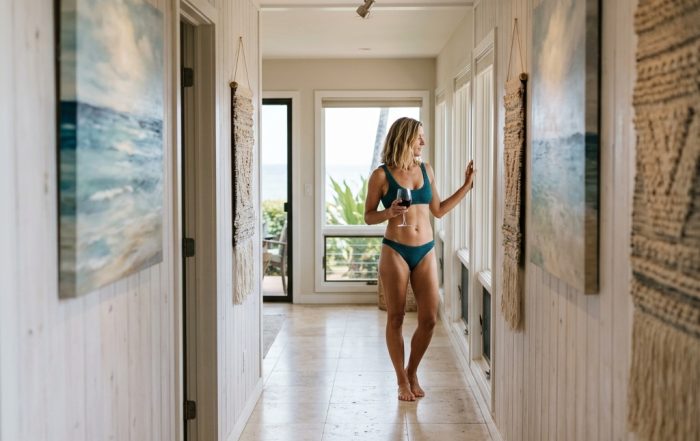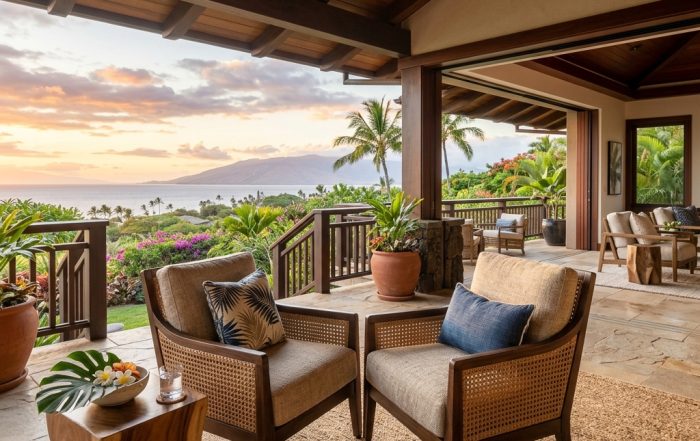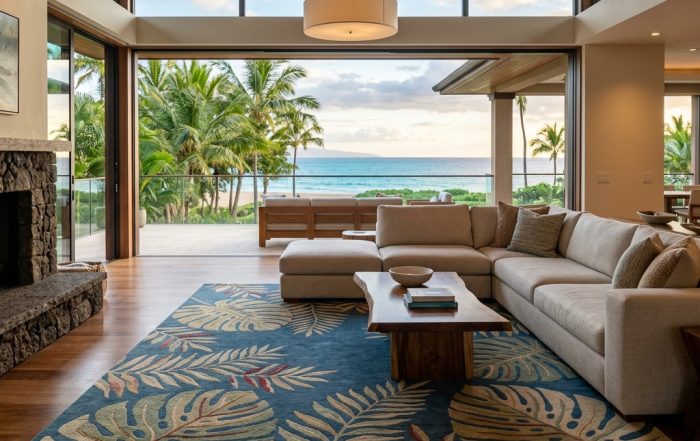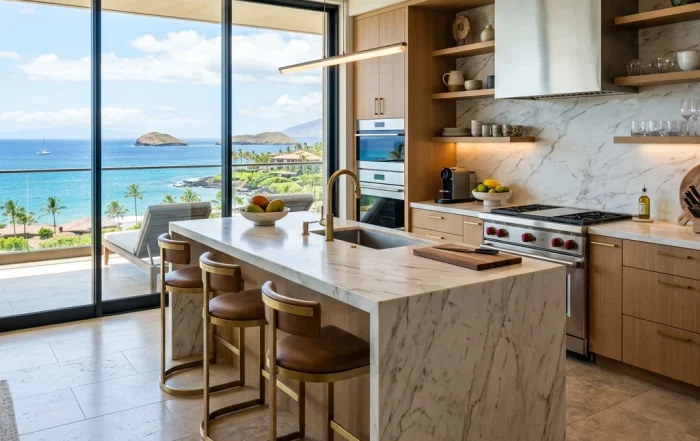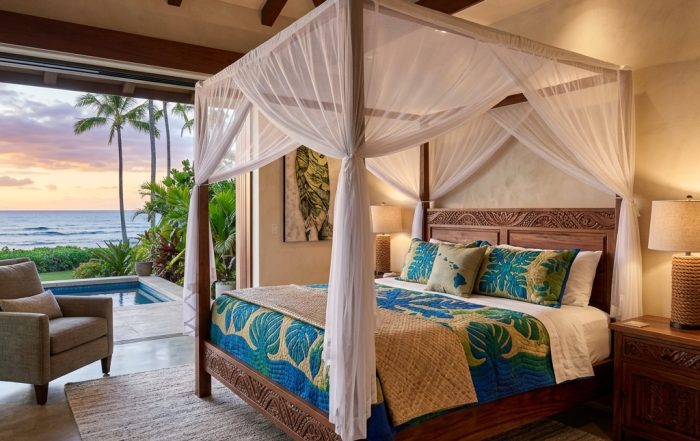
Your entryway is the first thing guests see when they step into your Maui home—and it’s the last thing they remember as they leave. But in Hawaii, an entry isn’t just about aesthetics. It’s a high-performance zone that must handle sandy flip-flops, beach gear, humid salt air, and a constant flow of visitors moving between indoor and outdoor spaces. Whether you’re furnishing a vacation rental that needs to impress guests within seconds or designing your own home to balance beauty with the practical demands of island living, getting your Maui entry and hallway design right means solving for both form and function. In this guide, we’ll walk through the unique challenges Hawaii entryways face, the furniture and finishes that hold up best, and how to create a welcoming first impression that works as hard as it looks beautiful.
Why Maui Entryways Require a Different Design Approach
Mainland design advice rarely accounts for the realities of Hawaii living. Here on Maui, your entry and hallway aren’t just transitional spaces—they’re active work zones that bridge the outdoors and indoors year-round. The proximity to the equator means natural light is more intense, which affects how colors and finishes read. Salt air accelerates corrosion on metal hardware and degrades certain wood species faster than you’d experience on the continent. And because island homes often feature open-plan living that flows directly onto lanais, your entryway sets the tone for the entire indoor-outdoor experience.
High foot traffic is another critical factor. Vacation rental owners know this well: guests arrive with luggage, beach bags, snorkel gear, and sandy feet multiple times per day. Even in a primary residence, the casual island lifestyle means more comings and goings, more outdoor equipment, and more exposure to the elements. Your Maui entryway furniture and finishes need to be selected with durability and maintenance in mind, not just visual appeal.
The Climate Factor: Salt, Sun, and Humidity
Hawaii’s climate is harder on interiors than most homeowners realize. Salt air doesn’t stay outside—it drifts in through open windows and doors, settling on surfaces and slowly corroding metal components. Wood species that perform beautifully in dry climates can warp or split in Hawaii’s humidity. Fabrics on upholstered benches or accent chairs need to be solution-dyed or treated to resist mildew and fading from UV exposure that penetrates even through windows.
This is why working with a designer who understands Hawaii-specific material performance makes such a difference. At IDS Maui, we’ve spent 27 years learning which finishes hold up to salt air, which wood species resist warping, and which upholstery treatments stand the test of time in island conditions. These aren’t details you’ll find in a mainland design magazine—they’re lessons learned through decades of real-world project experience across Maui, Lanai, Molokai, and the Big Island.
Essential Furniture Pieces for a Functional Maui Entry
The right furniture transforms an entryway from a pass-through corridor into a purposeful, organized space. In Hawaii, every piece needs to earn its place by solving a practical problem while contributing to the overall aesthetic. Here are the core furniture elements that make the biggest impact in Hawaii hallway design.
Console Tables: Beauty Meets Utility
Console tables Maui homeowners choose need to do more than look elegant. A well-selected console provides a landing spot for keys, sunglasses, and mail, while offering display space for art, plants, or a welcoming floral arrangement. In vacation rentals, a console table can hold guest information binders, local guidebooks, and a tray for room keys.
Look for consoles with drawers or lower shelves to maximize storage without visual clutter. Materials matter: solid hardwoods with marine-grade finishes, stone tops, or sealed rattan all perform well in humid conditions. Avoid veneers that can delaminate over time, and steer clear of unprotected metal bases that will corrode. Brands like Bernhardt, Theodore Alexander, and Caracole offer console tables built to withstand demanding environments, with finishes engineered for longevity.
Custom sizing is often the best solution for Maui homes, which may have unique architectural features or space constraints. Made-to-order options allow you to specify exact dimensions, leg styles, finish colors, and hardware that coordinates with your home’s overall design language. Lead times typically run 8–12 weeks, so plan ahead if you’re working toward a rental season launch or move-in date.
Entry Benches with Storage: The Island Essential
An entry bench storage solution is nearly non-negotiable in Hawaii homes. Guests need a place to sit while removing sandy shoes, and you need concealed storage for beach bags, reusable shopping totes, umbrellas, and all the gear that accumulates in an active island household. Upholstered benches add comfort and softness, but fabric selection is critical—choose performance fabrics that resist moisture, mildew, and UV damage.
Benches with lift-top storage or open cubbies underneath keep clutter contained while maintaining easy access. For vacation rentals, this hidden storage is invaluable for stashing extra linens, cleaning supplies, or guest amenities out of sight. In primary residences, it’s the perfect spot for kids’ school bags, pet leashes, or sports equipment.
Consider scale carefully. An oversized bench can overwhelm a small entry, while a too-small piece won’t provide adequate seating or storage. Measure your space and traffic flow patterns before selecting furniture. At IDS Maui, we create AutoCAD drawings for clients to visualize furniture placement and ensure proper clearances—especially important in entries that serve as the main circulation route through the home.
Accent Tables and Display Cabinets
In larger entries or hallways, accent tables and display cabinets add personality and functionality. A round accent table can soften the angles in a square entry, while a tall display cabinet showcases collections, artwork, or decorative objects that tell your story. For vacation rentals, these pieces elevate the perceived value of the space and create memorable visual moments that translate into positive reviews and repeat bookings.
Choose pieces with glass doors or open shelving to maintain visual lightness—Hawaii homes benefit from designs that don’t feel heavy or closed-off. Mirrors are another strategic addition, bouncing natural light deeper into the space and making small entries feel more expansive. A large mirror above a console table is a classic pairing that works beautifully in both traditional and contemporary island homes.
Flooring and Finishes That Stand Up to Island Traffic
Your entry flooring takes more abuse than any other surface in your home. Sand, moisture, salt, and constant foot traffic demand materials that are both durable and easy to maintain. This is where high-traffic flooring Hawaii homeowners select makes or breaks the long-term success of the space.
Best Flooring Materials for Maui Entries
Porcelain tile is the gold standard for Hawaii entryways. It’s impervious to moisture, won’t harbor mold or mildew, and holds up beautifully to heavy traffic. Large-format tiles minimize grout lines, which means less maintenance and a more contemporary look. Textured or matte finishes provide slip resistance—critical when feet are wet from the pool or ocean.
Natural stone like travertine or slate offers organic beauty and excellent durability, though it requires periodic sealing to resist staining and moisture penetration. Luxury vinyl plank (LVP) has improved dramatically in recent years and can be a cost-effective alternative that mimics wood or stone while offering superior water resistance. However, quality varies widely—choose commercial-grade products designed for high-traffic applications.
Hardwood flooring in entries is risky in Hawaii unless you’re committed to vigilant maintenance. Even the most durable species will show wear faster in high-traffic zones exposed to moisture and sand. If you love the warmth of wood, consider using it in adjacent living spaces and transitioning to tile or stone specifically in the entry zone.
Wall Finishes and Paint Selection
Walls in entries and hallways need washable, durable paint finishes. Satin or semi-gloss sheens are easier to clean than flat paints and hold up better to frequent contact. Color selection should account for Hawaii’s intense natural light—colors that look perfect in a mainland showroom can read completely different under our equatorial sun. Cooler tones often appear more vibrant here, while warm neutrals can look washed out without proper layering.
This is where working with a designer who has deep Hawaii experience becomes invaluable. At IDS Maui, we’ve learned how to predict color shifts based on sun exposure, time of day, and the interplay between interior and exterior views. We can provide color samples sized appropriately to test in your actual space, under your specific lighting conditions, before you commit to painting entire walls.
Lighting Design for Welcoming, Safe Entries
Lighting in your entry needs to accomplish multiple goals: create a warm welcome, provide adequate illumination for safety, and set the aesthetic tone for the rest of your home. In Hawaii, where indoor-outdoor living blurs the boundaries, your entry lighting also needs to transition smoothly between bright daylight and evening ambiance.
Layered Lighting Approach
The most successful entry lighting designs use multiple layers: ambient lighting for overall illumination, task lighting for specific activities, and accent lighting to highlight architectural features or artwork. A statement chandelier or pendant fixture serves as both a light source and a focal point—choose fixtures with finishes that resist salt air corrosion, such as aged brass, bronze, or powder-coated metals.
Wall sconces flanking a mirror or artwork add symmetry and visual interest while providing flattering, shadow-free light. In longer hallways, a series of recessed downlights or linear fixtures maintains consistent illumination without visual clutter. Dimmer switches are essential for controlling ambiance and energy use—bright light for daytime activity, softer light for evening entertaining.
Natural Light Considerations
Many Maui homes feature generous windows or glass doors in entry areas, flooding the space with natural light. While beautiful, this creates challenges for furniture and finishes. UV-resistant window treatments protect floors and furniture from fading, while still allowing light to filter through. Sheer curtains, woven shades, or solar screens can diffuse harsh afternoon sun without making the space feel dark or closed-off.
Position furniture and artwork away from direct sun exposure when possible. Rotate decorative objects seasonally to prevent uneven fading. And choose upholstery fabrics specifically rated for UV resistance—brands like Kravet offer extensive collections of performance fabrics that maintain their color and integrity even in sun-drenched Hawaii homes.
Creating Guest Flow and Traffic Patterns
The layout of your entry and hallway directly impacts how people move through your home. Poor traffic flow creates bottlenecks, while thoughtful design guides guests naturally from one space to the next. This is especially important in vacation rentals, where guests need to intuitively understand the home’s layout from the moment they walk in.
Start by mapping the primary circulation routes. Where do people naturally walk? Are there pinch points where furniture placement creates obstacles? In open-plan homes, use area rugs to visually define the entry zone and signal the transition from outdoor to indoor space. A runner in a hallway adds warmth underfoot while protecting flooring and reducing noise.
Furniture placement should enhance flow, not impede it. Maintain at least 36 inches of clearance for primary walkways—more if the space serves as the main route to bedrooms or other frequently accessed areas. Console tables should be positioned against walls, not floating in the center of the space where they’ll be bumped by passing traffic. Benches work best perpendicular to the main entry door, creating a natural stopping point for removing shoes without blocking the path forward.
Vacation Rental Specific Considerations
For vacation rental owners, the entry is your opportunity to exceed expectations immediately. First impressions drive reviews, and reviews drive bookings. A well-designed entry signals that the entire property has been thoughtfully curated. Include practical amenities: a bench for sitting, hooks for bags and beach gear, a basket for keys, and clear sightlines to the main living areas.
Consider adding a small welcome display—fresh flowers, local fruit, or a handwritten note. These touches cost little but create outsized emotional impact. Storage solutions should be obvious and intuitive: guests shouldn’t have to hunt for where to put their luggage or hang their jackets. Clear organization reduces questions, improves the guest experience, and protects your property from clutter and damage.
Ready to Transform Your Maui Entry?
Designing an entry and hallway that balances beauty, durability, and function requires understanding Hawaii’s unique demands—from climate challenges to lifestyle patterns. The furniture, finishes, and layouts that work on the mainland often fail here, while Hawaii-specific solutions create spaces that look better and perform better over the long term.
At IDS Maui, we’ve spent 27 years perfecting the art of island-appropriate interior design. Our showroom at 3031 Old Haleakala Highway in Makawao features Maui entryway furniture from brands like Bernhardt, Caracole, Theodore Alexander, and Jonathan Charles—lines you won’t find elsewhere on island, with custom options for dimensions, finishes, and fabrics. We manage every detail from AutoCAD space planning to freight logistics and installation, so you can focus on enjoying the result rather than coordinating the process.
Whether you’re furnishing a vacation rental to maximize bookings and reviews, or creating a welcoming home for your family, we’d love to help you get the entry right. Call us at 808-891-8800 or stop by the showroom Monday through Friday, 10 AM to 6 PM. Let’s create a first impression that sets the perfect tone for everything that follows.
Need Help With Your Space?
Ask us anything — furniture, design, or where to start.