A successful Maui master bedroom layout does more than make room for a bed, dresser, and nightstands. It should welcome island breezes, protect sleep from early light and evening humidity, create clear walking paths, and stand up to Maui’s salt air, strong sun, and relaxed indoor-outdoor lifestyle. A room that looks beautiful in a floor plan can still feel hot, crowded, or impractical once the windows are open and the trade winds arrive.
This guide explains how to place the major pieces, orient the bed, plan for cross-ventilation, choose durable materials, and layer lighting and textiles for deeper rest. Whether you are furnishing a new Maui home, updating a vacation rental, or ordering furniture remotely for a second residence, the goal is the same: a tropical bedroom that feels calm, comfortable, and intentionally designed.
Maui Master Bedroom Layout Principles for Trade Winds and Better Sleep
Maui bedrooms benefit from a climate-aware approach. Hawai‘i’s National Weather Service describes the state’s persistent northeasterly trade winds, mild temperatures, moderate humidity, and major differences between windward and leeward conditions. On Maui, that means a bedroom in Haʻikū, Upcountry, or another exposed location may need a very different furniture arrangement from a sheltered room in Wailea or Kā‘anapali. The best master bedroom furniture layout in Maui begins with the actual window, door, and lanai positions—not a generic diagram.
Start by identifying the direction of the usual breeze and the path air takes through the room. The U.S. Department of Energy explains that natural ventilation works through operable openings and cross-ventilation, allowing incoming air to move through the home rather than stop at the first obstruction. Read the room as an airflow map: where does air enter, where can it leave, and which pieces of furniture interrupt that movement?
Choose the bed position first
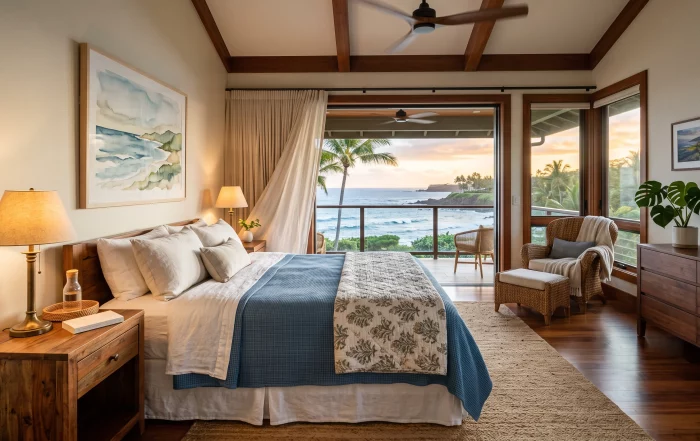
Place the bed on the most stable, visually quiet wall whenever possible. A solid wall behind the headboard gives the room a sense of protection and prevents pillows and bedding from sitting directly in a stream of moving air. Avoid placing the head of the bed immediately beneath a window if wind-driven rain, bright morning light, or condensation could affect comfort.
At the same time, do not seal the bed into a corner simply to gain floor space. Aim for access on both sides, especially in a primary bedroom shared by two adults. Two usable bedside zones make nighttime movement easier and support balanced lighting, charging, and storage.
Keep the breeze path open
Reserve the clearest route between opposite windows, a window and lanai door, or the bedroom door and an exterior opening. A low bench at the foot of the bed can define the sleeping area without blocking airflow. A tall armoire, bookcase, or oversized dresser is better placed on a solid wall, away from the primary breeze path.
For a practical bedroom arrangement in Hawai‘i, think in layers: low furniture near openings, taller storage against interior walls, and enough space around the bed for air and people to move comfortably. If you use a ceiling fan, make sure the bed is centered beneath its effective circulation area without allowing the fan to become the room’s only cooling strategy.
How to Arrange Furniture Around a Tropical Bed
The bed is the visual and functional anchor, but it should not consume every inch of the room. A tropical master bedroom furniture placement plan should balance a generous sleeping surface with open circulation, useful storage, and a place to sit or pause. In most rooms, the strongest arrangement is a centered bed with matching or deliberately coordinated nightstands, a bench or compact settee at the foot, and storage placed along the least interrupted wall.
Allow comfortable circulation
Whenever the room permits, preserve approximately 30 to 36 inches of walking space beside the bed and in front of frequently used drawers. Larger clearances are helpful in a luxury primary suite, an aging-in-place design, or a vacation rental where guests may be unfamiliar with the room. Avoid placing a sharp-edged chest where a person naturally turns from the bed toward the bathroom.
Also study door swings. A bedroom door, closet door, and bathroom door can create competing movement zones. A beautiful dresser that forces a door to open only halfway will become an everyday frustration. If the existing room is tight, consider a narrower chest, a wall-mounted mirror, or custom nightstands with reduced depth rather than forcing standard pieces into the plan.
Use the foot of the bed strategically
A bench is often the most flexible choice at the foot of a Maui bed. It offers a place to put on shoes, fold a throw, or set down a suitcase without creating the visual weight of a full settee. In a larger room, two compact accent chairs can create a reading or conversation area, provided they do not obstruct the lanai route.
For vacation rentals, avoid making the foot of the bed a luggage station by default. A dedicated luggage bench or low console can protect bedding and reduce clutter. For a private residence, a tailored bench in a performance fabric adds color and texture while remaining easier to maintain than a delicate upholstered chaise.
- Small room: choose slim nightstands, a wall-mounted reading light, and a shallow dresser.
- Large suite: add a bench, two lounge chairs, or a small writing desk while keeping the window-to-door breeze route open.
- Lanai-facing room: use low-profile furniture near the glass so the outdoor view and ventilation remain unobstructed.
- Rental bedroom: favor durable finishes, concealed storage, and furniture with enough visual weight to resist accidental movement.
Designing for Sleep: Light, Noise, Temperature, and Airflow
Furniture placement cannot solve every sleep problem, but it can support the conditions your body needs. The Centers for Disease Control and Prevention recommends a bedroom that is quiet, relaxing, and cool; CDC guidance also notes that many people sleep well around 65 to 68 degrees Fahrenheit. In Maui, naturally ventilating at night may be comfortable during some weather patterns, while other nights may call for screened windows, air conditioning, or a combination of both.
Do not point a strong fan directly at the sleeper unless that is genuinely comfortable. Instead, use the fan to circulate air across the room or toward an exit opening. A bed placed directly in the path of a powerful fan may create dry eyes, disturbed bedding, or inconsistent comfort between two people.
Control the morning sun
Orient the bed so morning light is pleasant rather than intrusive. If the bedroom receives strong sunrise exposure, combine woven shades or solar shades with lined drapery. Layered window treatments let you enjoy daylight during the day while preserving darkness at night. The CDC specifically recommends a dark sleep environment and suggests opaque window coverings when outside light interferes with rest.
In a Maui bedroom, fabric selection matters. Sun can fade textiles, weaken some fibers, and heat up dark-colored surfaces near glass. Consider solution-dyed performance fabrics, washable bedding layers, and drapery linings selected for the room’s exposure. A local interior designer can also help distinguish between a room that needs full blackout and one that simply needs glare control.
Place electronics away from the bed
A dresser or media console opposite the bed may seem convenient, but screens can undermine the calm atmosphere of a primary suite. If a television is necessary, conceal it inside an armoire or use a low-profile installation that does not dominate the room. Keep charging stations tidy and avoid turning both nightstands into technology hubs.
For a quieter room, place mechanical equipment, noisy speakers, and frequently used appliances away from the headboard wall. Soft rugs, upholstered benches, and layered window treatments can help reduce hard echoes without making the room feel heavy. The result is a more restful Hawaii bedroom airflow design—one that considers both moving air and the sound carried through it.
Materials and Furniture That Hold Up in Maui
A beautiful bedroom in Hawai‘i must be selected for its environment. Salt air, ultraviolet exposure, humidity, open windows, and sand from the beach or lanai can shorten the life of furniture and textiles. Maui bedroom design durability is not about choosing only outdoor materials; it is about matching every finish and fiber to the room’s exposure and maintenance expectations.
Wood species and finishes deserve particular attention. Open-grain woods, painted finishes, veneers, and metal hardware all respond differently to moisture and sunlight. A finish that performs well in a dry mainland interior may require more care near a Maui lanai. Use coasters, avoid placing furniture directly against damp exterior walls, and provide a little breathing room behind case goods when the room’s conditions call for it.
Build a durable textile palette
Choose upholstery that can handle regular use, especially in a vacation rental or second home that may sit closed for periods of time. Performance fabrics can provide resistance to stains and fading without forcing the room into a commercial appearance. Natural fibers remain appealing for their texture, but they may need more thoughtful placement and maintenance near direct sun or open doors.
Layer the bed with breathable materials and removable covers. A washable coverlet, lightweight duvet, and a few decorative pillows give guests or homeowners flexibility as temperatures change. Rugs should be selected for easy cleaning and stable construction; a low-pile design is often more practical than a high-pile rug in a sandy, indoor-outdoor environment.
Consider custom dimensions
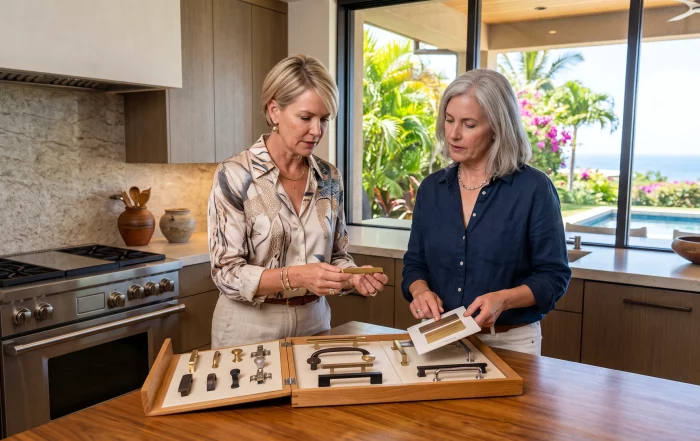
Made-to-order furniture can be especially valuable in island homes, where room proportions, window locations, and shipping constraints do not always align with standard mainland sizes. Custom nightstands can be narrowed to protect a walkway. A dresser can be built to fit beneath a window. A bench can be sized precisely so it does not interfere with a closet or lanai door.
IDS Maui works directly with manufacturers and offers custom options including dimensions, legs, arms, fabrics, finishes, cushions, and other details. Standard made-to-order pieces may take up to eight weeks, while Quick Ship items can arrive in approximately two to three weeks; freight to Hawai‘i is typically calculated by cubic footage and may run about 10–15% of item cost. Planning early helps coordinate the bed, lighting, rugs, and accessories as one complete room.
Finish the Layout With Lighting, Rugs, and Accessories
Once the large furniture is placed, use accessories to reinforce the room’s natural rhythm rather than fill every empty surface. A layered lighting plan should include ambient light, bedside reading light, and softer accent light. Wall-mounted sconces can preserve nightstand space and reduce cord clutter. Table lamps work well when the nightstands are wide enough to support both the fixture and daily essentials.
Color also reads differently in tropical light. Because Maui sits closer to the equator than most mainland locations, sunlight can make colors appear more intense and reflective surfaces more active. Sample paint, upholstery, and rug colors in the actual bedroom at morning, midday, and evening. A neutral that feels soft in a showroom may look much brighter beside a sunlit window.
Use natural textures—woven fibers, carved wood, linen-like fabrics, stone, and organic forms—to create an island connection without turning the room into a theme. Keep the strongest pattern on one major element, such as the headboard, rug, or drapery. Then repeat one or two colors in smaller accessories so the design feels collected rather than matched.
Finally, leave some negative space. Better sleep often comes from visual quiet: fewer objects, concealed cords, clear floors, and a bed that remains the unquestioned focal point. If the room connects directly to a lanai, treat that outdoor area as an extension of the suite and make sure indoor furniture does not compete with the view.
Conclusion: Create a Maui Bedroom That Feels Effortless
The best Maui master bedroom layout is a balance of airflow, comfort, durability, and personal style. Place the bed on a stable wall, keep cross-ventilation routes open, protect the room from glare, and select furniture and fabrics that can handle island conditions. Then refine the space with custom dimensions, layered lighting, breathable bedding, and enough open space to make the room feel restful.
IDS Maui has served Hawai‘i for 27 years, with furniture, lighting, rugs, accessories, custom bedding, and made-to-order pieces from leading manufacturers. Visit the showroom at 3031 Old Haleakala Highway in Makawao, Monday through Friday from 10 a.m. to 6 p.m., or call 808-891-8800 to discuss your bedroom dimensions, budget, and furniture needs. IDS serves Maui and the neighboring islands, as well as mainland projects, and can coordinate ordering, freight, damage claims, and installation for a smoother furnishing experience.
Need Help With Your Space?
Ask us anything — furniture, design, or where to start.