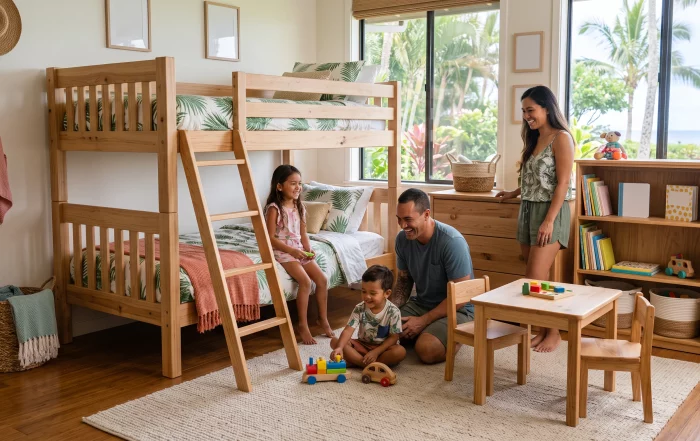
Choosing Maui furniture for kids’ rooms involves more than finding a cute bed or colorful dresser. Island families need pieces that can withstand daily activity, strong sunlight, salty air, humidity, sand, and the naturally relaxed way indoor and outdoor living overlap in Hawaii. At the same time, children’s furniture should support safe movement, practical storage, restful sleep, and a style that can grow with the child.
For Maui homeowners, second-home owners, and vacation rental operators, the right furniture is an investment in comfort and long-term performance. This guide explains what to look for in durable children’s furniture Hawaii families can rely on, how to select safer materials and finishes, and why professional guidance can make furnishing a child’s room easier. IDS Maui helps clients select beds, dressers, nightstands, desks, lighting, rugs, and accessories suited to both island conditions and the overall character of the home.
Maui Furniture for Kids’ Rooms: Start with Durability
Children’s rooms are active spaces. Furniture is climbed on, moved, spilled on, bumped into, and occasionally used in ways its designer never imagined. In Maui, the environment adds another layer of wear. Ultraviolet exposure can fade fabrics and finishes, salt carried in through open windows can affect hardware and wood surfaces, and humidity may contribute to swelling or finish deterioration when materials are poorly selected.
That does not mean a child’s bedroom has to look industrial or overly cautious. Durable furniture can still be beautiful, refined, and connected to the relaxed style of a Maui family home. The key is selecting construction, finishes, and textiles based on how the room will actually be used.
Construction details that matter
Look for solid or well-engineered case goods, reinforced joints, stable drawer boxes, and hardware that operates smoothly without feeling delicate. A dresser with quality glides is easier for children to use and less likely to develop problems after years of opening and closing. Beds should feel stable without rocking, while nightstands and desks should have a substantial footprint appropriate to their height.
Rounded or softened corners can reduce the severity of bumps, particularly in rooms where children play on the floor. Furniture should also be appropriately scaled: oversized pieces can create awkward circulation, while lightweight pieces may shift too easily. A professional furniture plan helps maintain clear paths between the bed, closet, door, and play or study areas.
Materials for everyday island living
Wood species and finish quality are especially important in Hawaii. Some woods and finishes tolerate changing humidity and sun exposure better than others. Upholstered pieces should be specified with durable, cleanable fabrics rather than textiles selected solely for appearance. Performance fabrics can provide resistance to spills and everyday staining while still offering attractive color, texture, and softness.
IDS Maui brings 27 years of Hawaii-specific experience to these choices. The showroom offers access to furniture from manufacturers such as Bernhardt, Baker, Caracole, Century, Kravet, McGuire, Theodore Alexander, and other respected lines. Many pieces can be ordered with customized dimensions, fabrics, finishes, legs, arms, and cushion options, making it possible to balance durability with a child’s personality and the home’s design language.
Safety Essentials for a Child-Friendly Bedroom
A safe children’s room begins with the layout, not just the individual furniture pieces. Before selecting products, consider where a child will walk, play, reach, sleep, and store belongings. The goal is to create a room that feels inviting while reducing avoidable hazards.
Plan for stability and clear circulation
Heavy dressers, bookcases, and armoires should be secured appropriately to the wall, especially in rooms used by young children. Freestanding furniture should not block exits, windows needed for emergency access, or pathways to the bathroom. Keep cords for lamps and electronics managed and out of easy reach, and choose lighting with stable bases or appropriate mounting.
Rugs can make a bedroom more comfortable and visually complete, but they should lie flat and include a suitable nonslip solution. Avoid creating trip points at doorways or beside the bed. For younger children, keep toys and frequently used items in storage that they can reach without climbing on furniture.
Choose healthy, practical finishes
When discussing furniture for a child’s room, ask about finish systems, upholstery composition, cleaning recommendations, and maintenance requirements. “Natural” does not automatically mean safer, and “performance” does not describe every aspect of a textile. A knowledgeable furniture professional can help compare options based on durability, cleanability, odor, texture, and the manufacturer’s care guidance.
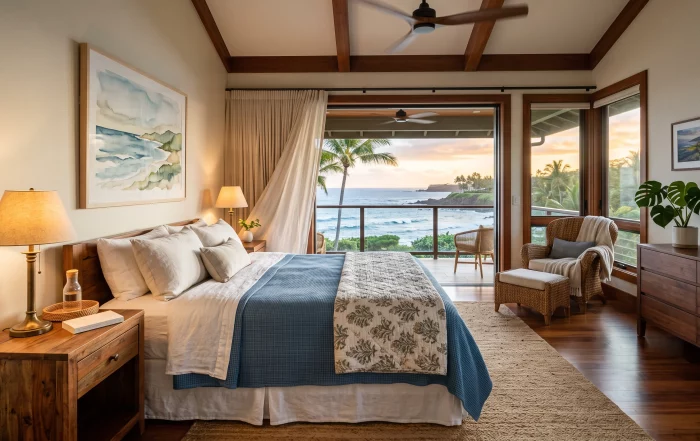
Window coverings and lighting also deserve attention. Maui’s bright sun can make a room uncomfortably warm and expose furniture to damaging UV rays. Layered window treatments can moderate glare while preserving natural light. In addition, warm, diffused bedside or ceiling lighting is generally more comfortable than harsh direct light. A design plan should coordinate lighting with sleep routines, reading, homework, and nighttime movement.
Families furnishing a vacation home or rental should be especially thoughtful. A room may be used by children of different ages and abilities, so sturdy pieces, accessible storage, washable textiles, and uncluttered circulation can improve both safety and guest satisfaction. IDS Maui can coordinate furniture, lighting, rugs, custom bedding, and installation as part of a broader purchasing plan.
Salt Air, Sun, and Humidity: Designing for Maui’s Climate
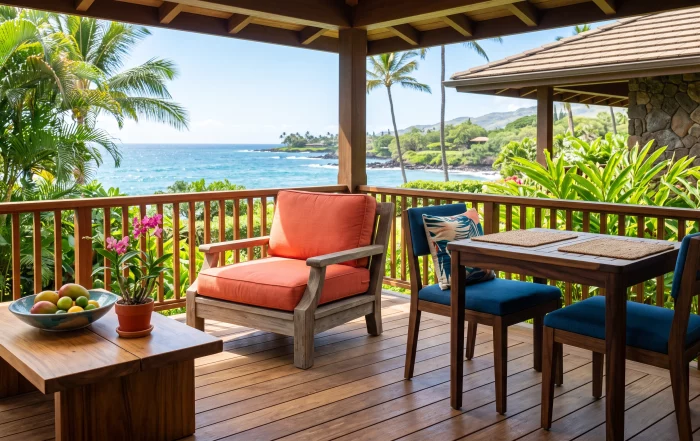
A salt air safe kids room design is not simply a matter of choosing coastal colors. The room’s materials need to respond to the actual exposure level. A bedroom near the ocean, a room with wide-open windows, and a space connected to a lanai may experience more salt, wind, and sunlight than an interior room on the opposite side of the home.
Protect fabrics and finishes from UV exposure
Strong sunlight can fade upholstery, bedding, rugs, artwork, and wood finishes unevenly. That fading may be gradual, so damage can go unnoticed until furniture is rearranged. Consider UV-resistant kids bedroom pieces when the room receives direct sun, particularly for upholstered headboards, benches, accent chairs, and window-side storage.
Color selection matters, too. Some colors show fading more quickly than others, while textured or patterned fabrics may disguise minor wear better than flat, delicate surfaces. However, durability should never mean sacrificing the visual character of the room. Maui’s proximity to the equator changes how color reads indoors; bright natural light can intensify certain hues and alter the appearance of paint, fabric, and wood. Samples should be reviewed in the actual room at different times of day.
Account for salt, moisture, and ventilation
Salt residue can collect on metal hardware and exposed surfaces. Regular, gentle cleaning according to the manufacturer’s instructions is preferable to harsh products that may damage finishes. Good ventilation helps manage humidity, while leaving a small amount of breathing room around furniture can support air circulation and simplify cleaning.
Materials selected for a child’s bedroom should also reflect lifestyle. If children regularly come inside from the beach or pool, choose rugs and upholstery that can tolerate more frequent cleaning. If the room doubles as a playroom, prioritize resilient surfaces and storage. If it is a quiet guest suite, the priorities may shift toward refined finishes, layered bedding, and a sophisticated bed or dresser that will remain attractive for years.
IDS Maui’s experience with Hawaii homes and hospitality interiors is valuable here. The firm understands that flooring, paint, hardware, fabric fibers, wood species, and finish choices all need extra scrutiny in an island environment. That practical knowledge helps clients avoid selecting beautiful pieces that are poorly matched to their location.
Style and Flexibility for Growing Children
The best kids bedroom furniture Maui homeowners select should not need to be replaced every few years simply because a child’s interests change. A room can feel youthful through bedding, artwork, rugs, and accessories while the major furniture pieces remain timeless. This approach is also useful for second homes and vacation rentals, where adaptable design supports multiple users.
Invest in pieces that can evolve
A well-made bed, dresser, nightstand, desk, or storage chest can move from a young child’s room to a teenager’s space with relatively simple updates. Choose a versatile finish and use replaceable elements—such as drawer pulls, lampshades, bedding, and wall art—to bring in personality. A neutral upholstered headboard can look playful with bright linens and more mature with layered solids and natural textures later.
Custom and made-to-order options provide additional flexibility. Furniture may be adjusted for room dimensions, unusual wall locations, storage needs, or a particular design direction. IDS Maui can help specify dimensions, fabric, finish, cushion details, and other elements. Typical made-to-order lead times are approximately 8–12 weeks, while some standard or Quick Ship items may arrive sooner.
Build a coordinated room without matching everything
A successful children’s room does not require a matching suite. Instead, combine related finishes, repeated colors, and complementary shapes. For example, a wood bed may work with a painted dresser, woven light fixture, upholstered bench, and patterned rug if the palette and proportions are coordinated.
Consider including:
- A durable bed or upholstered headboard suited to the child’s age and the room’s dimensions
- A dresser or chest with practical, stable storage
- A nightstand with space for a lamp, books, and nighttime essentials
- A desk or compact writing surface for homework and creative activities
- A comfortable rug with a secure, low-maintenance construction
- Layered lighting for reading, play, homework, and general illumination
- Custom bedding and accessories that add color without committing the entire room to a short-lived theme
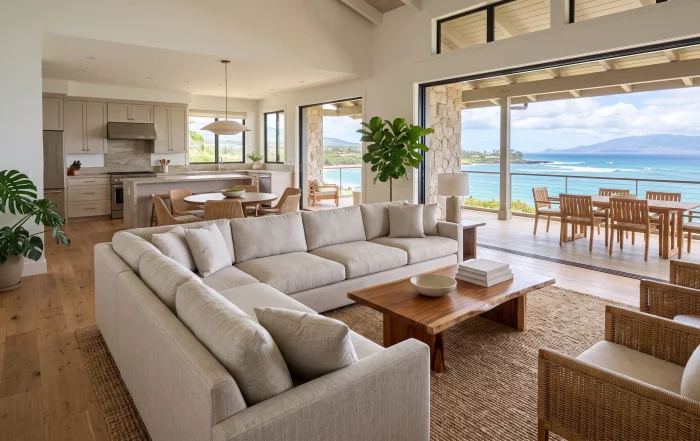
For families drawn to biophilic or wellness design, natural textures, calming colors, indoor plants selected for the space, and clear views can create a more restorative room. These elements can be interpreted in a polished way rather than as a literal tropical theme. Valorie Spence, ASID, brings both design expertise and a fashion-informed understanding of color and texture layering to these decisions.
How IDS Maui Helps Furnish Children’s Rooms
Buying children’s furniture from a mainland catalog may seem straightforward, but shipping, scale, material suitability, and damage resolution can become complicated when the home is in Hawaii. IDS Maui works directly with furniture manufacturers and manages the process from selection through freight, delivery, and installation coordination.
Clients can begin with a single bedroom or include children’s rooms in a whole-home furnishing plan. Typical bedroom projects may range from approximately $4,000 to $14,000, depending on the scope, quality level, custom selections, lighting, rugs, and accessories. IDS also serves vacation rental owners, remote second-home buyers, and families furnishing properties across Maui and other Hawaiian islands.
The team can assist with:
- Furniture layouts and room measurements
- Bed, dresser, desk, and nightstand selection
- Durable upholstery, custom bedding, and rug recommendations
- Lighting and window-treatment coordination
- Color and finish selection for bright island interiors
- Custom and made-to-order furniture specifications
- Freight planning and damage-claim management
Freight to Hawaii is generally estimated at about 10–15% of an item’s cost and is priced by cubic footage, though the final amount varies. Because IDS handles freight and damage claims for clients, the purchasing process is more manageable—particularly for homeowners furnishing remotely. The showroom is located at 3031 Old Haleakala Highway in Makawao and is open Monday through Friday from 10 a.m. to 6 p.m.
Conclusion: Create a Safer, More Durable Maui Kids’ Room
A child’s room should support sleep, creativity, organization, and years of changing needs. In Maui, it should also be designed for sunlight, salt air, humidity, sand, and indoor-outdoor living. By prioritizing stable construction, appropriate finishes, resilient textiles, secure layouts, and flexible styling, families can create rooms that are both practical and beautiful.
Whether you need one bed and dresser or a complete furnishing plan, IDS Maui can help you compare options suited to your home and budget. Call 808-891-8800, email the IDS Maui team, or visit the Makawao showroom to discuss kids bedroom furniture Maui families can enjoy for years. Ask about durable children’s furniture Hawaii homeowners, rental operators, and second-home owners can order with professional guidance, custom options, and coordinated freight support.
Need Help With Your Space?
Ask us anything — furniture, design, or where to start.