Choosing Maui living room furniture is about more than finding a beautiful sofa. In an island home, the living room often connects directly to a lanai, dining area, kitchen, and outdoor entertaining space. Salt air, intense sunlight, trade winds, and year-round indoor-outdoor living all influence how furniture performs and how a room feels. The right layout must welcome guests without blocking circulation, while the right lighting should create a warm atmosphere after sunset without competing with Maui’s natural daylight.
Whether you are furnishing a new home, refreshing a vacation rental, or completing a second home from the mainland, thoughtful planning makes the entire room more comfortable and durable. This guide explains how to arrange seating, choose materials suited to Hawaii, layer lighting, and select tables, rugs, and accessories for effortless island entertaining. IDS Maui can help you bring those decisions together with furniture, lighting, rugs, and custom pieces sourced through leading manufacturers.
Maui Living Room Furniture: Start With an Entertaining-Friendly Layout
A successful living room layout begins with the way people move through the home. Before selecting a sectional or sofa, identify the room’s primary entrances, lanai doors, views, television or architectural focal point, and connection to nearby spaces. In many Maui homes, the best view is the ocean, garden, or mountains—not necessarily a television—so the arrangement should preserve sightlines whenever possible.
Create Conversation Zones
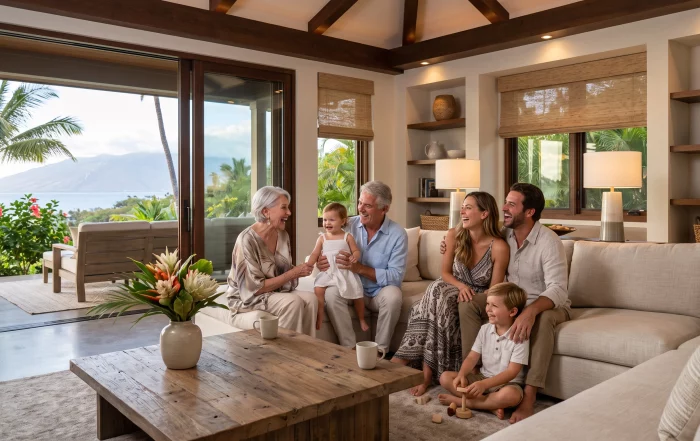
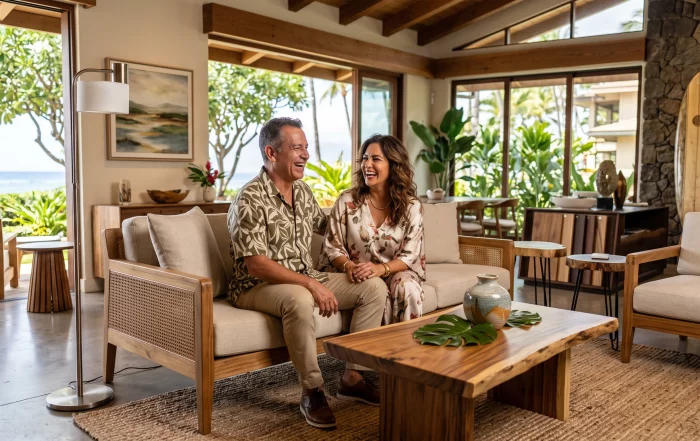
For island entertaining, seating should encourage conversation rather than force guests to line up against the walls. A sofa paired with two accent chairs creates a flexible conversation area, while a sectional can define a larger open-plan room. If the space needs to serve both everyday relaxation and larger gatherings, consider a combination of a sofa, swivel chairs, and a bench or settee. Swivel chairs are especially useful because they can face the conversation area, the view, or the lanai as needed.
Keep enough space between pieces for comfortable movement. A clear path of approximately 30 to 36 inches is a practical starting point for major walkways, although the ideal distance depends on the room and the furniture scale. Allow guests to reach the lanai, dining area, and kitchen without navigating through the center of the seating group.
Balance Scale and Flexibility
Large rooms can handle deeper sofas, substantial cocktail tables, and generous lounge chairs. Smaller rooms often feel better with raised-leg furniture, compact occasional tables, and armless or low-profile seating. Avoid choosing every piece from the same collection; a layered mix of materials and silhouettes feels more collected and relaxed.
- Place the front legs of seating on the rug when possible to visually anchor the arrangement.
- Choose a cocktail table that is easy to reach from every primary seat.
- Use nesting tables or C-tables when flexibility is more important than a large central surface.
- Keep console tables and display cabinets from narrowing circulation routes.
- Provide a nearby surface for drinks, phones, and serving pieces at each seating zone.
For larger residences and vacation rentals, multiple zones may work better than one oversized seating group. A primary conversation area can face the view, while a secondary pair of chairs creates a quiet reading or coffee space. This approach makes the living room more useful throughout the day and helps guests spread out during gatherings.
Designing a Living Room Layout for Hawaii’s Indoor-Outdoor Lifestyle
A living room layout in Hawaii must account for the blurred boundary between interior and exterior spaces. Open doors and large windows bring in exceptional light and breezes, but they also expose furnishings to ultraviolet rays, humidity, salt air, and wind-driven moisture. That makes placement and material selection equally important.
Protect Circulation and the Lanai Connection
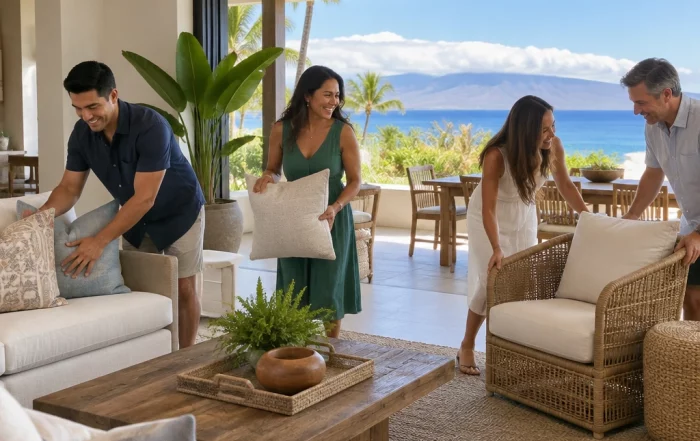
Do not position a deep sofa, tall cabinet, or oversized chair directly in front of a lanai opening. Instead, use the architecture to define the room. A sectional can run parallel to the view, while chairs sit perpendicular to it, creating a welcoming arrangement that preserves access outdoors. In a narrow space, a sofa table behind the seating can provide a finished back view without taking up too much room.
Measure door swings, sliding-door clearances, and the transition between flooring types before ordering furniture. These details are easy to overlook when shopping from photos or floor plans. IDS Maui can review dimensions, prepare AutoCAD drawings, and help coordinate furniture with lighting, cabinetry, and other elements of a whole-home project.
Select Materials for Sun, Salt, and Humidity
Hawaii’s climate can accelerate fading, finish wear, and fabric deterioration. The best choice depends on the room’s exposure and how the furniture will be used. Performance fabrics, solution-dyed fibers, tightly woven textiles, and finishes selected for durability can provide greater peace of mind in high-use homes and vacation rentals. However, “performance” is not a single solution; fiber content, construction, colorfastness, cleaning requirements, and placement all matter.
Wood species and finishes deserve the same attention. Some woods develop a beautiful patina, while others may require more careful protection from direct sun or fluctuating moisture. Natural materials can be an excellent fit for Maui, but they should be selected with realistic expectations about maintenance and aging. Window treatments, solar control, and strategic placement can protect valuable pieces while preserving the room’s connection to the outdoors.
Color also reads differently in Hawaii than it does on the mainland. Maui’s intense, equatorial light can make whites appear brighter, deepen certain greens and blues, and amplify warm undertones. Sampling fabrics and finishes in the actual room is essential. A color that looks quiet in a showroom may become much more vivid beside sunlit flooring, ocean views, or tropical landscaping.
Maui Interior Design Lighting: Layer for Day and Night
Good Maui interior design lighting begins with the understanding that natural light changes dramatically throughout the day. A room may feel bright and airy in the morning, glow with warm sunset tones in the evening, and require a completely different mood after dark. Rather than relying on one ceiling fixture, combine several types of light so the room remains comfortable and inviting at every hour.
Use Three Layers of Light
Ambient lighting provides general illumination. Recessed fixtures, architectural lighting, and carefully placed chandeliers or pendants can establish a comfortable baseline. Select fixtures with dimming capability, especially in rooms that receive strong daylight.
Task lighting supports specific activities. Floor lamps beside lounge chairs, table lamps on consoles, and focused reading lights make the room more functional. A well-placed lamp can also make an occasional chair feel like an intentional destination rather than an extra seat.
Accent lighting adds depth and highlights design details. Picture lights, cabinet lighting, sconces, and discreet illumination directed toward artwork or textured walls can emphasize the materials that make a Maui home distinctive. Lighting a bar cabinet, sculpture, or collection of accessories creates visual interest during evening entertaining.
Choose Fixtures That Complement the Room
Lighting should relate to the furniture scale and architectural character without making the room feel themed. Woven shades, natural fibers, aged metals, ceramic bases, and sculptural glass can suggest an island sensibility in a refined way. The goal is not to fill the room with overtly tropical motifs, but to layer texture, craftsmanship, and a connection to nature.
Color temperature matters, too. Warm, dimmable light generally creates a more flattering environment for people, fabrics, and wood finishes. Avoid glare by shielding bulbs, using opaque or diffused shades, and positioning fixtures so light does not reflect directly into seating or television screens. Outdoor lighting at the lanai should also be coordinated with the interior, allowing the view to remain part of the evening experience without creating harsh reflections.
IDS Maui offers lamps, chandeliers, sconces, and architectural lighting guidance as part of a broader furniture and interior plan. Coordinating the lighting early prevents common problems such as a pendant that blocks a view, a lamp that overwhelms a side table, or insufficient illumination near the areas guests use most.
Furniture, Rugs, and Details That Make Entertaining Easier
Once the layout and lighting plan are established, choose the pieces that support how your household or guests actually live. A living room for casual family use may need deep seating, durable upholstery, and generous storage. A vacation rental may benefit from resilient fabrics, easy-clean surfaces, and furniture that photographs well while remaining comfortable. A formal second home may call for tailored upholstery, distinctive accent chairs, and custom pieces that make the room feel personal.
Build Around Durable, Flexible Pieces
A well-made sofa or sectional is usually the largest investment in the room, so prioritize comfort, frame quality, cushion construction, and fabric suitability. Accent chairs can introduce color and pattern without committing every major piece to a bold choice. Cocktail, console, side, and end tables should provide practical surfaces while adding contrast through stone, wood, metal, glass, or hand-finished details.
For entertaining, consider adding a bar or display cabinet, sideboard, or credenza near the living and dining areas. These pieces can store glassware, serving pieces, games, and extra linens while keeping the main seating area uncluttered. An ottoman can function as a footrest, extra seating, or a serving surface when paired with a tray.
Use Rugs and Accessories Strategically
Rugs define seating zones, soften acoustics, and add comfort underfoot. In a Maui home, the ideal rug should be selected for traffic, sand, humidity, cleaning needs, and exposure to sunlight. A rug that is too small can make a substantial room feel disconnected, while one that is too delicate may not suit a frequently used vacation property.
Accessories should be edited rather than scattered across every surface. A few large-scale objects, artwork, mirrors, and organic forms often create more impact than a collection of small pieces. Mirrors can reflect light and expand a room, but avoid placing them where they bounce glare from windows or expose private areas. Natural textures, locally inspired color, and carefully chosen artwork can reinforce a Maui sense of place without sacrificing sophistication.
Because IDS Maui orders directly from manufacturers, the showroom can access furniture and accessories from brands such as Bernhardt, Baker, Caracole, Century, McGuire, Kravet, Janus et Cie, Global Views, Theodore Alexander, and others—many of which are not otherwise available on Maui. Custom and made-to-order options may include dimensions, upholstery, finishes, cushions, legs, and arms, with typical lead times of approximately 8–12 weeks.
Plan Your Maui Living Room With IDS Maui
The best island entertaining spaces feel relaxed because the planning behind them is precise. Furniture should support conversation and circulation, lighting should shift comfortably from bright daytime to evening gatherings, and every material should be evaluated for Maui’s sun, salt air, and indoor-outdoor lifestyle.
IDS Maui has served Hawaii for 27 years, bringing local climate knowledge, hospitality experience, and direct manufacturer relationships to residential and vacation-home projects. The showroom at 3031 Old Haleakala Highway in Makawao is open Monday through Friday from 10 a.m. to 6 p.m. Visit to explore furniture, lighting, rugs, and accessories, or call 808-891-8800 to discuss your room, dimensions, budget, and furnishing needs. IDS Maui serves clients throughout Maui, Lanai, Molokai, Oahu, the Big Island, and the continental United States, with freight quoted separately. With the right plan, your living room can feel as effortless as island life—and work beautifully for years to come.
Need Help With Your Space?
Ask us anything — furniture, design, or where to start.