Three years after the devastating August 2023 Lahaina wildfire, Maui’s rebuilding landscape has transformed dramatically. By August 2026, 577 residential units have been completed, debris removal is 100% finished statewide, and homeowners are finally moving from emergency shelters into permanent residences. But furnishing a post-wildfire rebuild in 2026 looks nothing like it did before the disaster. The lessons learned from fire exposure, salt air damage, and the realities of Hawaii’s climate have fundamentally changed what smart homeowners prioritize when selecting furniture, fabrics, and finishes. This isn’t just about replacing what was lost—it’s about building back smarter, more resilient, and better suited to West Maui’s demanding environment.
If you’re among the families rebuilding in Lahaina or surrounding fire-affected areas, understanding these shifts can save you thousands of dollars in premature replacements and help you create a home that truly lasts. Here’s what’s different about Maui furniture selection in 2026, and why those differences matter for your rebuild.
The 2026 Maui Wildfire Rebuild Furniture Landscape: By the Numbers
The scale of Lahaina’s recovery provides important context for furniture and interior design decisions. According to Maui County’s Recovery Dashboard, as of late 2026, 667 building permits have been issued for residential properties, with 315 homes actively under construction. The largest debris removal effort in Hawaii history hauled more than 400,000 tons of wildfire debris to Central Maui Landfill, clearing the way for reconstruction.
But permits and cleared lots tell only part of the story. Housing stability data reveals that approximately two-thirds of fire-affected households now live in permanent housing, up from just over half in early 2025. This shift from temporary FEMA trailers and rental assistance to permanent homes has created unprecedented demand for furniture that can withstand Hawaii’s unique environmental challenges while supporting the emotional recovery process.
What makes 2026 different is the collective wisdom gained from three years of living through recovery. Homeowners who rushed to furnish temporary housing learned hard lessons about which materials fail quickly in salt air, which fabrics bleach out under Maui’s intense UV exposure, and which furniture configurations actually support the indoor-outdoor lifestyle that defines West Maui living. Those lessons are now shaping smarter purchasing decisions for permanent rebuilds.
Why Fire-Resistant Building Standards Change Interior Choices
New building codes implemented after the Lahaina fire emphasize fire-resistant roofing, ember-resistant vents, defensible space, and non-combustible exterior materials. While these requirements focus on the building envelope, they have ripple effects inside the home. Tighter construction means better climate control but also requires more attention to humidity management and air circulation—factors that directly impact fabric selection, wood furniture longevity, and finish durability.
Homeowners rebuilding in 2026 are coordinating interior design decisions earlier in the construction process, working with architects and builders to ensure that furniture placement, window treatments, lighting, and material selections align with the home’s fire-resistant systems rather than working against them.
Material Performance Takes Priority Over Aesthetic Trends
Before August 2023, many Maui homeowners selected furniture based primarily on style, color, and price. The post-fire rebuild has shifted that calculus. In 2026, resilient furniture for Maui coastal homes means prioritizing material performance first, then finding aesthetic solutions within those parameters.
The difference is significant. Solution-dyed performance fabrics, once considered strictly commercial or “outdoor only,” are now standard recommendations for any room that opens to a lanai—which in Lahaina means nearly every living space. These fabrics resist UV fading, moisture damage, and salt air degradation far better than natural fibers or standard upholstery, extending furniture life from three to five years to ten years or more.
Fabrics That Actually Survive Salt Air and Sun
Hawaii’s proximity to the equator intensifies UV exposure beyond what mainland homeowners experience. Colors that look vibrant in a Seattle showroom can bleach to pastels within 18 months in a west-facing Lahaina living room. Solution-dyed acrylics and polyesters maintain color integrity because the pigment is embedded throughout the fiber rather than applied as a surface treatment.
Natural fibers like cotton, linen, and silk—popular in coastal design magazines—deteriorate rapidly in salt air. Homeowners who replaced fire-lost furniture with “natural” materials in 2023 and 2024 often found themselves replacing those pieces again by 2026. The smarter approach uses performance fabrics in high-exposure areas and reserves natural fibers for enclosed bedrooms or spaces with minimal UV exposure and controlled humidity.
Wood Species Selection Based on Climate Reality
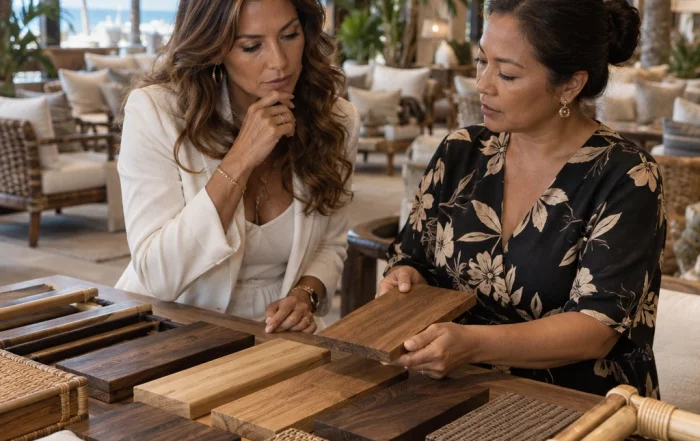
Not all wood furniture performs equally in Maui’s climate. Species with high natural oil content—like teak, mahogany, and certain rosewoods—resist moisture and dimensional changes better than softer woods. Veneered furniture requires careful attention to adhesive quality and edge sealing, as salt air and humidity can cause delamination in poorly constructed pieces.
In 2026, experienced designers recommend solid wood construction for outdoor and lanai furniture, with marine-grade finishes that protect against both UV and moisture. Indoor furniture benefits from harder species and high-quality catalyzed finishes that create a more durable barrier than traditional lacquers or oil finishes.
Custom and Made-to-Order Furniture Solves Rebuild Challenges
Many Lahaina rebuilds feature updated floor plans that reflect lessons learned from the fire—better emergency egress, more storage for emergency supplies, flexible spaces that serve multiple functions, and improved indoor-outdoor flow. These modified layouts often have dimensions that don’t match standard furniture sizes, making custom and made-to-order pieces especially valuable.
IDS Maui’s access to manufacturers like Bernhardt, Baker, Caracole, Century, and McGuire—many unavailable elsewhere on Maui—allows homeowners to specify exact dimensions, leg styles, arm configurations, fabrics, finishes, and cushion construction. This customization matters when a rebuilt home has a narrower stairway, a compact bedroom, or a lanai that needs furniture scaled to a specific footprint.
Lead Times and Logistics in 2026
The post-pandemic supply chain chaos that plagued 2021-2023 has largely resolved, but Hawaii shipping still requires careful planning. Quick Ship items typically arrive in two to three weeks, while standard made-to-order pieces take up to eight weeks or longer depending on the manufacturer and freight schedule.
Freight to Hawaii is commonly priced by cubic footage and typically runs 10 to 15 percent of the item cost. For a $5,000 sofa, expect $500 to $750 in shipping. For a full-house furnishing project totaling $80,000, freight might add $8,000 to $12,000. Working with a professional purchasing team that coordinates orders, inspects deliveries, and manages freight or damage claims eliminates much of the stress and financial risk of direct ordering.
Phased Purchasing Aligns With Construction Milestones
Smart homeowners in 2026 are ordering furniture in phases that align with construction progress rather than waiting until the house is finished. Long-lead custom pieces—beds, dining tables, sectionals, case goods—are ordered when framing is complete and dimensions are confirmed. Faster-ship accessories, lamps, and rugs are ordered closer to move-in. This phased approach prevents bottlenecks and ensures furniture arrives when it can actually be delivered and installed.
Emotional Recovery Through Thoughtful Interior Design
Beyond material performance and logistics, post-fire Maui furniture selection in 2026 acknowledges the emotional dimension of rebuilding. Homes lost in the Lahaina fire weren’t just structures—they held decades of memories, family heirlooms, children’s artwork, collected treasures, and the accumulated comfort of daily life. Replacing those losses with generic furniture from a big-box store or rushed online orders often leaves families feeling disconnected from their new space.
Thoughtful interior design helps rebuilt homes feel personal and rooted in place. This might mean incorporating family pieces that survived the fire, commissioning custom artwork that references Lahaina’s history, selecting colors that evoke positive memories, or choosing furniture proportions that echo the scale and feel of the lost home. The goal isn’t to recreate what was lost—that’s impossible—but to create a new home that honors the past while supporting the family’s future.
Biophilic Design Connects Rebuilt Homes to Nature
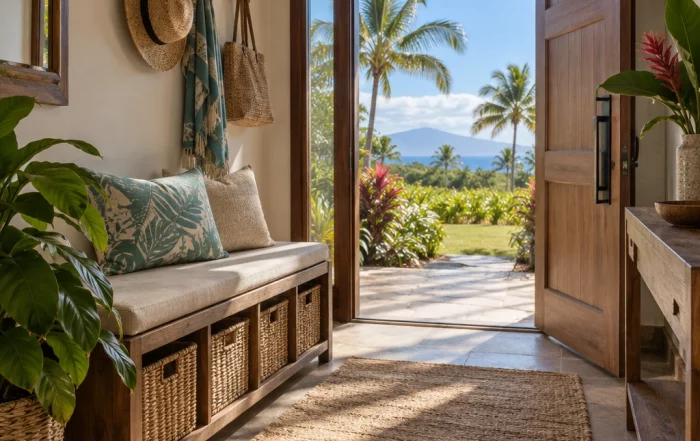
Biophilic design principles—bringing nature indoors through views, natural textures, indoor plants, organic forms, and visual connections to landscape—have gained traction in Lahaina rebuilds. After experiencing catastrophic fire, many families find comfort in reconnecting with nature in controlled, beautiful ways. Large windows that frame ocean or mountain views, natural stone or wood accents, and furniture with organic curves rather than harsh angles all contribute to this sense of connection.
Color and Fabric Layering Creates Personal Expression
There’s no single “Maui look” that every rebuilt home should follow. Some families prefer restrained palettes with subtle references to Lahaina’s history—soft blues, warm neutrals, natural textures. Others want saturated color, bold patterns, and collected objects that celebrate their family’s personality. Both approaches are valid. The right design reflects the people who live there, not a generic coastal trend.
Color reads differently in Hawaii than on the mainland due to the equator’s proximity and the intensity of natural light. What looks like a soft sage green in a San Francisco showroom may appear washed out in a Lahaina living room. Experienced designers who understand this phenomenon can help homeowners select colors that will look vibrant and intentional in Maui’s unique light conditions.
Aging-in-Place and Universal Design in Post-Fire Rebuilds
Many Lahaina homeowners are incorporating aging-in-place features into their rebuilds—wider clearances, comfortable seating heights, lever hardware instead of knobs, better task lighting, curbless showers, and flexible guest rooms. These choices are far easier and less expensive to implement during construction than as later renovations.
From a furniture perspective, this means selecting pieces with appropriate seat heights and depths for easy standing, avoiding overly low or overly soft seating, ensuring clear circulation paths, and planning adequate lighting at every task area. These considerations support not just aging homeowners but also visiting parents, children, and guests of all abilities.
Why Local Hawaii Experience Matters for Post-Fire Furniture Selection
Mainland furniture retailers and online stores can ship to Hawaii, but they rarely understand the specific performance requirements of Maui’s climate or the unique challenges of post-fire rebuilding. Generic advice about “coastal style” or “tropical design” often recommends materials that fail quickly in real Hawaii conditions.
IDS Maui’s 27 years of Hawaii-specific experience means understanding which fabric fibers hold up to salt air, which wood species resist dimensional changes in humidity, which finishes protect against UV damage, and which furniture configurations actually work for indoor-outdoor lanai living. This knowledge prevents costly mistakes and ensures that furniture purchases support long-term durability rather than requiring replacement within a few years.
Access to Manufacturer Lines Unavailable Elsewhere on Maui
Direct manufacturer relationships give IDS Maui access to furniture and accessory lines that aren’t otherwise available on Maui—brands like Bernhardt, Baker, Caracole, Century, Global Views, Janus et Cie, Kravet, McGuire, and Theodore Alexander. This access provides better pricing, more customization options, and higher quality than mass-market alternatives, with the added benefit of professional purchasing support that manages orders, freight, and damage claims.
Ready to Furnish Your Rebuilt Lahaina Home?
Rebuilding after the Lahaina fire is a marathon, not a sprint. By late 2026, the community has moved from emergency response to thoughtful, permanent reconstruction. The furniture and interior design decisions you make now will shape your daily life for the next decade or longer—choosing wisely means prioritizing material performance, understanding Hawaii’s unique climate challenges, and working with professionals who have deep experience in both.
IDS Maui has guided Maui homeowners through complex furnishing projects for 27 years, combining Hawaii-specific design expertise with access to premium furniture lines and comprehensive purchasing support. Whether you’re furnishing a single bedroom or an entire rebuilt residence, the team understands the practical and emotional dimensions of post-fire recovery.
Visit the IDS Maui showroom at 3031 Old Haleakala Highway in Makawao, Monday through Friday from 10 a.m. to 6 p.m., or call 808-891-8800 to discuss your project. Let’s create a rebuilt home that honors your past, serves your present needs, and stands up to Maui’s demanding environment for decades to come.
Need Help With Your Space?
Ask us anything — furniture, design, or where to start.