Living in paradise comes with an unexpected trade-off: the same salt air, sun, and humidity that make Maui breathtaking are also working around the clock to break down your furniture. That beautiful sofa that lasted a decade on the mainland might start showing wear in just a few years here. The good news? Understanding why furniture breaks down faster in Hawaii is the first step toward choosing pieces that will truly stand the test of time—and look stunning while doing it.
Why Furniture Breaks Down Faster in Hawaii: The Three Main Culprits
Hawaii’s tropical climate is notoriously tough on home furnishings. While the weather is idyllic for beach days, it creates a perfect storm of conditions that accelerate wear and tear on everything from wood tables to upholstered sofas.
Salt Air and Corrosion
If you live near the coast, salt-laden breezes constantly settle on your furniture. This salt is abrasive and corrosive. It dulls metal finishes, rusts hardware, and can even break down the glues used in wood joints over time. For those living in upcountry Maui, the effects are less severe, but the trade winds still carry moisture that impacts your home’s interior environment.
Intense UV Radiation
Maui’s proximity to the equator means the sun is significantly stronger than in most of the continental U.S. UV rays don’t just fade fabric colors; they break down the molecular structure of fibers, making them brittle. Wood finishes can discolor, and natural materials like rattan and wicker become dry and crack. This is a primary reason Hawaii furniture needs to be sourced with UV resistance in mind.
Humidity and Moisture
High humidity causes wood to swell and warp. It also creates the ideal breeding ground for mold and mildew, particularly in dark, unventilated areas like closets or underneath cushions. For vacation rental owners, this is a constant battle, as units often sit closed up between bookings, trapping moisture inside.
How to Choose Furniture That Survives (and Thrives) on Maui
Selecting the right pieces isn’t about sacrificing style—it’s about being strategic. With the right knowledge, you can have a home that looks like it belongs in a design magazine and holds up to the elements for decades. Here’s what to look for:
Material Matters: Wood and Metal
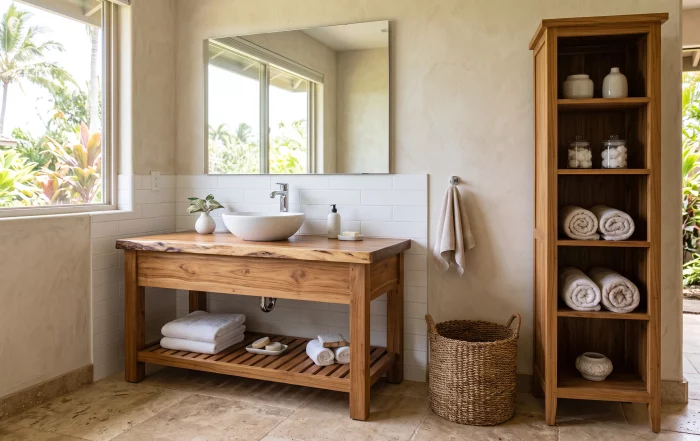
Not all wood is created equal. Dense hardwoods like teak, mahogany, and acacia are naturally resistant to moisture and pests. For indoor pieces, look for kiln-dried hardwoods with a high-quality lacquer finish that seals out humidity. For metal, powder-coated finishes are far more durable than painted ones, offering a tougher barrier against salt air corrosion.
Fabric and Fiber Selection
This is where a Maui interior design expert’s guidance pays off. Synthetic fibers like polyester, acrylic, and solution-dyed nylon are your best friends. They resist fading, repel moisture, and don’t absorb the musty smells that natural fibers often do. If you love the feel of linen or cotton, look for performance blends that combine natural aesthetics with synthetic durability. For outdoor spaces, marine-grade fabrics like Sunbrella are the gold standard.
Indoor-Outdoor Living: Furniture for Salt Air and Sun
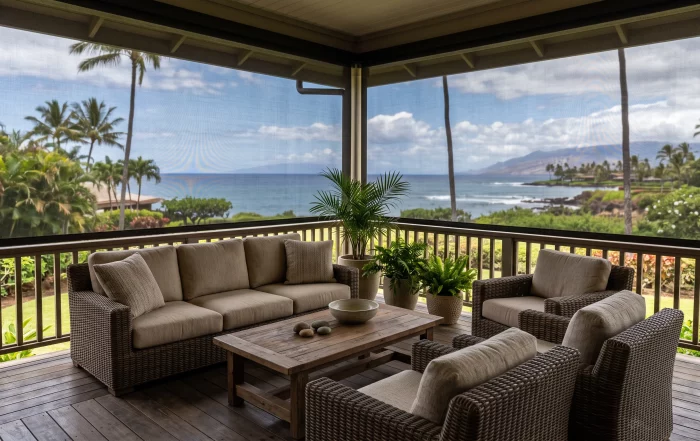
Maui living is all about the lanai. We blur the lines between indoors and outdoors, which means your outdoor furniture Hawaii needs to work harder than anywhere else. The days of flimsy plastic patio sets are over. Today’s market offers luxurious, durable options that can handle the elements without compromising on style.
When planning your outdoor spaces, consider pieces designed for indoor outdoor living Maui residents love. These are crafted from materials like all-weather wicker (resin-based), powder-coated aluminum, and UV-stabilized woods. They’re built to withstand rain, sun, and salt, and they look sophisticated enough to blend seamlessly with your interior decor. Choosing these pieces means you can enjoy your lanai year-round without worrying about constant maintenance or replacement.
Real Results: The IDS Maui Difference
Over our 27 years in business, we’ve seen it all—from imported furniture that disintegrated within a year to investment pieces that still look new after two decades. The difference always comes down to the initial selection. We recently worked with a client in Kihei who had gone through three sets of outdoor furniture in five years, all purchased from big-box stores. Frustrated, they came to us for a full home refresh.
We sourced a complete set of powder-coated aluminum and Sunbrella furniture for their lanai, and selected kiln-dried hardwood pieces with high-performance upholstery for the interior. The result? A home that perfectly captures the elegance of island living without the constant cycle of replacement. That’s the value of working with a team that understands the unique demands of the Hawaiian climate.
We leverage our direct relationships with manufacturers like Bernhardt, Hancock & Moore, and Janus et Cie to bring you lines that are not only beautiful but also built to last. We know which pieces will perform in a windward-facing home versus a leeward one, and we can guide you through custom options for fabric and finish that match your lifestyle.
Conclusion: Invest in Your Peace of Mind
Understanding why furniture breaks down faster in Hawaii is the key to making smarter purchasing decisions. By prioritizing durable materials and climate-appropriate designs, you can avoid the frustration and expense of premature wear. You deserve a home that looks and feels as beautiful as the island itself, without the constant worry about damage.
At IDS Maui, we make it easy to furnish your home with confidence. Visit our showroom in Makawao to see and feel the difference quality makes, or call us at 808-891-8800 to schedule a design consultation. Let us help you invest in pieces that will last as long as your love for island life.
Need Help With Your Space?
Ask us anything — furniture, design, or where to start.