Rebuilding after the Lahaina fire is about more than replacing walls, roofs, and appliances. For many Maui homeowners, it is an opportunity to create a home that feels familiar, functions better, and responds more intelligently to wildfire, salt air, intense sun, wind, and year-round indoor-outdoor living. In 2026, Lahaina fire rebuilding is moving from emergency response toward permanent homes, neighborhood infrastructure, and long-term community recovery. That transition brings important design questions: Which materials are worth prioritizing? How can a home feel warm rather than overly defensive? Which furniture, fabrics, lighting, and finishes will perform well in West Maui? This guide explains how thoughtful interior design can support post-fire home reconstruction in Lahaina while honoring the character of the community. It also outlines practical choices for resilient furniture for Hawaii, comfortable lanai living, and a more coordinated purchasing process. For homeowners furnishing a rebuilt residence, IDS Maui combines Hawaii-specific design experience with access to furniture and accessory lines that are often unavailable elsewhere on Maui.
Lahaina Fire Rebuilding Starts with a Resilient Design Strategy
A successful rebuild begins before furniture is ordered. Interior design decisions should be coordinated with the architect, builder, permit team, insurance representatives, and other consultants so that the finished home works as a complete system. The goal is not simply to select attractive pieces after construction; it is to plan circulation, storage, lighting, window treatments, finishes, and indoor-outdoor connections while the floor plan is still flexible.
For Lahaina homeowners, resilience should be considered at several levels:
- Building interface: Coordinate interior choices with fire-resistant roofs, walls, windows, doors, vents, decks, and exterior assemblies specified by the construction team.
- Material performance: Select fabrics, wood species, finishes, flooring, and hardware that can tolerate UV exposure, humidity, salt air, and heavy use.
- Daily function: Create practical drop zones, durable kitchens, accessible bathrooms, flexible guest rooms, and easy-to-clean surfaces.
- Emotional comfort: Use color, artwork, family pieces, and familiar proportions to make the rebuilt home feel personal and connected to Lahaina.
Interior design cannot replace code-compliant construction or professional fire-hardening. However, it can reinforce the overall strategy. FEMA’s Maui wildfire building guidance discusses ember- and flame-resistant vents, enclosed or soffited eaves, noncombustible materials, and other decisions that must be reviewed by qualified building professionals. Read the FEMA performance guidance for residential buildings after the Maui wildfires alongside your architect’s recommendations.
Design for recovery, not just replacement
Many owners rebuilding in Lahaina are balancing grief, insurance decisions, temporary housing, changing budgets, and long lead times. A phased design process can reduce stress. Start with programming: determine how many people will live in the home, how often guests will visit, whether the property is a primary residence or vacation rental, and which belongings must be accommodated. Then develop a schematic furniture plan before selecting finishes or placing orders.
This approach helps prevent common problems, such as placing a sectional that blocks a lanai door, under-sizing dining furniture for family gatherings, or discovering too late that a bedroom lacks adequate storage. It also allows homeowners to identify must-have purchases, quick-ship substitutions, and made-to-order pieces with longer lead times.
What Is Specific About Rebuilding a Lahaina Home in 2026?
Lahaina’s recovery is happening at a community scale, not only one property at a time. On August 3, 2026, the Office of Governor Josh Green reported that 100% of wildfire debris had been cleared statewide, with 667 building permits issued and 577 houses completed across Maui. The same update described a rebuilding direction that emphasizes walkability, public spaces, accessibility, cultural character, and support for local businesses. Those priorities matter inside the home, too: a rebuilt residence should connect comfortably to its neighborhood, landscape, lanai, and community life.
Infrastructure milestones are also shaping expectations. Maui County announced that Lahaina’s Front Street was scheduled to reopen to vehicular traffic on August 1, 2026, after debris removal, seawall and sidewalk repairs, new railings, landscaping, fencing, paving, and striping. The county described the reopening as another step in Lahaina’s healing journey, with commercial activity returning to the historic core. Follow updates through the Maui County Office of Recovery announcement about Front Street.
For homeowners, this broader progress creates a need for interiors that are durable but not generic. A Lahaina home may benefit from natural textures, relaxed proportions, shaded lighting, and colors inspired by ocean, volcanic landscape, tropical foliage, and historic West Maui architecture. At the same time, the design should avoid relying on delicate materials that fade quickly or require constant professional maintenance.
Firewise construction and familiar character
The county’s Hoʻokumu Hou Single-Family Homeowner Reconstruction Program has emphasized designs that are “familiar, resilient, and rooted in the Lahaina community.” Its available floor plans and renderings were developed with Firewise construction in mind while maintaining forms and layouts familiar to residents. That combination is a useful model for private rebuilding: safety does not require a cold, institutional interior.
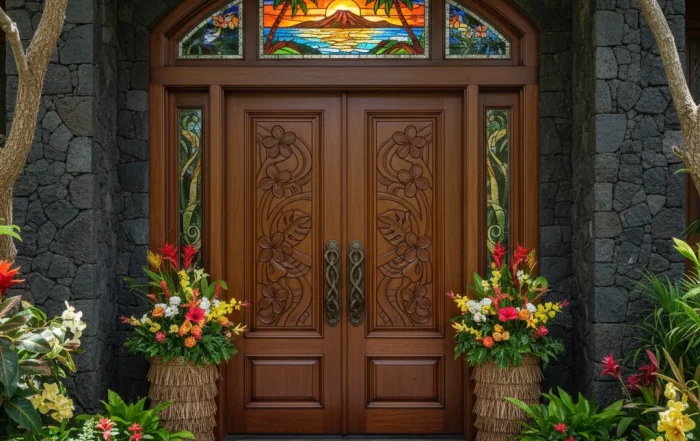
Inside, familiar character can come from a carefully chosen dining table, a crafted wood accent, locally meaningful art, a tailored upholstered bed, or a color palette that reflects the owner’s history in Lahaina. It can also come from practical details, such as a generous entry bench, a guest room that works for extended family, or a kitchen island designed for conversation rather than display alone.
Choosing Fire-Resistant Interior Design Materials for Maui
“Fire-resistant interior design Maui” should be understood as part of a larger construction strategy. Furniture and finishes inside the home are not substitutes for rated exterior assemblies, but material selection still matters. Interior designers can help homeowners reduce unnecessary combustible clutter, improve cleanability, and coordinate interior finishes with the building envelope.
Prioritize the building envelope first
Ask the architect and builder about the roof assembly, exterior cladding, glazing, doors, vents, eaves, decks, and attachment points before making decorative selections. FEMA notes that embers can enter through openings and ignite vulnerable materials; the U.S. Fire Administration describes ember exposure as one of several pathways that can lead to structure ignition. The U.S. Fire Administration’s wildfire ember guidance is a useful primer for understanding why the entire parcel and structure must be considered together.
Once the construction system is established, the interior can be designed to support durability. Consider porcelain or stone surfaces in high-traffic areas, commercial-grade upholstery where appropriate, performance fabrics for family rooms, and finishes that can be repaired rather than replaced after minor wear. Avoid selecting materials solely because they are marketed as “natural” or “coastal.” In Lahaina’s climate, the correct fiber, finish, and maintenance plan matter more than a trend label.
Plan for sunlight, salt, and indoor-outdoor living
Hawaii’s position closer to the equator changes how color reads indoors. Bright daylight can intensify warm tones, reveal undertones, and accelerate fading. Salt air and wind can also affect metal hardware, wood finishes, outdoor fabrics, and lanai furniture. That is why a material board should be reviewed in the actual home, at different times of day, and near the windows where the strongest exposure occurs.
For a resilient furniture plan, consider:
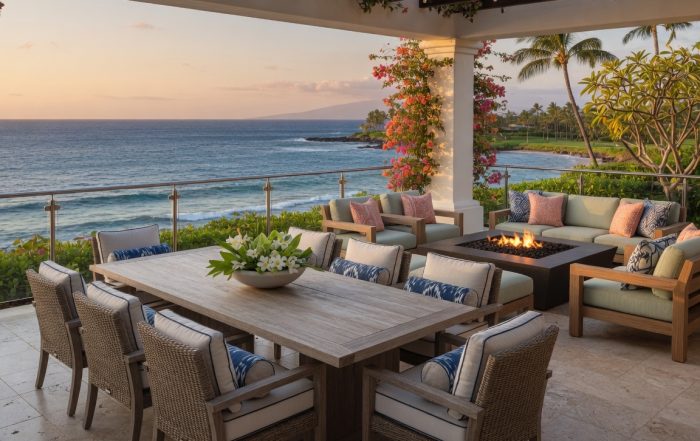
- Solution-dyed or performance upholstery for rooms that open directly to a lanai.
- Outdoor-rated furniture with corrosion-resistant hardware for covered and uncovered areas.
- Rugs that can be cleaned and replaced in sections when practical.
- UV-conscious window treatments that protect furnishings without eliminating natural light.
- Hardwearing wood, stone, porcelain, or high-quality composite surfaces in high-touch locations.
- Closed storage for textiles, games, electronics, and emergency supplies.
Furniture should also be elevated or arranged to support cleaning and maintenance, especially in homes exposed to windblown dust and sand. Thoughtful spacing makes a room feel calmer while allowing owners or property managers to inspect surfaces, clean underneath pieces, and identify damage early.
Furniture Planning for a Post-Fire Home Reconstruction in Lahaina
Rebuilding furniture collections all at once can feel overwhelming. A whole-home plan gives homeowners a clearer way to prioritize. Begin with the rooms that support daily life: the primary bedroom, kitchen and dining area, living room, and essential guest or family spaces. Then add lighting, rugs, artwork, outdoor furnishings, and accessories in coordinated phases.
Build a cohesive room-by-room plan
A rebuilt Lahaina residence often benefits from flexible pieces that can serve multiple generations and different types of gatherings. A generously scaled sectional may anchor family movie nights, while an accent chair or settee provides a quieter reading seat. A console can define an entry without blocking circulation. A bar or display cabinet can add storage and hospitality function without requiring a full renovation.
For vacation rental owners, durability and operational efficiency become even more important. Select upholstery that tolerates frequent turnover, dining chairs that are easy to move and clean, beds with dependable support, and lighting that can be serviced without specialized parts. For second-home owners furnishing remotely, accurate floor plans, finish samples, video consultations, and a single purchasing contact can simplify decisions from the mainland.
Use custom pieces strategically
Made-to-order furniture can be especially valuable when rebuilt homes have unusual dimensions, tight stairways, compact bedrooms, or indoor-outdoor rooms. Custom options may include dimensions, legs, arms, fabric, finish, and cushion construction. IDS Maui offers access to manufacturers and brands such as Bernhardt, Baker, Caracole, Century, Global Views, Janus et Cie, McGuire, Kravet, Theodore Alexander, and others, with many lines not otherwise available on Maui.
Lead times should be discussed early. Quick Ship items may arrive in approximately two to three weeks, while standard made-to-order pieces can take up to eight weeks or longer depending on the manufacturer and freight schedule. Shipping to Hawaii is commonly priced by cubic footage and may run approximately 10% to 15% of item cost. A professional purchasing team can coordinate orders, inspect deliveries, and manage freight or damage claims when problems occur.
Creating Comfort, Memory, and Wellness After the Lahaina Fires
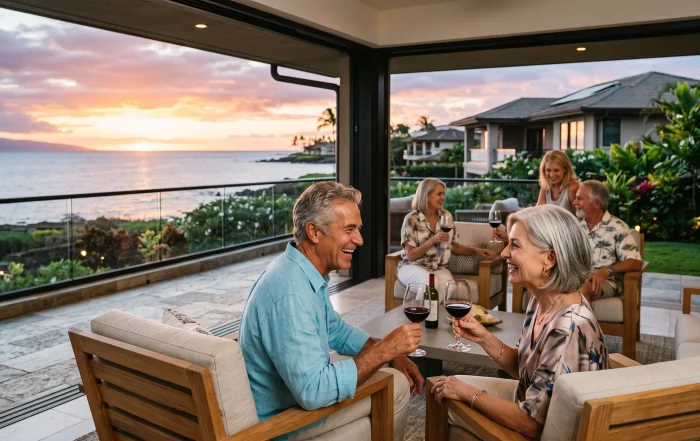
A rebuilt home should not feel like a showroom or a reminder of everything that was lost. It should support rest, privacy, connection, and a sense of control. That may mean using softer lighting, acoustic rugs, layered window treatments, and comfortable seating with clear sightlines. It may also mean designing an uncluttered bedroom, a calm reading corner, or a lanai that supports morning coffee and evening conversation.
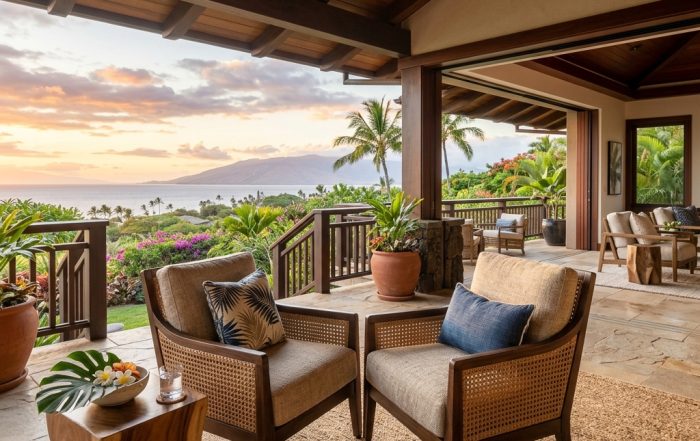
Biophilic design can help bring nature indoors through views, natural textures, indoor plants where suitable, organic forms, and a visual connection to the landscape. Color and fabric layering can make a home feel distinctly personal. Some homeowners may prefer a restrained palette with subtle references to Lahaina; others may want saturated color, pattern, and collected objects. There is no single “Maui look.” The right design reflects the people who live there.
Aging-in-place planning is another worthwhile consideration during reconstruction. Wider clearances, comfortable seating heights, lever hardware, better task lighting, curbless showers, and flexible guest rooms are easier and less expensive to address during a rebuild than later. These choices can support residents, visiting parents, children, and guests without making the home look clinical.
IDS Maui approaches projects through six coordinated phases: programming, schematic design, design development, construction documentation, construction administration, and purchasing, shipping, and installation. That structure is helpful when a project includes cabinets, closets, lighting, plumbing fixtures, appliances, furniture, custom bedding, rugs, and accessories.
Plan Your Lahaina Rebuild With IDS Maui
Rebuilding after the Lahaina fires is a major undertaking, but homeowners do not have to make every decision in isolation. A clear furniture plan, climate-appropriate materials, resilient finishes, and carefully sequenced purchasing can create a home that is safer, more comfortable, and more enduring.
IDS Maui has served Hawaii for 27 years, with experience in Maui’s climate, hospitality environments, custom furnishings, color, fabrics, lighting, and whole-home installations. The showroom is located at 3031 Old Haleakala Highway in Makawao and is open Monday through Friday from 10 a.m. to 6 p.m. IDS serves Maui, Lanai, Molokai, Oahu, the Big Island, and mainland clients through coordinated ordering and freight.
If you are planning Lahaina emergency rebuild design, furnishing a vacation rental, or replacing furniture after reconstruction, call 808-891-8800 to discuss your scope and budget. You can also visit the showroom to explore furniture, lighting, rugs, outdoor pieces, accessories, and custom options that bring comfort and character back into your home.
Need Help With Your Space?
Ask us anything — furniture, design, or where to start.