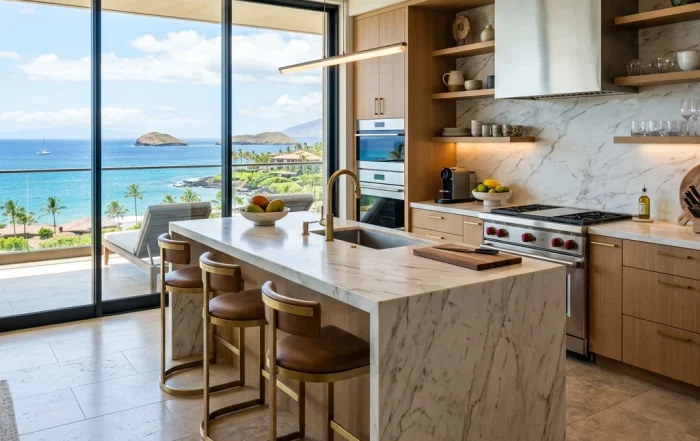
In a Maui home, furniture placement is about more than creating an attractive room. Trade winds, salt air, intense sunlight, and open-air living all affect how comfortable a space feels and how long its furnishings last. A sofa aimed directly into a strong breeze may collect moisture and dust, while a beautiful lanai arrangement can become unstable when wind channels between walls. Thoughtful Maui furniture layout balances airflow, views, conversation, circulation, and protection from the island climate. This guide explains how orientation and placement influence comfort, durability, and design flow—from living rooms and bedrooms to covered lanais and vacation rentals. With the right approach, you can welcome Maui’s natural ventilation without allowing wind, salt, and sun to dictate the entire design.
Maui Furniture Layout Starts with Understanding Trade Winds
Maui’s trade winds often provide welcome natural cooling, but their direction and intensity vary by location, season, elevation, and the shape of a home. Before moving a sectional or selecting outdoor furniture, observe where air enters, where it accelerates, and where it becomes turbulent.
Map the air movement first
Spend time in each room at different times of day. Notice whether breezes arrive through sliding doors, louvered windows, hallways, or a lanai opening. Air may move gently across one side of a room and become forceful near a corner or narrow passage. This simple observation is the foundation of effective Maui trade winds furniture placement.
- Keep primary walking routes clear so airflow and people can move comfortably.
- Place heavier seating perpendicular to strong breezes rather than directly in their path.
- Avoid positioning lightweight tables, lamps, or accessories beside open doors.
- Use larger pieces to define zones without blocking every source of natural ventilation.
Furniture should support cross-ventilation, not stop it completely. For example, a sofa can sit at a right angle to an open lanai door, creating a comfortable conversation area while allowing air to pass around the seating group.
Protect comfort without closing the room
In an island home, the goal is rarely to eliminate airflow. Instead, use orientation, scale, and layers to soften it. A console, bookcase, or substantial sideboard can help break a direct wind path. However, tall pieces should not obstruct views or create a dark, stagnant corner. Balance is especially important in open-plan homes where the living, dining, and kitchen areas share one volume.
Use Orientation to Improve Durability in Hawaii
Wind is only one consideration. Salt air and strong sun can affect fabrics, wood, metal, finishes, and flooring. The best salt air furniture orientation reduces direct exposure while keeping frequently used pieces convenient and visually connected.
Choose placement based on exposure
Place especially vulnerable materials away from the most exposed openings. Upholstered furniture should not sit directly in the path of blowing mist or rain. Likewise, wood furniture benefits from protection beneath a covered roof and from distance away from doors that are frequently left open during windy weather.
For lanais, use heavier frames and broad bases where wind exposure is predictable. Outdoor-rated furniture is still not maintenance-free, so cushions should be stored or secured when weather changes. Select performance fabrics designed for moisture, ultraviolet exposure, and frequent cleaning. Inside, consider fabrics with durable weaves and finishes suited to the home’s traffic level.
Think about sun as well as wind
Direct sunlight can fade upholstery and wood finishes, particularly near large glass doors. Rotate movable pieces periodically, use shades or solar treatments where appropriate, and avoid placing irreplaceable textiles in the brightest exposure. A well-positioned rug can define a seating area, but it should be made from materials suited to the room’s moisture and foot traffic.
These decisions are part of Hawaii wind-resistant furniture layout, but they also improve everyday livability. Furniture that remains stable, cleanable, and comfortable will serve a family—or a vacation rental—far better than a fragile arrangement chosen only for appearance.
Design a Lanai That Welcomes Airflow
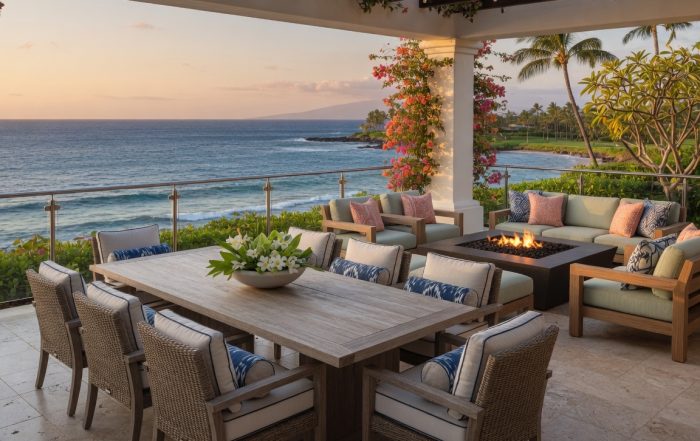
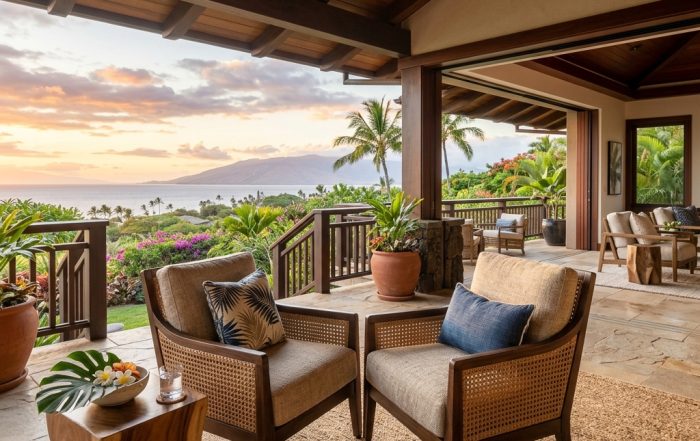
Maui lanais are year-round living spaces, so their layouts deserve the same care as interior rooms. Effective Maui lanai wind protection does not require turning an outdoor area into a sealed enclosure. Instead, combine furniture weight, placement, and soft architectural elements to create comfortable pockets.
Start by identifying the most protected side of the lanai. Place lounge seating there, especially if it includes loose cushions. Dining furniture can occupy a more exposed zone when the table has a stable base and chairs can be secured. Avoid lining every piece against the perimeter; that can make the space feel crowded and leave the center unusable.
A practical lanai arrangement may include:
- A substantial outdoor sofa positioned away from the strongest opening.
- Two anchored lounge chairs angled toward the view and toward one another.
- A weighted cocktail table with enough clearance for circulation.
- Outdoor drapery, screens, or planters used selectively to soften gusts.
Keep at least one clear route between the interior and exterior. This preserves the visual connection that makes indoor/outdoor living so appealing. For vacation rentals, choose durable pieces with simple maintenance requirements and avoid small accessories that can blow away or become trip hazards.
Thoughtful island home airflow design also considers ceiling fans, lighting, and door swings. A fan should supplement—not fight—natural breezes, while lighting should remain useful when furniture is rearranged for gatherings.
Build a Trade Wind Home Design Plan for Your Maui Property
A successful layout begins with the people using the home. A full-time resident may prioritize quiet reading corners and flexible entertaining, while a second-home owner may need a durable, welcoming arrangement that works remotely. A vacation rental requires especially careful circulation, secure furnishings, and fabrics that can withstand frequent turnover.
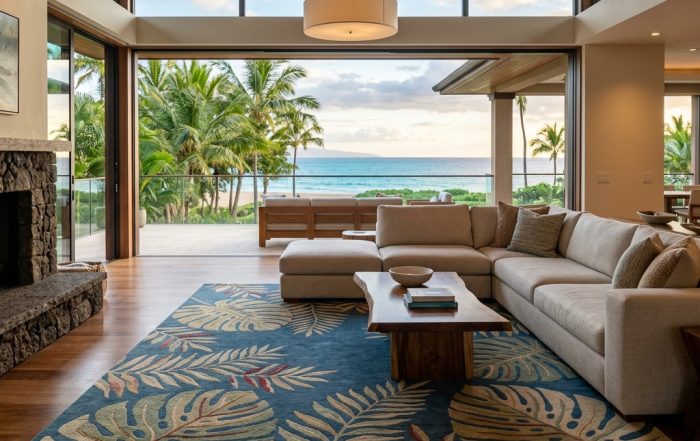
Consider a living room with doors opening toward a windward lanai. Rather than placing a sectional directly across the opening, an interior designer might angle it to preserve the view while turning its back toward the strongest breeze. A low console can anchor the rear of the sectional, and heavier end tables can replace lightweight occasional pieces. The result supports conversation, keeps the entry path open, and reduces exposure to blowing moisture.
Because every Maui property differs, room orientation should be evaluated alongside flooring, window treatments, lighting, and finish selections. IDS Maui brings 27 years of Hawaii-specific experience to these decisions, including expertise in furniture, fabrics, custom pieces, outdoor furnishings, and complete room planning. Furniture can be ordered directly from manufacturers, with custom dimensions, finishes, cushions, and upholstery available when an existing piece will not perform well in the space.
Conclusion: Create a More Comfortable Maui Home
The right furniture arrangement can make trade winds feel refreshing rather than disruptive. Begin by observing airflow, then orient seating to protect comfort and views. Use stable, climate-appropriate materials, reduce direct exposure to salt and sun, and treat the lanai as an essential room rather than an afterthought. These choices create better durability and smoother design flow at the same time.
If you are furnishing a new Maui home, renovating a vacation rental, or updating a second home from the mainland, IDS Maui can help you plan a cohesive solution. Call 808-891-8800 or visit the showroom at 3031 Old Haleakala Highway, Makawao, Monday through Friday from 10 a.m. to 6 p.m. Bring your floor plan, approximate dimensions, and project scope to discuss furniture, lighting, rugs, and accessories suited to your property.
Need Help With Your Space?
Ask us anything — furniture, design, or where to start.