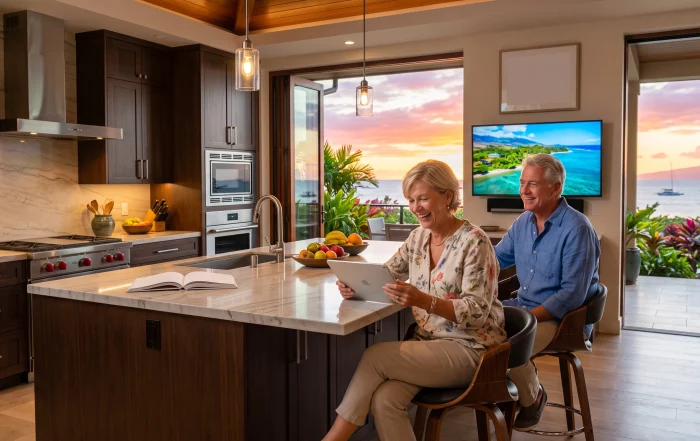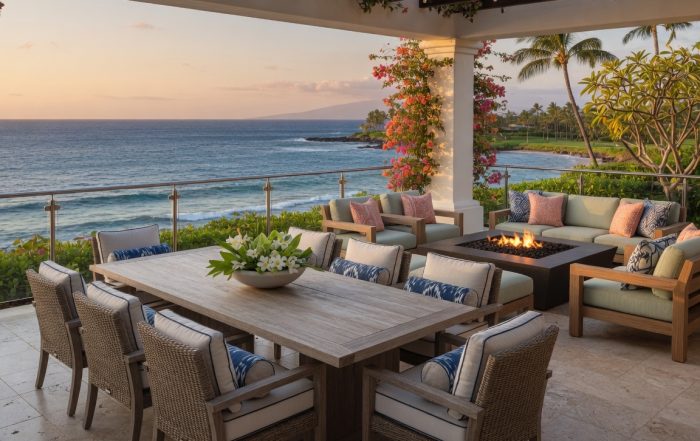
Hawaii’s equatorial location transforms how light behaves indoors—and that shift matters far more in kitchen design than most mainland homeowners realize. Unlike kitchens in temperate zones, Maui kitchens experience intense, year-round sunlight that floods rooms at different angles throughout the day, shifting how colors appear on walls, cabinets, and countertops. Add salt air corrosion, humidity, and the island’s indoor-outdoor living culture, and you’re designing in a completely different climate context than standard kitchen lighting guides address.
When you’re planning a Maui kitchen remodel, lighting and color coordination can’t be an afterthought. In Hawaii, intense sunlight, salt air, humidity, shipping timelines, and year-round indoor-outdoor living all affect how a kitchen performs, and the wrong lighting decisions can either wash out your design or create harsh glare that makes the space uncomfortable to cook in. This guide walks you through the unique challenges of equatorial kitchen lighting design, how to account for color shifts throughout the day, and why layered lighting and durable finishes are non-negotiable in island kitchens.
Understanding Equatorial Light and Color Shift in Maui Kitchens
Maui’s proximity to the equator means sunlight behaves differently than it does on the mainland. The sun climbs higher in the sky year-round, creating more direct overhead light and fewer long morning and evening angles. This changes everything about how colors read in your kitchen at different times of day.
A soft neutral paint color that looks calm and warm in your designer’s showroom sample may appear brighter and almost washed out when natural light floods your actual kitchen at midday. Conversely, a saturated color—deep charcoal, ocean blue, or warm terracotta—can become more energetic and bold than you expected under equatorial sun. Because Hawaii’s proximity to the equator changes how color reads indoors, samples should be viewed in the actual room at different times.
This isn’t a minor aesthetic concern. When you’re coordinating cabinet finishes, backsplash tile, countertop colors, and wall paint, a color shift of even one or two shades can throw off the entire visual balance. The backsplash might clash with the cabinetry in afternoon light, or your countertop color might look muddy at sunrise. The solution is viewing actual material samples in your kitchen space—not in a showroom or on a computer screen—during the times of day you’ll spend the most time cooking.
Beyond color, equatorial light also intensifies glare. Direct overhead sun bouncing off glossy countertops, shiny cabinet hardware, or reflective backsplash tile can create uncomfortable brightness that makes food prep difficult and tiring. This is where strategic lighting design and finish selection become essential tools for comfort.
Layering Light: The Three Essential Layers for Island Kitchens
Professional kitchen lighting always relies on a layered approach, but in Maui kitchens, this layering is even more critical because you’re working against intense natural light. A practical kitchen typically needs three lighting layers: ambient lighting (overall illumination from ceiling fixtures or recessed lighting), task lighting (focused light beneath cabinets, over prep areas, and near the range), and decorative lighting (pendants, sconces, or a fixture that adds scale and personality).
Ambient Lighting: The Foundation
Ambient lighting provides overall illumination and sets the baseline brightness for your kitchen. In Maui kitchens, ambient lighting needs to work in concert with—not compete against—natural sunlight. During daylight hours, your ambient system may barely be needed. At dawn, dusk, and evening, it becomes essential.
Recessed ceiling lights are popular in modern kitchens, but spacing and fixture type matter enormously in island kitchens. Too few fixtures create dark zones; too many create a harsh, clinical feel. Consider dimmers on your ambient system so you can dial brightness up or down depending on how much natural light is available and what mood you want to create. This flexibility is especially valuable in kitchens that open to dining and living areas, where you might want to shift the lighting feel without moving between rooms.
Task Lighting: Precision Where It Counts
Task lighting focuses bright, directed light exactly where you need it for cooking, prep work, and cleanup. Under-cabinet lighting is the workhorse here—LED strips mounted beneath upper cabinets illuminate countertops without creating glare on your face or casting shadows across your work surface. Over-range lighting, whether a hood with integrated lights or a separate fixture, prevents shadows when you’re cooking.
In Maui kitchens, task lighting also helps counteract the washed-out feeling that intense midday sun can create. A well-placed task light makes colors pop and creates visual definition even when natural light is overwhelming. Choose warm color temperatures (2700K–3000K) for task lighting to keep the kitchen feeling inviting rather than institutional.
Decorative Lighting: Personality and Scale
Decorative fixtures—pendant lights over an island, sconces on either side of a window, or a statement chandelier—add personality and help define the room’s visual hierarchy. In island kitchens, decorative lighting should be selected after your island dimensions and ceiling heights are confirmed, not simply based on appearance in a catalog. A pendant that looks perfect in a showroom might overwhelm a smaller island or feel undersized in a spacious kitchen.
Decorative fixtures also need to withstand salt air and humidity. Choose fixtures with rust-resistant finishes and marine-grade metals rather than standard brass or iron that will corrode quickly in Hawaii’s environment. LED bulbs are essential—they run cooler, last longer, and reduce your energy consumption compared to incandescent or halogen options.
Coordinating Lighting with Finishes and Materials
Once you’ve planned your lighting layers, you need to coordinate them with your cabinet finishes, countertops, backsplash, and paint. Salt air, wind, and intense sun accelerate wear on wood, fabrics, and finishes far faster than mainland conditions. Countertops should be evaluated for staining, heat, maintenance, and seam placement. Flooring needs to suit traffic flow from entries, lanais, and pool areas. Paint sheen, backsplash material, cabinet finish, and hardware should work together while remaining practical to clean.
Matte vs. Glossy: Reducing Glare
Matte and satin finishes are generally better choices than high-gloss in Maui kitchens. A glossy cabinet finish or shiny countertop will reflect equatorial sunlight directly into your eyes, creating uncomfortable glare. Matte finishes absorb light more evenly and reduce reflections. This isn’t just about comfort—it also affects how colors appear. A matte finish will show color more accurately than a glossy one, which can shift and brighten the hue depending on the angle of light.
Backsplash material matters too. A highly reflective tile or glass backsplash can amplify glare, while natural stone, textured tile, or matte ceramic absorbs light more gently. Consider the grout color as well—light grout in a textured tile creates visual interest without the glare of a polished surface.
Hardware and Fixture Finishes for Salt Air
Cabinet hardware, light fixtures, and sink faucets are constant targets for salt air corrosion. Stainless steel, powder-coated aluminum, and marine-grade brass are your best bets for longevity. Avoid plated finishes that will wear through and corrode underneath. When selecting decorative lighting fixtures, prioritize rust-resistant materials and sealed connections to keep moisture and salt spray from degrading internal components.
Practical Tips for Testing Light and Color in Your Maui Kitchen
Before committing to finishes and fixtures, invest time in testing how they perform in your actual space:
- View samples at multiple times of day. Morning light, midday sun, and evening light all render colors differently. Visit your kitchen at sunrise, noon, and sunset with paint chips and material samples in hand.
- Test samples on different walls. A north-facing wall receives cooler, more stable light than a south-facing wall. East and west walls experience dramatic light shifts.
- Bring samples home and live with them. A paint color or tile sample that looks good for five minutes in a showroom may feel wrong after a week in your kitchen.
- Photograph samples under different lighting. Take photos of your material samples under natural light, under your current kitchen lighting, and under the proposed new lighting. This visual record helps you and your designer discuss options clearly.
- Consider a lighting mockup. If you’re investing in a professional design, ask your designer about creating a temporary lighting setup so you can experience how different fixture types and color temperatures feel in your space before installation.
Working with an Island-Experienced Designer
Maui kitchen lighting design is genuinely different from mainland kitchen design, and the stakes are high—a poorly lit kitchen with mismatched finishes can make a beautiful space feel uncomfortable and dated within a few years. An experienced island designer understands how equatorial light behaves, knows which materials stand up to salt air and humidity, and can coordinate all the moving pieces—cabinetry, appliances, electrical, plumbing, lighting, and finishes—from the start rather than making them separately weeks apart.
At IDS Maui, we’ve spent 27 years designing kitchens and interiors specifically for Hawaii’s climate and light conditions. We source lighting fixtures, hardware, and finishes that are durable and beautiful in island conditions, and we view material samples in your actual space to ensure colors work with your equatorial light before anything is ordered. Our design process includes AutoCAD drawings, cabinet and lighting design, 3D renderings, and full coordination with appliances and plumbing so every element works together.
Whether you’re renovating a primary residence, updating a vacation rental, or furnishing a second home remotely, a well-coordinated lighting and finish plan transforms your kitchen from a space that fights the climate into one that celebrates it.
Next Steps: Design Your Island Kitchen Right
Maui kitchen lighting isn’t about following mainland trends—it’s about designing for equatorial sun, salt air, and island living. The right lighting layers, durable finishes, and thoughtful color coordination will keep your kitchen beautiful, functional, and comfortable for years to come.
Ready to start your Maui kitchen remodel? Call us at 808-891-8800 or visit our showroom at 3031 Old Haleakala Highway in Makawao (Monday–Friday, 10 a.m.–6 p.m.) to discuss your scope, budget, and lighting goals. We can help you source fixtures and finishes that stand up to island conditions, coordinate lighting with your cabinetry and countertops, and create a kitchen that looks and performs beautifully in Maui’s unique light.
Need Help With Your Space?
Ask us anything — furniture, design, or where to start.