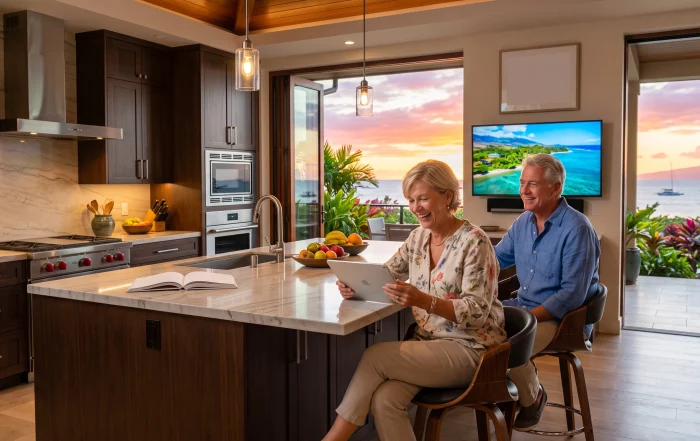
In a Maui home, natural light is both a design advantage and a daily challenge. Ocean views, trade-wind breezes, and bright island daylight can make a room feel expansive—but the same conditions may create screen glare, harsh reflections, uneven temperatures, and premature fading on upholstery, rugs, wood finishes, and artwork. The right Maui furniture arrangement for natural light should frame the view without turning every seat into a front-row position facing the sun.
This guide explains how to plan furniture around sunrise and afternoon exposure, preserve clear sightlines, choose UV-resistant materials, and use window treatments without sacrificing the open feeling that makes Maui living special. You will also learn how to balance indoor and lanai furniture, protect investment pieces, and create comfortable layouts for full-time homes, second residences, and vacation rentals. With 27 years of Hawaii-specific experience, IDS Maui approaches light, materials, freight, and furniture placement as one coordinated design problem—not as separate finishing decisions.
Maui Furniture Arrangement for Natural Light Starts With the Sun
Before moving a sofa or ordering a sectional, observe how sunlight travels through the room. A west-facing window may be comfortable in the morning and intensely bright in the late afternoon. An east-facing room can offer beautiful early light but create glare during breakfast or morning work. Large south-facing openings may deliver consistent brightness, while north-facing spaces often provide softer illumination.
That pattern matters because interior design equatorial sun behaves differently from the softer daylight many mainland homeowners are used to. IDS Maui notes that Hawaii’s proximity to the equator makes glare and color perception especially important indoors; even flooring and wall finishes can amplify reflected brightness. The U.S. Department of Energy likewise explains that ceiling, wall, floor, and furniture colors significantly affect how daylight and electric light perform in a room. ([idsmaui.com](https://www.idsmaui.com/aging-in-place-design-maui-homes/?utm_source=openai))
Create view corridors instead of pointing every seat at the glass
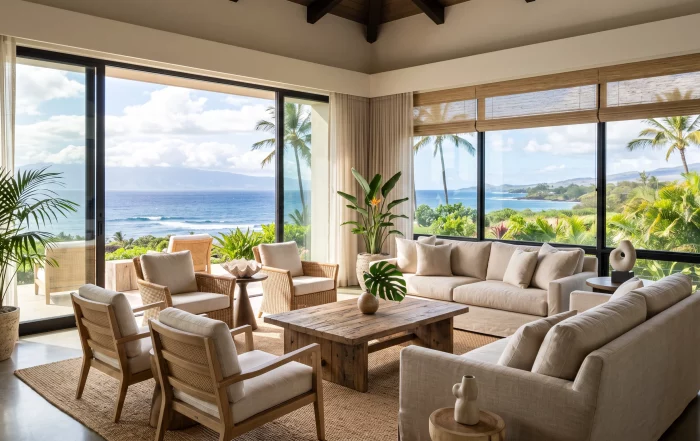
A common mistake is arranging all seating directly toward the ocean or landscape. The result may look attractive in a photograph, but it can leave occupants squinting into the light and create a difficult conversation layout. Instead, position the primary sofa perpendicular or slightly diagonal to the largest window. Add one or two accent chairs at an angle so people can enjoy the view without facing direct glare.
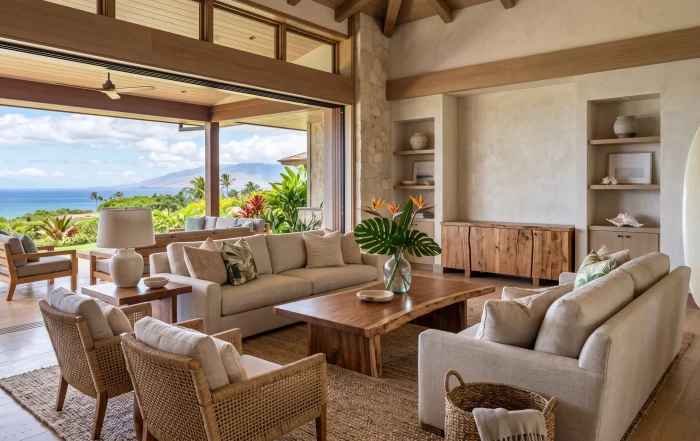
Keep the central sightline open. Low cocktail tables, benches, and streamlined consoles can define the room without blocking the horizon. Tall case goods, armoires, and bookcases usually belong on solid interior walls or beside—not directly in front of—windows. If a room has two view walls, use the furniture to create a conversation zone in the center and let the architecture remain the visual backdrop.
Map glare, traffic, and circulation together
Walk through the room at different times of day. Note where sunlight lands on seat cushions, wood tops, rugs, television screens, and artwork. Also identify the main path to the lanai, kitchen, bedroom, or bathroom. A beautiful layout fails if people must walk between the coffee table and sofa every time they step outside.
- Leave generous circulation between seating areas and lanai doors.
- Avoid placing a television directly opposite an unshaded window.
- Use low-profile furniture beneath broad view windows.
- Keep reading chairs near daylight, but outside the strongest direct beam.
- Rotate loose cushions periodically so exposure is more even.
For complex rooms, scaled AutoCAD drawings can test furniture dimensions, door swings, window openings, and traffic routes before anything is ordered. That is particularly valuable when a Maui project involves made-to-order pieces or freight from the mainland.
Use Furniture Placement to Reduce Glare Without Losing the View
Natural light should make a room feel welcoming, not visually exhausting. Glare occurs when a bright window or reflective surface is much brighter than the surrounding field of view. In practical terms, that may mean a laptop screen becomes unreadable, a television washes out, or polished furniture reflects a sharp band of sunlight across the room.
Start with orientation. Place desks and work tables so the window is beside the user rather than directly behind the monitor or directly in front of the eyes. For living rooms, position the sofa at a slight angle to the strongest opening. In dining rooms, avoid aligning the table lengthwise with a low western sun if guests will be looking toward the glass during dinner.
Choose finishes that absorb and soften light
Highly polished floors, lacquered tables, glossy stone, and mirrored surfaces can multiply glare. Matte or low-sheen finishes are often more comfortable in intensely bright rooms. That does not mean a Maui interior must be dark. Warm white walls, natural wood, textured upholstery, woven shades, and softly reflective accessories can distribute light while preserving an airy palette.
Layered contrast also helps. A pale sofa against a slightly deeper rug may feel calmer than pale-on-pale surfaces that bounce light everywhere. Textured fabrics break up visual shine, while honed stone and brushed metal tend to be easier on the eyes than mirror-polished alternatives.
Control the brightest hours, not all daylight
The goal is not to close the room off. It is to filter the most aggressive light while allowing softer daylight and views to remain. The Department of Energy identifies window attachments as a way to minimize glare, support daylighting, and improve comfort. It also reports that certain window films can reduce fabric fading and that spectrally selective low-emissivity glazing can filter substantial heat while allowing daylight to pass through. ([energy.gov](https://www.energy.gov/energysaver/window-types-and-technologies?utm_source=openai))
For existing Maui homes, consider a layered window treatment:
- Sheer or solar shades: Reduce brightness while preserving a connection to the view.
- Operable drapery: Add stronger protection during late-afternoon exposure and provide privacy at night.
- Blackout lining where needed: Useful for bedrooms, media rooms, and guest spaces.
- Exterior shading: Overhangs, louvers, and lanai structures can block heat before it reaches the glass.
Window treatment fabric protection should be considered alongside upholstery protection. A shade that is always closed may preserve a sofa but undermine the room’s purpose. A better plan allows occupants to adjust light easily throughout the day.
Specify UV-Resistant Furniture for Maui’s Climate
Furniture arrangement can reduce exposure, but it cannot eliminate Maui’s sunlight, salt air, humidity, and indoor-outdoor lifestyle. Material selection is therefore essential. IDS Maui’s Hawaii-specific guidance emphasizes that natural fibers, wood species, finishes, and performance fabrics need closer scrutiny in island homes than they often receive in mainland projects. Salt air and UV exposure can accelerate fading, mildew, finish deterioration, and general wear. ([idsmaui.com](https://www.idsmaui.com/local-maui-interior-designer-expertise/?utm_source=openai))
When selecting UV-resistant furniture in Maui, ask about the entire construction—not just whether the fabric is labeled “outdoor.” A durable specification may include a kiln-dried hardwood frame, high-performance upholstery, solution-dyed fibers, corrosion-resistant hardware, UV-stable finishes, and cushions designed to dry efficiently.
Protect upholstery, rugs, and wood case goods
Place the most delicate textiles away from direct beams. A silk-like accent chair may work beautifully in a shaded corner, while a sun-exposed reading chair should use a performance fabric with documented resistance to fading and cleaning wear. Rotate loose pillows and cushions, and avoid leaving throws permanently folded in one bright strip of sunlight.
Rugs deserve equal attention. A large rug may anchor a seating group, but uneven exposure can produce visible color variation at the edge of a shade or beneath a coffee table. Choose fibers and dyes appropriate for the room’s exposure, and use window protection where a rug receives several hours of direct sun.
Wood furniture also benefits from thoughtful placement. Keep valuable case goods out of the most intense direct exposure when possible, and ask whether the finish is intended for bright tropical interiors. Dark finishes may show fading or heat-related changes more noticeably, while lighter woods and carefully selected finishes can offer a more forgiving appearance. Regular dusting matters as well: airborne particles and salt residue can become abrasive when moved across finished surfaces.
Design for indoor-outdoor continuity
Maui homes often treat the lanai as an extension of the living room. The transition zone should feel intentional, with similar scale, color temperature, and visual rhythm on both sides of the opening. However, indoor furniture should not automatically be used outdoors, and outdoor furniture should not be selected solely for appearance.
For lanais, specify weather-appropriate pieces and leave enough space for doors, breezes, and wet-weather movement. IDS Maui works with outdoor-focused lines such as Janus et Cie and coordinates furniture, fabrics, and layouts around the realities of salt air and year-round use. ([idsmaui.com](https://www.idsmaui.com/lanai-furniture-maui-indoor-outdoor-living/?utm_source=openai))
Plan Each Maui Room Around Its Light and Lifestyle
There is no single formula for furniture arrangement natural light Hawaii because every property has a different orientation, elevation, window package, and view. A vacation rental may need durable seating and simple circulation for unfamiliar guests. A second home may require remote planning, freight coordination, and furniture that remains attractive between visits. A full-time residence may prioritize reading light, work-from-home comfort, and aging-in-place needs.
Living rooms
Use a sofa or sectional to define the room without creating a visual wall across the view. If the sectional must sit near windows, choose a configuration that keeps its back low and avoid placing its longest side directly in the harshest beam. Add a swivel chair where occupants can turn toward the view, conversation, or television.
Bedrooms
Do not place the bed where morning or afternoon sun hits the sleeper’s face unless the room has effective shading. A low dresser can sit beneath a window if it does not interfere with ventilation or curtains. For a bedroom with a spectacular outlook, angle a bench or lounge chair toward the view rather than making the bed the only destination.
Dining rooms and home offices
Dining tables should support both intimate meals and larger gatherings without blocking the route to the lanai. In a home office, place the desk perpendicular to the window and use adjustable shades to manage screen glare. A small desk lamp or layered lighting plan will help when daylight changes quickly, especially after sunset.
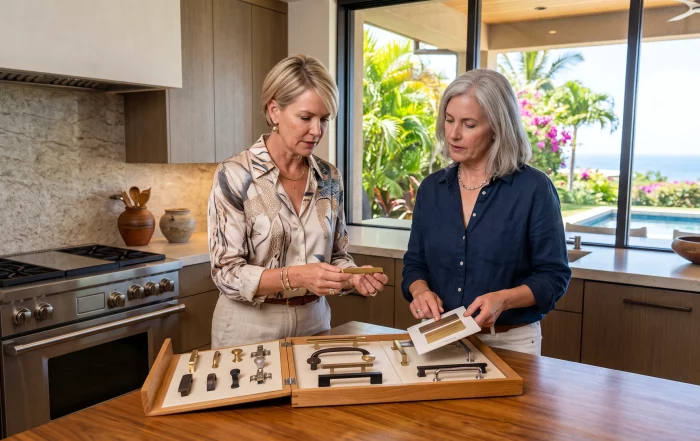
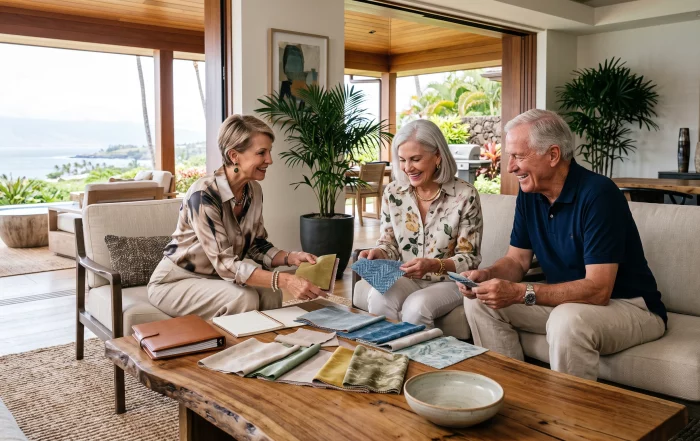
IDS Maui’s design process can include space planning, lighting plans, window treatments, furniture, rugs, accessories, and purchasing coordination. That integrated approach helps prevent a common problem: ordering beautiful furniture first and discovering later that the pieces cannot be positioned comfortably around the light.
Conclusion: Design a Maui Room That Feels Bright, Not Harsh
The best Maui furniture placement lets you experience the view from multiple positions while protecting the room from the most damaging and uncomfortable exposure. Begin by tracking the sun, then create open view corridors, angle seating away from direct glare, select matte and textured finishes, and specify performance materials where sunlight and salt air are strongest. Layered window treatments can preserve daylight while reducing glare, heat, and fading.
For a new Maui home, vacation rental, or second residence, IDS Maui can help coordinate furniture, lighting, rugs, accessories, custom upholstery, and installation around the realities of island living. The showroom is located at 3031 Old Haleakala Highway in Makawao, and the team serves Maui and other Hawaiian islands, as well as mainland clients. Call 808-891-8800 to discuss your room, request a furniture quote, or schedule a design consultation. With 27 years of Hawaii-specific experience and direct access to premium manufacturers, IDS Maui can help you maximize the light—and keep your furniture looking beautiful for years.
Need Help With Your Space?
Ask us anything — furniture, design, or where to start.