Choosing an outdoor coffee table for your Maui lanai is more complex than picking a stylish piece from a mainland catalog. Hawaii’s relentless UV radiation, salt-laden trade winds, and year-round humidity create a unique challenge for outdoor furniture—one that accelerates wear, fading, and corrosion faster than almost anywhere else in the United States. A cocktail table that performs beautifully in Arizona or Southern California may show rust stains, warped wood, or faded finishes within two years on Maui without the right material specifications. This guide walks you through the weather-resistant materials that actually survive island conditions, proper sizing and layout strategies for lanai living, and the brands and finishes that hold up to coastal exposure while maintaining the elegance your outdoor space deserves.
Why Maui’s Climate Demands Specialized Outdoor Coffee Table Materials
The combination of intense sun, salt spray, high humidity, and wind-driven sand creates what designers call a “perfect storm” for furniture degradation. UV radiation causes fading, chalking, drying, and embrittlement of plastics, finishes, textiles, and some woods, while salt air and salt spray accelerate corrosion of metal fasteners, hardware, and unprotected metal frames. High humidity encourages mold and mildew growth in crevices and can cause some woods to warp or swell. Heavy rain and frequent wet/dry cycles contribute to water stains, rust formation, and breakdown of unsealed materials.
Even furniture positioned under a covered lanai faces these challenges. The ambient humidity and airborne salt find their way through microscopic pores in finishes and protective coatings. Standard powder-coated steel, for example, will rust from the inside out within eighteen months when exposed to trade winds—even in a partially protected environment. This means that material selection for your outdoor coffee table Maui setup isn’t just about aesthetics; it’s about understanding which materials possess the inherent properties to resist these specific environmental stressors.
Understanding Exposure Levels on Your Lanai
Not all lanai spaces face the same degree of exposure. High-exposure areas include ocean-facing lanais, sunrooms with large openings, and spaces near open doors where trade winds circulate freely. Moderate-exposure areas might include covered lanais with partial wind protection or spaces that receive filtered rather than direct sunlight. Understanding your specific exposure level helps you calibrate your material choices—a fully exposed oceanfront lanai demands the most resilient specifications, while a sheltered courtyard lanai offers slightly more flexibility.
Weather-Resistant Materials That Actually Survive Hawaiian Conditions
The best outdoor coffee tables for Maui lanais are built from materials that resist UV degradation, salt corrosion, moisture absorption, and wind damage. Here’s what actually works in Hawaii’s coastal environment, based on decades of field performance rather than manufacturer marketing claims.
Tropical Hardwoods: Teak and Mahogany
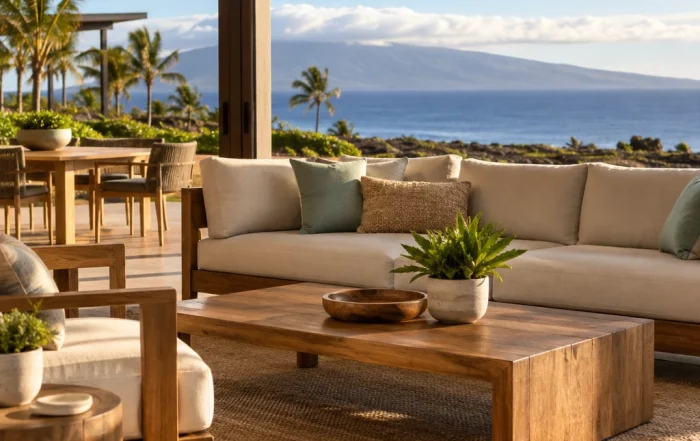
Solid teak and mahogany remain the gold standard for outdoor wooden furniture in Hawaii. These tropical hardwoods contain natural oils that resist rot, insect damage, and moisture absorption—properties that make them far superior to softwoods or pressure-treated lumber. Teak will silver gracefully over time if left untreated, developing a beautiful patina that many homeowners prefer. Mahogany can be sealed to maintain its warm color, though it requires reapplication of marine-grade sealant every 12 to 18 months to preserve the finish.
Both woods require minimal maintenance beyond occasional cleaning with mild soap and water. If you want to restore teak’s original honey-brown color, light sanding and the application of teak oil will bring back the warmth, though many designers recommend embracing the natural silvering process instead. For a lanai cocktail table that will be used daily, teak’s durability and low-maintenance characteristics make it an excellent long-term investment.
Marine-Grade Metals: Aluminum and Stainless Steel
When specifying metal frames for outdoor coffee tables, your documentation should explicitly require marine-grade 316 stainless steel, fully welded powder-coated aluminum, or solid brass that is allowed to patina naturally. Standard powder-coated steel—even high-quality versions—will fail in Hawaii’s salt air. The powder coating may look intact on the surface while rust develops underneath, eventually causing the finish to bubble and flake.
Powder-coated aluminum offers excellent durability and lightweight handling, making it ideal for weather-resistant outdoor tables Hawaii homeowners move seasonally or for vacation rental turnover. Look for marine-grade powder coating, which provides superior corrosion resistance compared to standard finishes. The coating should be applied in multiple layers with proper surface preparation, and any welds should be ground smooth and sealed before coating to prevent moisture intrusion.
Stainless steel frames last even longer but cost more and can feel hot to the touch in strong sun. If you choose stainless steel, specify 316-grade rather than 304-grade—the higher molybdenum content in 316 provides significantly better resistance to pitting and crevice corrosion in marine environments. Both metals pair beautifully with teak tops, woven synthetic fibers, or tempered glass surfaces.
All-Weather Wicker and Synthetic Rattan
Natural wicker and rattan deteriorate quickly in Hawaii’s humidity and UV exposure, but high-quality synthetic alternatives perform remarkably well. Look for HDPE (high-density polyethylene) resin wicker that is UV-stabilized and woven over powder-coated aluminum frames. The resin should be solution-dyed rather than surface-coated, so color runs throughout the material and won’t fade or scratch away with use.
Quality synthetic wicker resists cracking, splitting, and color fade for years. It also drains quickly after rain and resists mildew growth when properly ventilated. For a lanai coffee table, wicker offers a lighter visual weight than solid wood or metal, making it ideal for smaller spaces or designs that emphasize an airy, tropical aesthetic. Maintenance consists of occasional washing with mild soap and a soft brush to remove salt residue and dust.
Tempered Glass and Stone Tops
Tempered glass tops are popular for outdoor coffee tables because they’re easy to clean, resist UV damage, and don’t trap moisture. Choose glass that is at least 3/8-inch thick for durability, and ensure it has polished or beveled edges to prevent chipping. Frosted or textured glass hides water spots and salt residue better than clear glass, reducing visible maintenance needs between cleanings.
Natural stone tops—particularly granite, slate, and basalt—perform well in Hawaii’s climate. Stone is inherently UV-resistant, won’t warp or crack from moisture, and provides substantial weight that resists wind displacement. Sealed stone requires less maintenance than unsealed surfaces, though even sealed stone benefits from periodic resealing every two to three years. Avoid porous stones like limestone or travertine, which can stain from organic matter and absorb moisture that promotes mildew growth.
Sizing and Layout Strategies for Lanai Coffee Tables
Proper sizing ensures your outdoor coffee table feels proportional to your seating arrangement and allows comfortable movement around the lanai. A standard coffee table should sit 16 to 18 inches high—roughly the same height as your sofa or chair seat cushions—and measure approximately two-thirds the length of your sofa for balanced visual proportion.
For a typical three-seat outdoor sofa measuring 72 to 84 inches long, a coffee table between 48 and 56 inches long works well. Allow 14 to 18 inches of clearance between the table edge and the sofa or chairs so guests can comfortably reach the table without leaning too far forward or bumping their knees. If your lanai includes multiple seating areas or traffic paths, maintain at least 30 inches of clearance for walkways so people can move past the furniture without squeezing through.
Shape Considerations for Traffic Flow
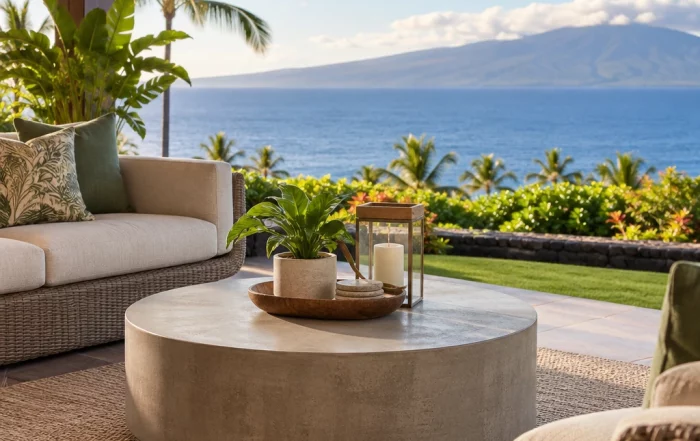
Rectangular tables work well for traditional seating arrangements with a sofa and two chairs, while round or oval tables soften the geometry and improve traffic flow in smaller spaces. Round tables eliminate sharp corners that can catch on clothing or cause bruises in tight quarters. Square tables suit symmetrical seating arrangements with four chairs or a sectional configuration.
For narrow lanais, consider a pair of smaller side tables flanking the seating rather than a single large coffee table. This approach maintains surface area for drinks and books while leaving the center open for foot traffic. Nesting tables offer flexibility—use them together when entertaining and separate them for everyday use.
Weight and Wind Resistance
Maui’s trade winds can reach 20 to 30 miles per hour on exposed lanais, making furniture weight an important consideration. Lightweight aluminum or wicker tables may need anchoring or positioning in sheltered corners where wind exposure is reduced. Heavier materials like teak, stone, or thick glass provide natural wind resistance without additional securing.
For vacation rental properties or homes where furniture moves frequently for cleaning, consider a coffee table with a removable top—a heavy stone or glass surface that lifts off a lighter base frame. This design allows you to move the base easily while keeping the top stable during normal use.
Brands and Specifications That Hold Up to Island Living
Not all outdoor furniture brands are created equal when it comes to Hawaii’s demanding conditions. At IDS Maui, we specify outdoor furniture that balances resort-grade durability with residential elegance. Janus et Cie outdoor furniture, for example, combines teak frames with marine-grade metals and offers deep customization options—dimensions, leg styles, finishes—through a made-to-order process.
Lead times for custom outdoor furniture typically run 8 to 12 weeks, but the result is a coffee table precisely scaled to your lanai and finished in materials that complement your home’s palette. Custom ordering also allows you to specify details that improve longevity: stainless steel rather than plated hardware, UV-stabilized finishes rather than standard powder coating, and drainage holes in appropriate locations to prevent water pooling.
What to Look for in Manufacturer Specifications
When evaluating outdoor coffee tables, review the manufacturer’s material specifications carefully. Look for these indicators of quality construction:
- Frame construction: Fully welded aluminum or mortise-and-tenon joinery in wood, not screwed or bolted connections that can loosen over time
- Hardware: 316 stainless steel fasteners, not zinc-plated or brass-plated steel that will corrode
- Finish: Marine-grade powder coating with multiple layers, or factory-applied marine varnish on wood
- Warranty: At least three years on frame and finish, indicating the manufacturer’s confidence in material performance
- Replacement parts: Availability of cushions, glass tops, or hardware for future repairs
Many high-end manufacturers offer specific marine or coastal collections designed for environments like Hawaii. These lines use upgraded materials and finishes as standard specifications rather than optional upgrades, ensuring every component meets the demands of salt air and UV exposure.
Maintenance Protocols That Extend Furniture Life
Even the best materials benefit from regular maintenance. A simple care protocol can prevent small issues from becoming major problems and extend your outdoor coffee table’s lifespan by years. For powder-coated aluminum frames, rinse with fresh water every two weeks to remove salt crust that accumulates on the surface. Salt left to dry repeatedly will eventually penetrate the coating and cause corrosion underneath.
Teak and mahogany should be washed down with mild soap and water twice a year, or more frequently if the table is in a high-exposure location. Avoid pressure washers, which can damage wood fibers and drive water deep into joints. If you’re maintaining teak’s natural color with oil, reapply every three to four months during the first year, then reduce to twice yearly once the wood has stabilized.
Seasonal Protection Strategies
During Maui’s wetter months—typically November through March—consider additional protection for your outdoor coffee table even if it’s under a covered lanai. Use breathable furniture covers rather than plastic tarps, which trap moisture and promote mildew growth. Breathable covers allow air circulation while protecting against rain and wind-blown debris.
For tables with removable glass or stone tops, store the top indoors during severe weather and leave the base frame exposed. This reduces wind resistance and prevents the top from becoming a projectile in high winds. If your lanai includes a storage closet or bench, keep cleaning supplies and covers readily accessible so maintenance becomes a quick routine rather than a major project.
Bringing Your Maui Lanai Vision to Life
Selecting the right outdoor coffee table for your Maui lanai means understanding the specific challenges Hawaii’s climate presents and choosing materials, construction methods, and finishes that resist UV damage, salt corrosion, and moisture intrusion. Tropical hardwoods like teak and mahogany, marine-grade metals, high-quality synthetic wicker, and tempered glass or stone tops all perform well when properly specified and maintained. Sizing your table appropriately for your seating arrangement and traffic flow ensures comfort and usability, while attention to weight and wind resistance prevents damage during Maui’s stronger trade wind periods.
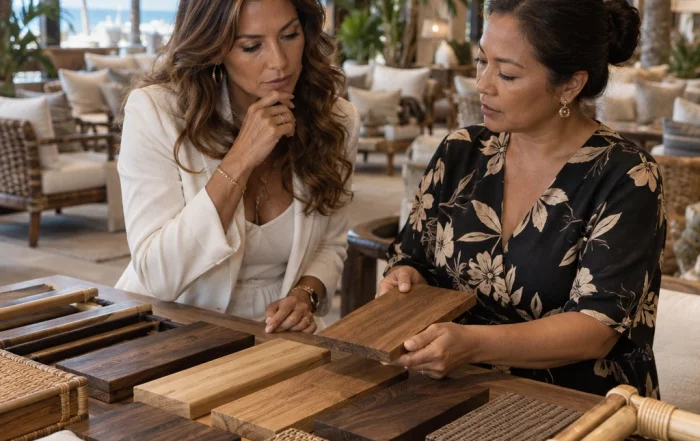
At IDS Maui, we’ve spent 27 years helping homeowners, vacation rental owners, and second-home buyers select outdoor furniture that survives island conditions while maintaining the elegance and comfort that makes lanai living one of Hawaii’s greatest pleasures. Our showroom at 3031 Old Haleakala Highway in Makawao features outdoor coffee tables and complete lanai furniture collections from manufacturers like Janus et Cie, McGuire, and other high-end lines that aren’t commonly available elsewhere on Maui. Because many pieces are ordered directly from manufacturers, we can customize dimensions, finishes, and materials to match your specific space and exposure conditions.
Ready to design your lanai with furniture that will last? Call IDS Maui at 808-891-8800 or visit our showroom Monday through Friday, 10 AM to 6 PM, to see weather-resistant outdoor coffee tables, seating, and complete furniture collections in person. We’ll help you specify materials and layouts tailored to your Maui home, manage freight and delivery to the islands, and coordinate with any other furnishing needs throughout your property. Whether you’re furnishing a single lanai or outfitting an entire home, our team brings decades of Hawaii-specific experience to ensure your furniture performs beautifully for years to come.
Need Help With Your Space?
Ask us anything — furniture, design, or where to start.