Choosing durable bar stools and counter stools for your Maui kitchen or lanai is about much more than finding a beautiful seat. In Hawaii, furniture must stand up to salt air, intense sunlight, humidity, entertaining, and the easy flow between indoor and outdoor living. The right stools should also fit your counter height, support comfortable everyday use, and complement the colors and finishes throughout your home.
Whether you are furnishing a new Maui residence, upgrading a vacation rental, or creating a more functional lanai, thoughtful selection makes a noticeable difference. This guide explains how to choose the correct stool height, evaluate construction and upholstery, compare indoor and outdoor materials, and create a cohesive coastal furniture look without sacrificing durability. IDS Maui can help you source well-made Maui bar stools and kitchen counter stools Hawaii homeowners can rely on, including custom and made-to-order options from respected furniture manufacturers.
Choosing Durable Bar Stools and Counter Stools for Your Maui Kitchen or Lanai
The first step is identifying how and where the stools will be used. A kitchen island may need comfortable seating for quick breakfasts, homework, and long conversations, while a lanai may require materials that tolerate sun, wind, moisture, and frequent entertaining. A stool selected only for its appearance can quickly become uncomfortable or show wear when it is exposed to Maui’s demanding conditions.
Measure the counter or bar before shopping
Stool height is measured from the floor to the top of the seat. As a general guide, allow approximately 9 to 12 inches between the seat and the underside of the counter or bar for comfortable legroom:
- Counter-height stools: typically have 24- to 26-inch seats and work with counters about 36 inches high.
- Bar-height stools: typically have 28- to 30-inch seats and pair with bars about 40 to 42 inches high.
- Extra-tall stools: are designed for counters or tables around 44 to 48 inches high and are less common in residential kitchens.
Measure the finished surface, not just the cabinet boxes. Thick countertops, waterfall edges, apron details, and raised backsplashes can affect knee clearance. Also measure the available width. Allow roughly 24 to 30 inches per person, depending on whether the stool has arms, a broad upholstered seat, or a swivel mechanism. Crowded seating is uncomfortable and can cause collisions when people move around the kitchen.
Consider backs, arms, and foot support
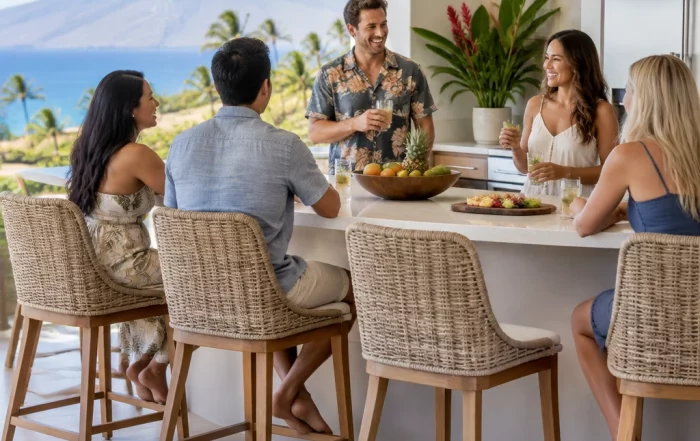
Backless stools tuck neatly beneath an island and can be useful in compact kitchens. However, stools with supportive backs are usually more comfortable for extended meals or entertaining. Arms add an inviting lounge-like feel, although they require additional clearance beneath the counter and may prevent stools from sliding fully underneath.
A properly placed footrest is equally important. Look for a sturdy integrated rail or a counter design that provides a comfortable place to rest your feet. For multi-generational homes or aging-in-place projects, a stable base, supportive back, and easy-to-clean upholstery can make everyday seating safer and more accessible.
Choose Materials That Withstand Maui’s Climate
Maui’s climate is beautiful, but it is not gentle on furniture. Salt air, humidity, strong ultraviolet exposure, windblown dust, and open windows can accelerate fading, corrosion, drying, and finish deterioration. That does not mean every stool must look overtly tropical. It means the construction and materials should be selected for the location and level of use.
Wood, metal, and woven materials
Quality wood stools can be exceptionally durable when the species and finish are appropriate. Dense hardwoods, properly sealed surfaces, and professional-grade finishes generally perform better than thin veneers or poorly protected soft woods. Still, even excellent wood should not be placed where it receives relentless direct sun without protection. Rotate stools occasionally, use window treatments where appropriate, and follow the manufacturer’s care recommendations.
Metal frames offer strength and a clean architectural look. For Maui homes, consider corrosion-resistant finishes and hardware, especially near open lanais or homes close to the ocean. Powder-coated metal, stainless steel, and appropriately treated aluminum can be good choices, but construction quality matters. Inspect welds, joints, feet, and the connection between the frame and seat rather than judging only by the finish.
Woven materials can bring texture and a relaxed coastal furniture aesthetic to a kitchen or lanai. Indoor natural fibers may not be suitable for exposed outdoor conditions, while high-quality outdoor synthetics are engineered to resist moisture and ultraviolet damage. Ask whether a weave is intended for interior, covered outdoor, or fully exposed use before making a purchase.
Upholstery and performance fabrics
Fabric selection is one of the most important decisions for Maui bar stools. A beautiful textile can fade or absorb stains quickly if it is not suited to the environment. For busy kitchens and vacation rentals, consider performance fabrics with resistance to staining, moisture, mildew, and ultraviolet fading. Solution-dyed acrylics and other outdoor-rated textiles can be particularly useful on a covered lanai.
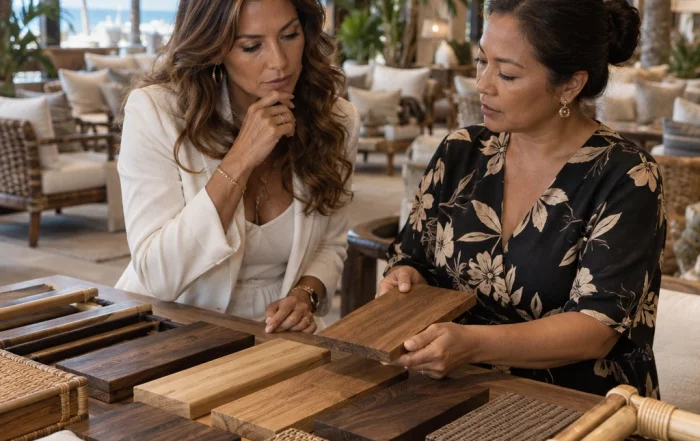
That does not mean sacrificing color or sophistication. IDS Maui specializes in color and fabric expertise, with access to a broad range of designer textiles and custom upholstery options. The goal is to balance hand, pattern, and visual warmth with the practical demands of your home. Light colors may look fresh in a bright island interior, but the specific weave and cleanability matter just as much as the shade.
Design Durable Lanai Seating for Indoor-Outdoor Living
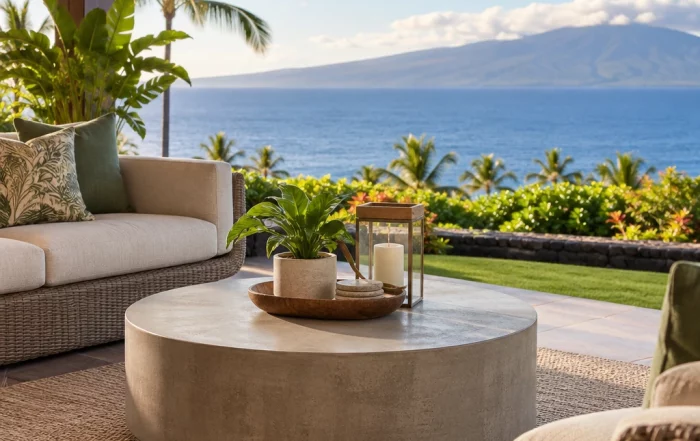
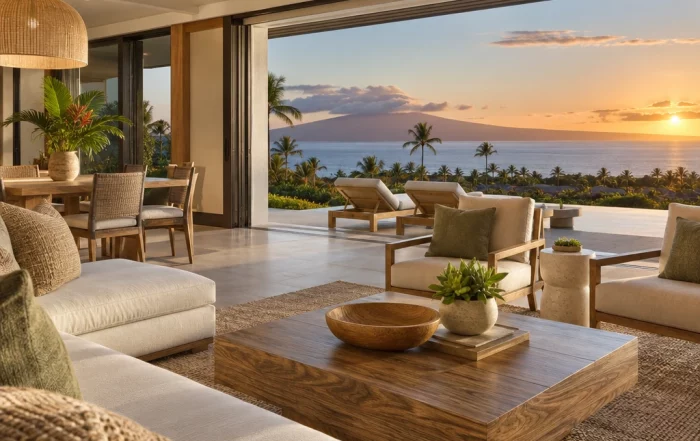
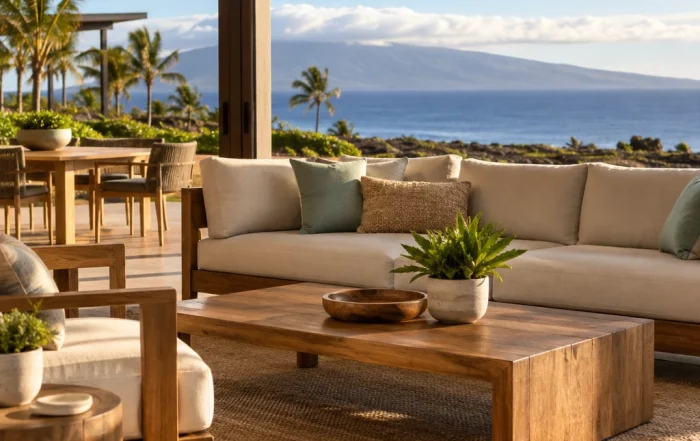
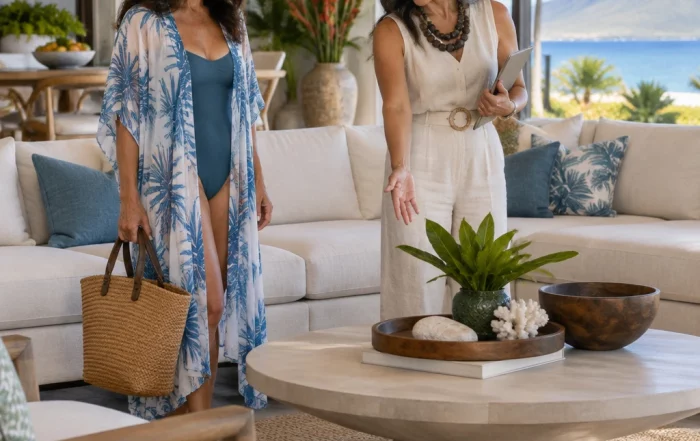
A Maui lanai often functions as an extension of the kitchen, dining room, or living area. Because of that connection, outdoor bar stools Maui homeowners choose should feel related to the interior rather than like an afterthought. Repeating a wood tone, metal finish, or accent color can create continuity while still allowing the lanai to have its own relaxed personality.
Match the stool to its exposure
Not every outdoor area has the same climate. A covered lanai with screened openings is very different from a fully exposed poolside bar. Before selecting durable lanai seating, evaluate:
- How many hours of direct sunlight reach the seating area
- Whether wind-driven rain or salt spray can reach the stools
- How close the home is to the ocean
- Whether the stools will be moved, stacked, or stored
- How often the home will be occupied and cleaned
Covered spaces offer more flexibility, but outdoor-rated construction is still wise when the area is open to humidity and salt air. Look for fast-drying cushions, breathable outdoor fabrics, rust-resistant frames, and finishes designed for exterior use. If cushions are removable, confirm that replacement covers and inserts will be available later. This can extend the useful life of the furniture and make future refreshes easier.
Create a cohesive coastal furniture look
Coastal design does not have to mean a room filled with shells, blue-and-white patterns, or distressed finishes. In Maui, a more enduring approach may combine natural textures, tailored upholstery, warm woods, sculptural lighting, and colors inspired by the landscape. The equatorial light also changes how colors read indoors. A neutral that appears soft and gray on the mainland may look brighter, warmer, or more saturated in Hawaii.
For this reason, evaluate fabric and finish samples in the actual room, ideally at different times of day. Coordinate stools with the flooring, cabinetry, countertop, pendant lighting, and nearby outdoor furniture. A stool can be a subtle bridge between spaces, or it can add a deliberate accent color that enlivens an otherwise restrained kitchen.
Prioritize Construction, Comfort, and Long-Term Value
Durability is not simply a matter of choosing a heavy stool. Strong joinery, balanced proportions, quality hardware, and replaceable components often determine how well seating performs over time. A well-built stool may cost more initially, but it can provide better comfort and a longer service life than a lower-priced piece that needs replacement after a few seasons.
What to inspect before ordering
- Frame stability: The stool should sit level without rocking, and the legs should feel secure under normal weight and movement.
- Joinery: Examine connections between legs, stretchers, arms, and the seat. Loose or visibly weak joints are warning signs.
- Seat construction: High-density foam, supportive webbing, and well-finished edges improve comfort and longevity.
- Swivel quality: If you choose a swivel stool, test whether it turns smoothly and returns reliably without wobbling.
- Footrest design: A solid footrest is more comfortable and less likely to bend or loosen than a thin decorative rail.
- Maintenance needs: Understand cleaning instructions, fabric protection, and whether replacement parts are available.
Comfort should be tested as carefully as appearance. Sit with your feet supported and your back relaxed. Check whether the front edge of the seat presses against your legs. For a kitchen used throughout the day, a contoured seat and supportive back may be worth prioritizing over a minimalist silhouette. In a vacation rental, easy maintenance and robust construction may take precedence over delicate details.
Think about the full project, not one furniture piece
Stools influence the visual balance of a kitchen. Four oversized chairs can make an island feel crowded, while narrow backless stools may look lost beneath a large architectural counter. Consider the entire composition, including pendant lights, bar cabinets, dining chairs, rugs, and adjacent living room furniture.
IDS Maui offers access to furniture lines such as Bernhardt, Baker, Caracole, Century, Holly Hunt, Janus et Cie, McGuire, Kravet, and other respected manufacturers. Many pieces can be ordered with choices of dimensions, legs, arms, finishes, fabrics, and cushions. Made-to-order selections typically require planning, with lead times often ranging from approximately 8 to 12 weeks depending on the product and availability.
Plan Ordering, Shipping, and Care for a Maui Home
Ordering furniture for an island home requires more coordination than purchasing a piece locally and taking it home the same day. Freight to Hawaii is commonly calculated by cubic footage and may be approximately 10% to 15% of the item cost, although the final amount depends on the shipment. Confirm the complete delivered cost, timeline, finish, fabric, and installation requirements before approving an order.
Some Quick Ship items may arrive in two to three weeks, while standard made-to-order pieces can take up to eight weeks or longer depending on production schedules. Custom stools may require additional time. Planning early is particularly important for vacation rentals, construction projects, and second homes furnished remotely.
IDS Maui coordinates freight and manages damage claims for clients, helping simplify the process from selection through delivery and installation. That support can be valuable when a project includes multiple rooms or shipments arriving at different times. The showroom team can also help coordinate stools with dining furniture, lighting, rugs, outdoor pieces, and accessories so the finished home feels intentional.
Once the stools arrive, simple care helps protect the investment. Wipe spills promptly, avoid harsh household cleaners, keep outdoor cushions dry when possible, and follow the manufacturer’s recommendations for fabric, wood, and metal. Periodically check screws, swivel hardware, glides, and footrests. Early maintenance can prevent a small issue from becoming structural damage.
Conclusion: Find Maui Bar Stools That Fit Your Home
The best bar stools and counter stools for a Maui kitchen or lanai combine correct proportions, supportive comfort, climate-appropriate materials, and a finish that complements the rest of the home. Start by measuring carefully, then consider exposure to sun and salt air, upholstery performance, construction quality, and the way the seating will be used each day.
IDS Maui has served Hawaii homeowners and hospitality clients for 27 years, offering furniture sourced through direct manufacturer relationships and informed by deep local climate experience. Whether you need kitchen counter stools Hawaii residents can enjoy every day, durable lanai seating for a second home, or outdoor bar stools Maui guests will appreciate, the team can help you compare options and request a quote.
Visit the IDS Maui showroom at 3031 Old Haleakala Highway in Makawao, Monday through Friday from 10 a.m. to 6 p.m., or call 808-891-8800 to discuss your project. You can also contact IDS Maui through idsmaui.com for furniture, fabric, and design guidance tailored to your home.
Need Help With Your Space?
Ask us anything — furniture, design, or where to start.