Maui’s salt air, intense UV exposure, and year-round humidity create an environment where standard interior finishes fail quickly. Many homeowners and designers assume that marine-grade coatings are the answer to every durability challenge—but applying them indiscriminately can actually damage wood, alter aesthetics, compromise future repairs, and waste money. Understanding when marine-grade finishes belong in Maui interiors, and when they don’t, is essential to protecting your investment and maintaining the refined look you’ve chosen.
This guide explains how marine-grade finishes for Maui interiors work, why they’re not a universal solution, and how to make strategic decisions based on location, wood species, furniture purpose, and maintenance reality. After 27 years of Hawaii-specific design experience, we’ve learned that the right finish strategy depends far more on context than on product names alone.
What Marine-Grade Finishes Actually Do—and Don’t Do
Marine-grade finishes are engineered to resist moisture, UV rays, salt spray, and mildew in high-performance outdoor or semi-outdoor environments. They create a protective barrier that slows water penetration, reduces color fading, and inhibits fungal growth. However, a critical misunderstanding persists: marine-grade finishes are not maintenance-free, and they are not appropriate for every room or every wood piece.
Corrosion-resistant wood finishes and appropriate hardware can significantly extend the life of furniture, but “water-resistant” does not mean maintenance-free. Finishes create a protective barrier against moisture and stains; they cannot eliminate the effects of direct sunlight, standing water, or airborne salt. When a marine coating is applied to an interior bedroom piece or a dining table that will never see direct spray, it may:
- Change the sheen from matte or satin to glossy or plastic-looking
- Alter the wood’s natural color or grain visibility
- Make future repairs, refinishing, or touch-ups difficult or impossible
- Create a surface that feels commercial rather than residential
- Add unnecessary cost without corresponding benefit
The manufacturer’s recommendations and the furniture’s construction should guide the decision. A designer’s job is to match the finish performance to the actual conditions the piece will experience—not to over-specify out of caution.
Coastal Wailea and Kapalua: Where Marine-Grade Finishes Make Sense
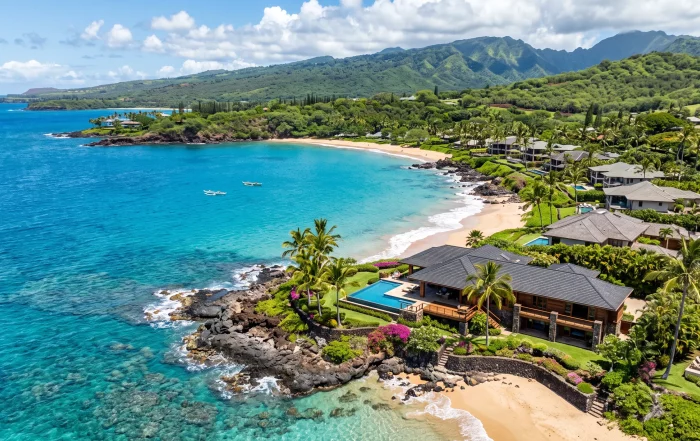
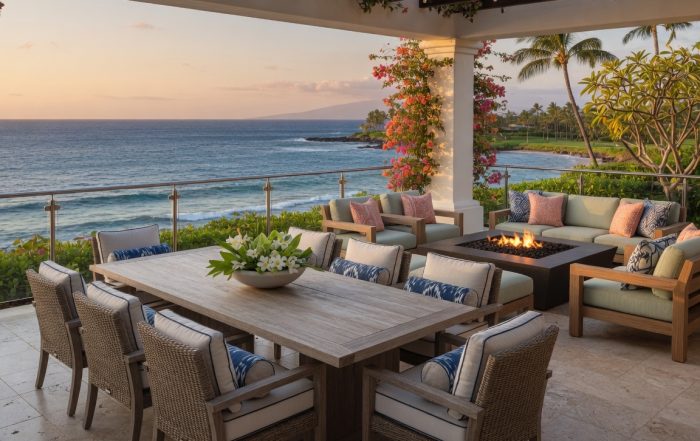
True marine-grade finishes belong in specific, high-exposure locations. If your furniture sits on an open lanai facing the ocean, receives salt spray during trade winds, or sits in direct sunlight without UV protection, a marine-grade finish is justified—and often necessary.
Exposed Outdoor Furniture and Lanais
Teak and mahogany remain the gold standard for outdoor wooden dining furniture on Maui because their natural oils resist rot, insect damage, and moisture absorption. Teak will silver gracefully over time if left untreated, while mahogany can be sealed to maintain its warm color. When these woods are finished with a marine-grade polyurethane or epoxy, they gain additional UV and salt protection without losing their character.
For metal components on coastal furniture, the stakes are even higher. For coastal Wailea and Kapalua, specify marine-grade 316 stainless steel or powder-coated aluminum for all outdoor metalwork to resist salt-air corrosion. Standard steel screws or brass-plated brackets will bleed rust onto stone tiles within months. This is not over-specification—it’s the difference between a lanai that looks beautiful for a decade and one that deteriorates within two seasons.
Hardware and Fasteners: The Hidden Vulnerability
Even beautiful teak can be undermined by inadequate hardware. Hinges, drawer pulls, screws, and fasteners corrode invisibly until rust staining appears on the wood surface. For any furniture destined for a covered lanai or high-humidity room near salt air, marine-grade stainless steel (316 grade, not 304) or fully welded powder-coated aluminum hardware is non-negotiable. This detail often costs less than refinishing damaged wood after corrosion spreads.
Interior Bedrooms and Living Rooms: When Marine-Grade Finishes Are Overkill
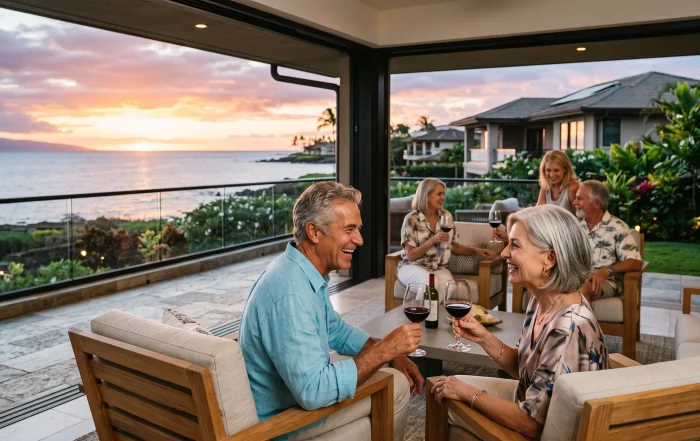
Many Maui homeowners and designers over-apply marine-grade finishes to interior furniture simply because they live in Hawaii. This approach wastes money and often degrades the aesthetic quality of the piece. An interior bedroom with ocean-facing windows is not the same as an open lanai, and the finish strategy should reflect that distinction.
Strategic Interior Specification
Consider a primary bedroom with ocean-facing windows. Instead of selecting every piece for outdoor-level performance, a thoughtful approach specifies a stable hardwood bed and case goods with a durable low-sheen finish, then uses UV-conscious window treatments and strategic furniture placement to manage sun exposure. Performance textiles and custom bedding add comfort without making the room feel overly commercial or requiring marine-grade wood coatings.
Interior pieces benefit from practical protection that doesn’t require heavy marine coatings:
- Using coasters, placemats, and breathable protective covers where appropriate
- Wiping salt residue with a soft, slightly damp cloth rather than abrasive cleaners
- Keeping furniture away from persistent drips, sprinkler spray, and standing water
- Rotating accessories and cushions so sunlight does not affect one area unevenly
- Inspecting metal hardware and fasteners before corrosion spreads
This maintenance-conscious approach preserves the wood’s natural appearance while still protecting against Maui’s climate challenges. A satin-finish hardwood with quality construction will outlast a marine-coated piece that’s neglected, because the finish alone cannot compensate for poor placement or lack of care.
Elevation and Humidity Swings: The Upcountry Exception
Maui’s climate is not uniform. Upcountry areas like Kula experience significant humidity swings as temperatures fluctuate between day and night. This creates a different challenge than coastal salt air: wood that breathes and contracts can crack if joints are too tight or if finishes are too rigid.
For a solid koa dining table in an Upcountry estate, the specification should prioritize construction that allows natural wood movement—floating tops, slotted screw holes, and breadboard ends that allow the timber to expand and contract without cracking. A flexible finish that moves with the wood may actually outperform a rigid marine-grade coating in this environment. The goal is to work with the wood’s nature, not against it.
Textiles, Cushions, and Soft Goods: Marine-Grade Thinking Beyond Wood
Marine-grade logic extends beyond finishes to fabrics and upholstery. Natural fibers like cotton, linen, and silk fade and deteriorate quickly under Maui’s relentless sun. Solution-dyed acrylic or polyester performance fabrics designed for outdoor use resist fading far better than natural alternatives. For any furniture that will see direct sunlight or high humidity—whether it’s on a lanai or in a bright interior room—specify performance textiles with mold and mildew resistance.
Cushions and pillows deserve equal attention. Moisture-wicking, quick-drying fabrics and construction prevent mildew growth in humid conditions. For vacation rental properties where guests move between living room and lanai all year, cushions should be selected for moisture management and easy care. Durable does not have to mean generic; refined proportions, layered color, and quality construction can still create a memorable guest experience.
Making the Right Call: A Decision Framework
Before specifying any finish, ask these questions:
- Location: Will the piece sit on an open lanai, covered lanai, or interior room?
- Exposure: How directly will it receive sun, wind, and salt air?
- Construction: Is the wood solid, veneered, or designed for outdoor use?
- Hardware: Are fasteners and hinges marine-grade stainless or powder-coated?
- Maintenance reality: Will the homeowner or rental manager actually clean and care for the piece regularly?
- Aesthetic intent: Does a marine-grade finish align with the design vision, or will it compromise the look?
This coordinated thinking prevents over-specification and ensures that your furniture investment reflects both your style and the real demands of Maui’s environment. A thoughtfully finished piece that matches its location will outlast and outperform an over-coated piece that was never suited to its placement.
Putting It Together: IDS Maui’s Approach
The right furniture for Maui should reflect your style while responding intelligently to salt, sun, humidity, and indoor-outdoor living. Teak can be excellent in the right setting, while carefully finished hardwood may be preferable indoors. Construction quality, upholstery, hardware, placement, and maintenance all matter just as much as the species name or finish type.
IDS Maui brings 27 years of Hawaii-specific experience to furniture selection, custom bedding, lighting, rugs, and complete interiors. Our team can help you evaluate materials for a coastal residence, vacation rental, second home, or resort-style project—and coordinate purchasing, shipping, and installation. Whether you’re furnishing a single bedroom or a full estate, we source medium-high to super-high-end furniture directly from manufacturers, including custom and made-to-order pieces with your choice of dimensions, fabric, finish, legs, arms, and cushion details. Standard lead times are up to eight weeks, while Quick Ship items may arrive in two to three weeks. Freight to Hawaii is priced separately and typically runs about 10–15% of item cost, based on cubic footage.
Call 808-891-8800 or visit our showroom at 3031 Old Haleakala Highway in Makawao, Monday through Friday from 10 a.m. to 6 p.m., to discuss your scope and budget. You can also contact us to request a design consultation or furniture quote. Let’s make sure your Maui interiors are built to last.
Need Help With Your Space?
Ask us anything — furniture, design, or where to start.