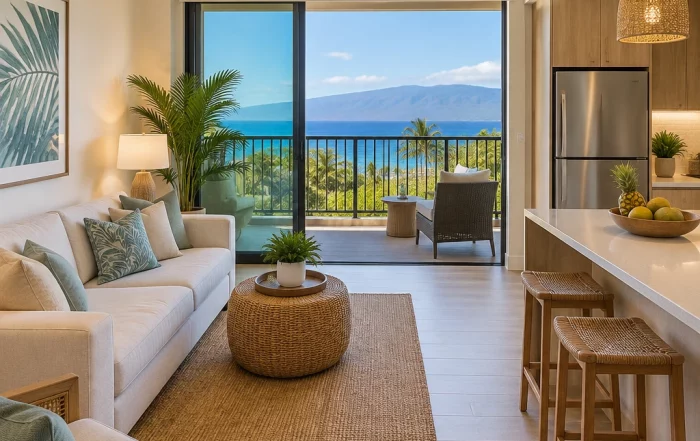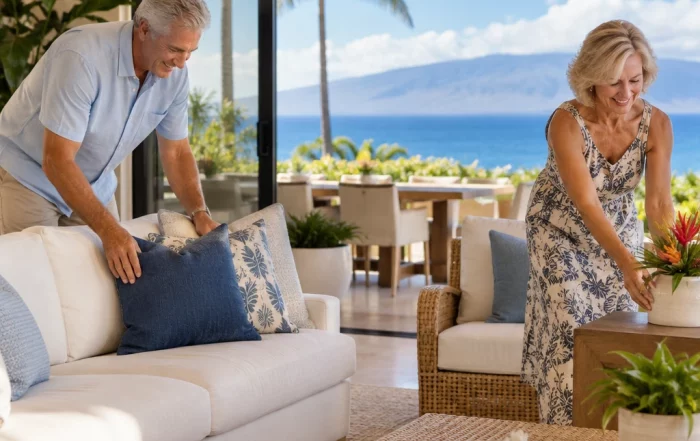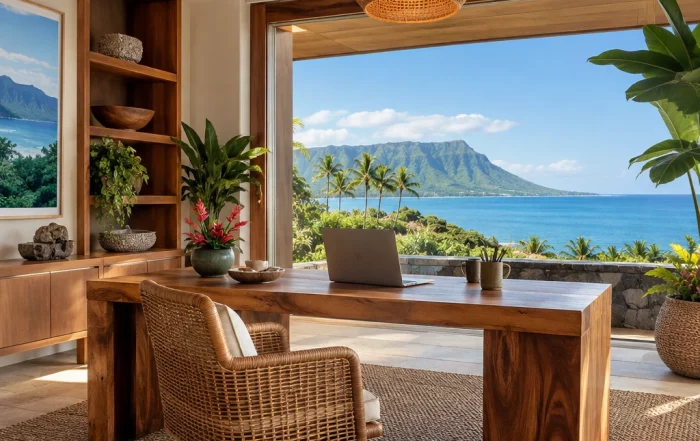
Creating functional spaces in small Maui homes and condos requires more than choosing a smaller sofa. It means understanding how people move through the room, how island light changes color, how salt air affects materials, and how indoor living extends onto the lanai. For homeowners, second-home buyers, and vacation-rental owners, every square foot needs to work harder without making the home feel crowded.
The need is especially relevant as Maui’s housing landscape continues to change. The U.S. Census Bureau reports 71,024 housing units in Maui County as of July 2025, while the 2025 Hawai‘i Housing Highlights report notes that Maui County’s housing inventory declined 0.6% between April 2020 and July 2025 following the devastating wildfires. Meanwhile, Hawai‘i REALTORS® reported a $710,000 median Maui condominium sales price through August 2025. ([census.gov](https://www.census.gov/quickfacts/fact/table/mauicountyhawaii/PST120225?utm_source=openai))
Whether you are furnishing a compact apartment in Kihei, updating a vacation condo in Kā‘anapali, or making a smaller home feel more comfortable in Makawao, the following strategies can help you maximize space in Maui while preserving style, comfort, and durability.
Designing Small Maui Homes and Condos Around How You Live
The best small home design Maui projects begin with function. Before selecting a sectional or dining table, consider what the room must accomplish each day. Is the living room primarily for relaxing, entertaining, watching television, or sleeping extra guests? Does the dining area also serve as a home office? Will the lanai function as an outdoor living room?
These questions establish priorities before furniture enters the space. A beautiful piece that blocks a walkway or prevents a cabinet door from opening is not a successful solution, no matter how attractive it looks in a showroom.
Start with circulation and sightlines
Map the main paths through the home first. Entry doors, kitchen access, bedrooms, bathrooms, closets, and lanai doors all require clear circulation. In a compact floor plan, even a few inches can determine whether a room feels relaxed or congested.
When planning a small living room layout Maui homeowners can use successfully, position the largest piece first, then build around it. A tailored sofa or apartment-scale sectional may define the seating zone, while an open-leg cocktail table keeps the floor visually lighter. In some homes, two accent chairs provide more flexibility than a loveseat because they can turn toward the sofa, dining area, or view.
Create zones without closing off the room
Small spaces still benefit from visual definition. Instead of adding walls, use rugs, lighting, furniture orientation, and ceiling fixtures to establish zones. A rug can anchor seating. A console can separate the entry from the living room. A slim desk can create a work area without dominating the room.
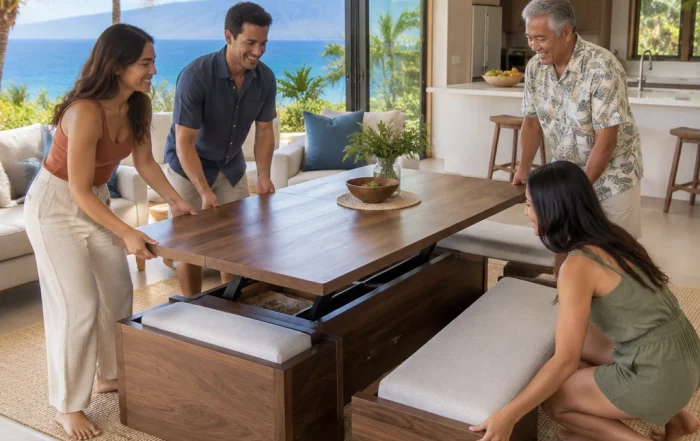
For open-plan condos, consider furniture that performs more than one role. An upholstered bench can serve as dining seating, extra living-room seating, or a place to remove shoes. A console table can provide storage and a work surface. Nesting tables can expand for guests and tuck away afterward. These functional space solutions help the room adapt without requiring more furniture.
Choose Furniture That Fits the Room—and Maui Living
Scale matters more than style labels in a small home. Oversized furniture can overwhelm a compact room, but undersized pieces may look temporary and fail to provide comfortable seating. The goal is proportion: furniture should be substantial enough for daily use while leaving enough negative space for movement and visual calm.
Look beyond standard dimensions
Made-to-order furniture can be particularly valuable in Maui condos, where room dimensions, elevators, hallways, and lanai doors may limit what can be delivered. Custom options can include width, depth, leg style, arm height, fabric, finish, cushion construction, and configuration. A sofa shortened by several inches may preserve a walkway. A shallower chair may allow a door to swing freely. A custom dining table can seat the household without consuming the entire room.
IDS Maui works directly with manufacturers and carries lines including Bernhardt, Baker, Caracole, Century, Kravet, McGuire, Janus et Cie, Luonto, Theodore Alexander, and others. Many of these products are made to order, with typical lead times of approximately 8–12 weeks depending on the piece. For projects with tighter deadlines, Quick Ship items may arrive in roughly two to three weeks.
Use vertical space strategically
When floor area is limited, look upward. Tall display cabinets, bookcases, armoires, and narrow chests can provide useful storage without spreading across the room. Wall-mounted lighting can free up tabletops. A tall mirror can reflect light and make a compact entry or living area feel more open.
However, vertical storage should be edited rather than excessive. A single well-chosen cabinet can add both personality and capacity; a wall filled with unrelated storage may make the room feel visually heavy. In Maui homes, display pieces can also bring in natural textures and craftsmanship through wood, woven materials, stone, glass, and metal.
Design for Maui’s Light, Climate, and Indoor-Outdoor Lifestyle
Maui interiors cannot be designed exactly like mainland interiors. The island’s latitude, intense sunlight, trade winds, salt air, humidity, and year-round indoor-outdoor living all influence how materials perform. The National Weather Service in Honolulu emphasizes Hawai‘i’s varied climate, shaped by mountains, valleys, slopes, ocean conditions, rainfall patterns, and localized weather. ([weather.gov](https://www.weather.gov/hfo/climate_summary?utm_source=openai))
That variety means a material that performs well in one part of the island may need different consideration in another. A home near the coast may experience more salt exposure, while a residence at elevation may have different wind, temperature, and moisture conditions.
Pay attention to fabric and finish selection
In a small home, upholstery receives frequent use because there are fewer seating options to share the load. Performance fabrics, tightly woven textiles, and properly specified cushion materials can make maintenance easier while still delivering color and softness. For vacation rentals, select fabrics that can withstand repeated turnover and regular cleaning. For full-time residences, prioritize the way the fabric feels as well as how it wears.
Wood species, protective finishes, hardware, and metal treatments also deserve careful review. Sun exposure can fade textiles and finishes, while salt air may accelerate corrosion on unsuitable metals. Window treatments can reduce glare and protect furnishings, but they should be selected with the view and natural ventilation in mind.
Bring the lanai into the design plan
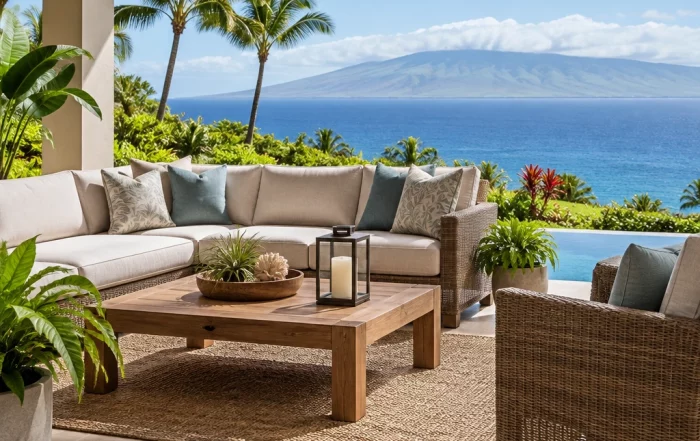
A lanai should not be treated as leftover space. It can extend the living room, create a dining area, or provide a quiet reading zone. Outdoor furniture must be selected for the actual exposure: covered, partially exposed, or fully exposed. Durable frames, quick-drying cushions, outdoor-rated fabrics, and appropriate covers can help the space remain comfortable and attractive.
Inside, use related colors and materials so the transition feels intentional. A rug tone can echo the lanai cushions. Wood accents can repeat across indoor and outdoor furniture. This approach creates a larger visual field, making both spaces feel connected without requiring a matching furniture set.
Use Color, Lighting, and Rugs to Make Compact Rooms Feel Larger
Small rooms do not have to be white to feel spacious. In fact, carefully chosen color can give a compact Maui interior more depth and identity. Because strong island light can intensify color, paint, upholstery, flooring, and finishes should be viewed in the actual room at different times of day.
Layer color instead of flattening the room
A restrained palette often works best as a foundation: warm whites, sand, soft gray, muted green, natural wood, or ocean-inspired blue. Then add character through a chair, artwork, pillows, a rug, or custom bedding. Layering color and texture is more effective than adding many unrelated accent pieces.
IDS Maui’s color and fabric expertise is especially useful when a homeowner wants a sophisticated island look rather than a generic tropical theme. Textures such as linen, woven fibers, leather, wood, stone, and subtly patterned textiles can provide richness without making the room feel busy.
Let lighting do more than illuminate
A single ceiling fixture rarely provides enough flexibility for a small home. Layer ambient, task, and accent lighting instead. A slim floor lamp can illuminate a reading chair. A wall sconce can replace a bedside table lamp. Under-cabinet lighting can make a compact kitchen more functional. A small table lamp can add warmth to a console or chest.
Lighting also helps define zones. A pendant over a dining table separates the eating area from the living room. An accent light on artwork draws attention upward and adds visual depth. Dimmers make it easier to shift a space from bright daytime use to evening entertaining.
Rugs are equally important. In a small living room, the rug should be large enough for at least the front legs of the primary seating pieces to rest on it. A rug that is too small can make the furniture appear disconnected. For Maui homes, choose fibers and constructions appropriate to the level of sand, moisture, pets, guests, and traffic the room receives.
Plan Maui Condo Furniture for Flexibility, Delivery, and Long-Term Value
Furniture planning should include more than the room layout. In a condo, measure elevators, stairwells, corridors, door openings, and turning clearances before ordering. Confirm building delivery rules and installation requirements early, especially for large sectionals, beds, armoires, and case goods.
Shipping is another important consideration for island projects. IDS Maui notes that freight to Hawai‘i is commonly approximately 10–15% of an item’s cost and is priced according to cubic footage. The company coordinates freight, delivery, installation, and damage claims, helping clients who are furnishing a property remotely or managing a renovation from the mainland.
That coordination can be especially valuable for second-home owners and vacation-rental investors. Current housing conditions add another layer of planning. UHERO’s 2026 Hawai‘i Housing Factbook reports that Maui condominiums were spending an average of more than 100 days on the market, while its analysis of Bill 9 describes a planned phaseout of roughly 7,000 short-term vacation rentals in apartment-zoned buildings beginning in West Maui in 2029 and countywide by 2031, subject to legal and policy developments. ([uhero.hawaii.edu](https://uhero.hawaii.edu/the-hawaii-housing-factbook-2026/?utm_source=openai))
For owners adapting a condo for long-term living, furniture should support everyday comfort rather than only occasional guest use. For vacation rentals that remain permitted, durable upholstery, easy-care surfaces, adequate storage, and flexible sleeping arrangements can improve the guest experience while reducing replacement costs.
- Measure the room, doors, elevators, and delivery path.
- Identify the two or three most important functions for each space.
- Select durable fabrics and finishes based on exposure and traffic.
- Use rugs and lighting to define zones without adding walls.
- Order key furniture early when made-to-order lead times may reach 8–12 weeks.
- Coordinate freight, installation, and damage claims before delivery day.
Conclusion: Make Every Square Foot Work Beautifully
Creating functional spaces in small Maui homes and condos is a balance of proportion, flexibility, material knowledge, and personal style. The most successful interiors do not feel packed with solutions. Instead, each piece has a clear purpose, the circulation feels natural, and the design connects indoor comfort with Maui’s light, climate, and outdoor lifestyle.
IDS Maui has provided Hawaii-specific interior design and furnishings for 27 years, serving Maui, Lanai, Molokai, Oahu, the Big Island, and clients in the continental United States. Visit the showroom at 3031 Old Haleakala Highway in Makawao, open Monday through Friday from 10 a.m. to 6 p.m., to explore furniture, lighting, rugs, outdoor pieces, accessories, and custom options. Call 808-891-8800 or contact IDS Maui to discuss your room dimensions, scope, budget, and furniture needs.
Need Help With Your Space?
Ask us anything — furniture, design, or where to start.