Optimizing Your Maui Home for Summer starts with more than changing a few decorative accessories. Maui’s bright sun, salt air, trade winds, humidity, and year-round indoor-outdoor lifestyle all influence how furniture, fabrics, finishes, and room layouts perform. A home that feels comfortable and polished in January may feel overly warm, crowded, or vulnerable to fading by the height of summer.
Whether you are furnishing a new Maui residence, refreshing a vacation rental, or preparing a second home from the mainland, thoughtful design can improve comfort, durability, and guest appeal. In this guide, you will learn how to select cooling furniture for Maui, improve airflow in island homes, create a more functional lanai, protect interiors from sun and salt, and choose finishes that suit Hawaii’s unique light. With the right plan, summer interior tips can make your home feel lighter, cooler, and more connected to the landscape without sacrificing style.
Optimizing Your Maui Home for Summer Starts With Airflow and Layout
The most effective summer improvement may not be a new piece of furniture. It may be creating more space around the furniture you already own. Open circulation paths allow trade winds and mechanical cooling to move through the home, while an overfilled room traps heat and makes every space feel less comfortable.
Create Clear, Comfortable Circulation
Begin by evaluating the primary paths between the entry, kitchen, living area, bedrooms, and lanai. Leave enough clearance around sofas, dining tables, kitchen islands, and accent chairs so people can move naturally without squeezing past corners. In a vacation rental, generous circulation also reduces accidents and makes the home easier for guests to understand.
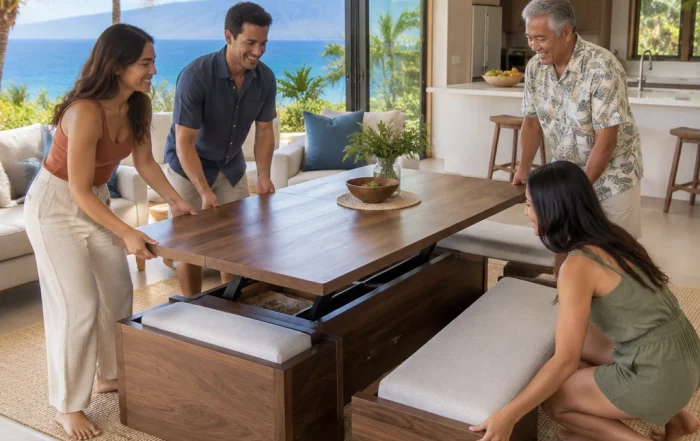
Consider replacing several small, unrelated pieces with one well-proportioned sectional or sofa arrangement. The goal is not necessarily minimalism; it is intentional placement. A streamlined seating plan can provide more usable space while still accommodating family and guests. Low-profile tables, open-leg furniture, and benches can also preserve visual and physical airflow.
Use Furniture to Support Natural Ventilation
Arrange seating so it takes advantage of windows, sliding doors, and lanai access rather than blocking them. Avoid placing tall cabinets, armoires, or bulky entertainment units directly in front of major openings. If privacy or storage is needed, choose a piece that provides function without closing off the room.
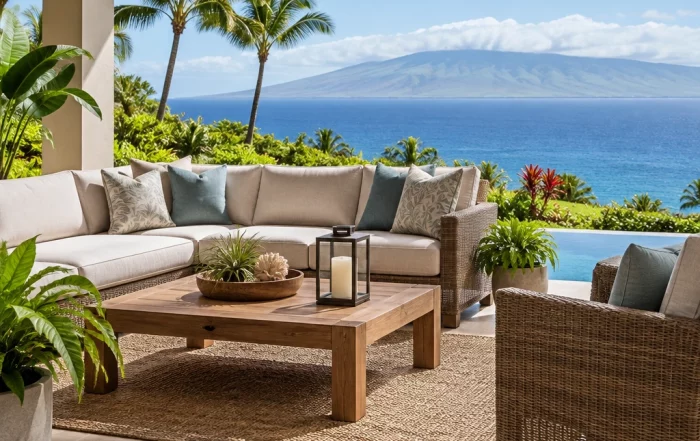
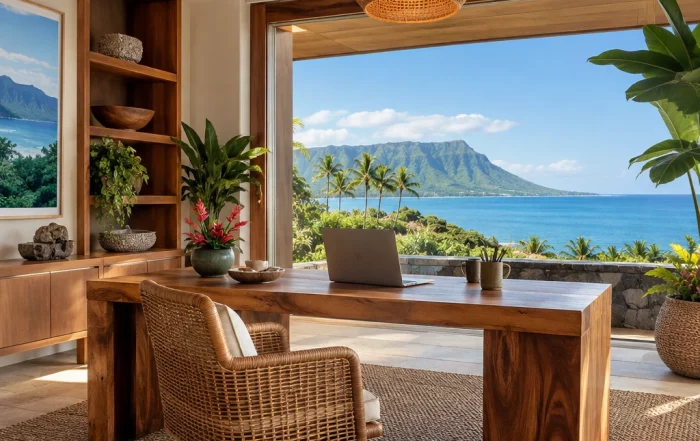
Ceiling fans, operable windows, and properly positioned window treatments all work better when furniture does not obstruct them. For cooling furniture for Maui, look for breathable upholstery, elevated bases, and materials that do not retain excessive heat. Outdoor-rated woven furniture can be especially effective in covered spaces because it encourages air movement while visually connecting indoor and outdoor areas.
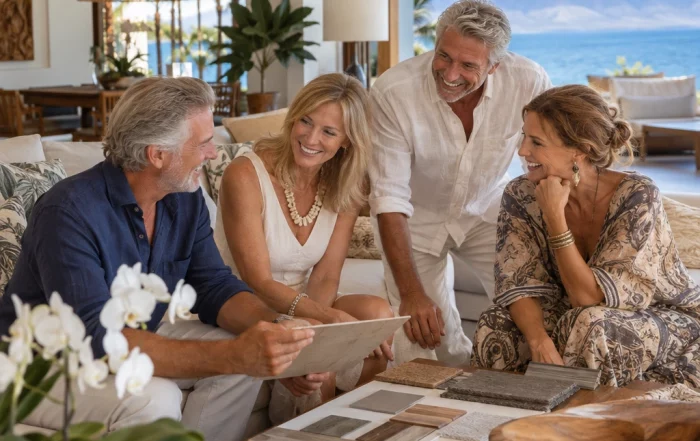
At IDS Maui, furniture layouts can be considered alongside lighting, rugs, finishes, and the way a home is actually used. A carefully selected sectional, occasional table, or console can improve both the appearance and the performance of a room. The right scale is particularly important in Maui homes, where generous views and lanai connections deserve to remain visible.
Choose Fabrics, Finishes, and Woods for Maui’s Climate
Hawaii’s climate requires more scrutiny than a typical mainland furnishing plan. Salt air, wind, intense sunlight, moisture, and frequent transitions between indoor and outdoor spaces can wear down fabrics and finishes faster. A beautiful piece is only a successful choice if it continues to look and feel good in the conditions where it will be used.
Prioritize Performance Without Losing Sophistication
For sofas, sectionals, dining chairs, ottomans, and outdoor seating, ask about cleanability, lightfastness, moisture resistance, and abrasion performance. Performance fabrics have evolved significantly and can provide the softness and visual richness expected in an elevated interior. Textured solids, subtle patterns, and layered neutrals can hide everyday wear while keeping the room relaxed.
In vacation rentals, durable fabrics are especially valuable. Select upholstery that can withstand frequent turnover, sunscreen, wet swimwear, and daily use. Removable cushions and practical finishes simplify maintenance. In a private residence, you may choose a more delicate textile for a formal area, but high-exposure rooms still benefit from fabrics selected for Maui’s sunlight and humidity.
Think Carefully About Wood and Surface Finishes
Wood species, stains, protective coatings, and placement all affect long-term performance. Direct sun can shift color, dry surfaces, or emphasize uneven fading. Rather than relying on a single dark finish throughout the home, consider a layered palette of natural woods, painted surfaces, stone, metal, and woven materials.
Window coverings can reduce UV exposure while maintaining the view. Solar shades, lined draperies, and thoughtfully placed sheers help protect floors, rugs, artwork, and case goods. However, window treatments should be selected with the room’s ventilation and view in mind; blocking every opening can make a space feel closed off.
Maui’s proximity to the equator also changes how color reads indoors. Intense natural light can make whites appear brighter, warm tones more saturated, and certain cool colors unexpectedly stark. A fabric or paint color that looks balanced in a mainland showroom may feel entirely different in a Maui room. Testing samples in the actual space at different times of day is essential.
Design a More Functional Indoor-Outdoor Summer Home
For many Maui homeowners, the lanai is not an occasional entertaining area. It is an extension of the living room, dining room, kitchen, or bedroom. Successful Maui home design treats these connected spaces as one experience while still accounting for different levels of exposure, cleaning, and durability.
Make the Lanai an Intentional Room
Start with the activity. Is the lanai used for morning coffee, outdoor dining, sunset cocktails, reading, or large gatherings? The answer determines whether you need a dining table, bar-height seating, deep lounge chairs, a sectional, or a combination of zones.
- For dining: Choose a stable table, comfortable chairs, and lighting that supports evening meals.
- For lounging: Use deep seating, durable cushions, side tables, and an outdoor rug to define the area.
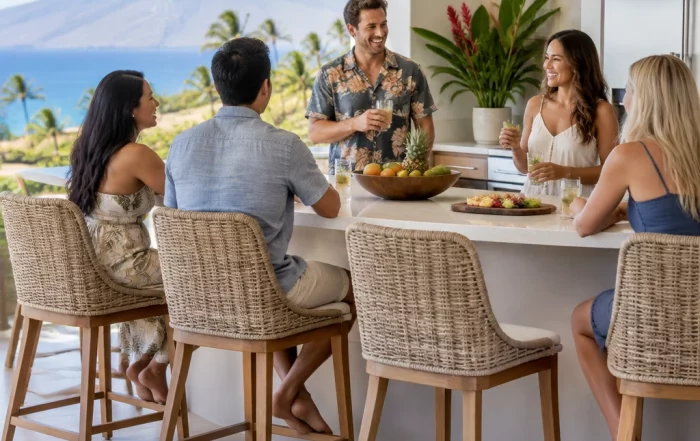
- For entertaining: Add a console, bar cabinet, display cabinet, or serving surface that keeps traffic moving.
- For quiet use: Include a reading chair, small table, and shade control without overcrowding the view.
Outdoor furniture should be rated for its specific exposure. A covered lanai has different requirements from an open terrace facing wind and salt spray. Even high-quality outdoor pieces benefit from regular cleaning, proper cushion storage, and protection from standing moisture.
Connect Interior and Exterior Materials
A coordinated palette creates a larger, calmer feeling throughout the home. You might repeat a wood tone from the living room in an outdoor side table, echo a woven texture in accent chairs and lanai seating, or carry a blue-green color from the landscape into custom pillows and artwork.
That does not mean every piece must match. Instead, use related materials and colors to create continuity. A natural fiber-inspired rug indoors, a stone cocktail table, and sculptural outdoor accessories can establish a Maui-inspired atmosphere without relying on predictable tropical motifs.
Indoor-outdoor living also affects storage. Provide a designated place for beach towels, sandals, cushions, and entertaining pieces. Chests, benches, armoires, and consoles can keep these items organized while contributing to the design. For a rental, convenient storage reduces clutter and improves the guest experience.
Use Summer Color, Lighting, and Accessories Strategically
Summer updates do not always require a complete renovation. A well-planned combination of lighting, rugs, artwork, mirrors, and accessories can make a room feel fresher while preserving high-quality foundational furniture. These elements are also an efficient way to adjust a second home or vacation rental between seasons.
Build a Palette That Works With Maui Light
Begin with the fixed elements: flooring, countertops, cabinetry, architectural finishes, and the colors visible through the windows. Then choose upholstery and accent colors that support, rather than compete with, the environment. Soft mineral tones, ocean-inspired blue-greens, warm sand, coral accents, and botanical hues can work beautifully, but balance is important.
Color should be tested in morning, afternoon, and evening light. A bold fabric may be perfect on a shaded accent chair but overwhelming across a large sectional. Conversely, a pale neutral may need texture, contrast, or darker wood accents to keep the room from feeling flat.
Layer Lighting for Heat-Free Ambiance
During summer, reduce dependence on harsh overhead lighting. Use table lamps, floor lamps, sconces, and carefully selected pendants to create layers. LED bulbs with appropriate color temperatures can provide a comfortable glow without adding significant heat.
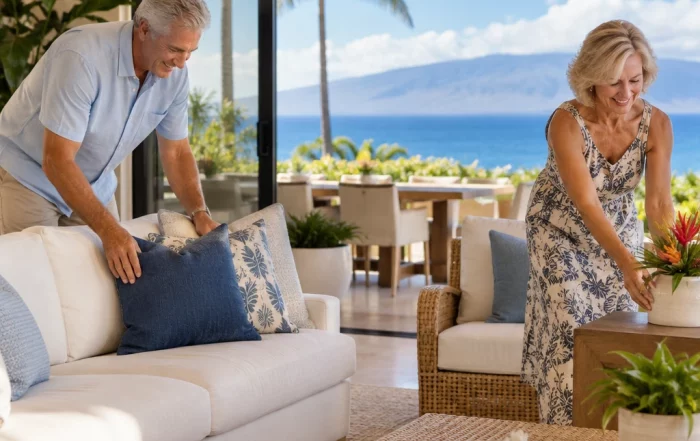
Mirrors can reflect daylight and make a room feel more open, but placement matters. Avoid directing intense sunlight onto delicate fabrics or reflective surfaces. Rugs also help define seating areas and add comfort underfoot. In high-traffic or rental properties, choose rugs that are durable, easy to clean, and appropriately sized for the furniture arrangement.
Accessories should be edited rather than accumulated. A few substantial pieces—such as a sculptural bowl, large-scale artwork, textured vase, or natural object—often have more impact than many small decorations. This approach keeps surfaces easier to clean and allows air and light to remain central to the room.
Plan Your Maui Summer Furnishing Project With IDS
Optimizing your Maui home for summer is an opportunity to improve comfort, durability, and everyday enjoyment. The best results come from coordinating layout, upholstery, wood finishes, lighting, rugs, storage, and lanai furnishings from the beginning. That is especially important when a home is being furnished remotely or prepared for frequent vacation-rental use.
IDS Maui has served Hawaii for 27 years, providing furniture, lighting, rugs, accessories, custom bedding, and complete interior design support. The showroom offers access to respected manufacturers such as Bernhardt, Baker, Kravet, McGuire, Janus et Cie, Theodore Alexander, and other lines that are often unavailable elsewhere on Maui. Custom and made-to-order pieces can be specified by dimensions, finish, fabric, cushion, legs, and arms, with typical lead times of approximately 8–12 weeks.
Visit the IDS Maui showroom at 3031 Old Haleakala Highway in Makawao, Monday through Friday from 10 a.m. to 6 p.m., or call 808-891-8800 to discuss your furniture, lighting, rug, or accessory needs. Whether you are refreshing one bedroom or furnishing an entire home, the team can help create a summer-ready interior suited to Maui’s climate and your lifestyle.
Need Help With Your Space?
Ask us anything — furniture, design, or where to start.