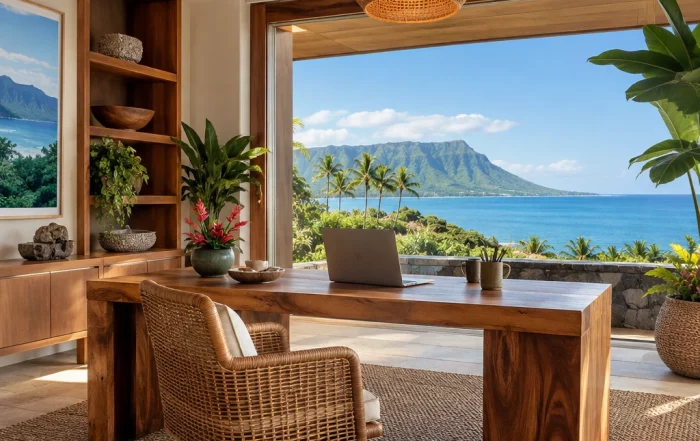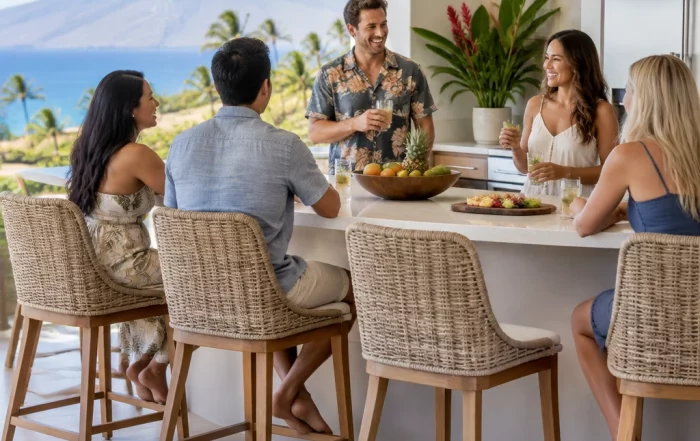
Designing for Cultural Influences: Blending Modern and Traditional Styles in Maui requires more than placing tropical accessories in a contemporary room. Maui homes reflect a distinctive relationship between land, ocean, weather, history, and hospitality. When those influences are thoughtfully combined, the result can feel current and comfortable while still connected to place.
For new homeowners, vacation rental owners, and second-home buyers furnishing from a distance, the challenge is knowing which traditional details to include, which modern elements to simplify, and how to choose materials that perform in Hawaii’s climate. This guide explains how to approach cultural influences in design, balance traditional Hawaiian decor with modern tropical style, select durable furniture and fabrics, and create a cohesive home with help from a Maui interior design professional.
Designing for Cultural Influences: Blending Modern and Traditional Styles in Maui
The strongest Maui interiors do not treat tradition and modernity as opposites. Instead, they layer them. Clean-lined sofas, tailored case goods, and contemporary lighting can work beautifully alongside natural fibers, carved details, woven textures, and artwork inspired by the islands. The goal is an interior that feels authentic and livable rather than themed.
Start with the home’s setting
Before selecting furniture, consider the home’s architecture, view, orientation, and connection to outdoor spaces. A plantation-style home, oceanfront condominium, modern hillside residence, and resort vacation rental each call for a different interpretation of island character. A formal traditional room may feel disconnected in a highly minimalist home, while an overly casual approach can undersell an elegant property.
Look for visual cues already present in the structure. Exposed wood, high ceilings, broad windows, stone surfaces, lanais, and natural ventilation can guide the palette and materials. Rather than competing with a dramatic ocean view, furniture should frame it. In a garden-facing room, earthy textures and organic shapes can reinforce the connection to the landscape.
Use cultural references with intention
Traditional Hawaiian decor is most successful when it is approached with respect and restraint. Natural materials, local craft, botanical forms, and a sense of indoor-outdoor living can communicate a connection to Hawaii without relying on stereotypical motifs. Meaningful artwork, locally made objects, and thoughtfully selected textiles often bring more depth than a collection of novelty prints or mass-produced “tropical” accessories.
Cultural influences in design should support the way a home is lived in. For example, an entry console made from expressive wood, a handwoven accent chair, or a carefully placed piece of island-inspired art can establish a sense of place. Repeating the same tropical symbol throughout every room, however, can make the interior feel predictable. A designer can help determine where cultural references add meaning and where simplicity provides balance.
Build a Modern Tropical Style Through Material and Form
Modern tropical style is not a single look. It can be sophisticated, relaxed, colorful, minimalist, or richly layered. What unites these variations is an emphasis on natural light, comfortable furnishings, organic materials, and a strong relationship between indoor and outdoor living.
Begin with a foundation of practical silhouettes. A well-proportioned sectional, tailored sofa, dining table, or upholstered bed creates structure. Then introduce warmth through wood tones, woven surfaces, stone, rattan-inspired textures, linen-look fabrics, and accessories with sculptural forms. This approach allows the room to feel contemporary while retaining a sense of ease.
Balance clean lines with organic texture
A room composed entirely of smooth, hard surfaces may appear stark under Maui’s intense natural light. Conversely, too many woven, rustic, or heavily patterned pieces can make a space feel visually busy. Pairing opposites creates balance:
- Combine a streamlined sofa with a textural accent chair or woven bench.
- Pair a substantial wood dining table with lighter, contemporary dining chairs.
- Use a refined area rug to soften stone or tile flooring.
- Contrast smooth case goods with handmade-looking ceramics, baskets, or accessories.
- Layer modern lamps and lighting with artwork or objects that reflect island craft and nature.
Scale is equally important. Large rooms and open-plan homes often need substantial furniture to feel finished, while smaller condominium spaces benefit from pieces with visual lightness and multifunctional value. Custom furniture can be ordered with specific dimensions, leg styles, arms, finishes, cushions, and upholstery, making it easier to achieve the right proportions.
Let color respond to Maui’s light
Because Hawaii is close to the equator, color can read more vividly than many homeowners expect. Bright sunlight intensifies contrast and changes the appearance of paint, wood, upholstery, and rugs throughout the day. A color that feels soft and neutral in a mainland showroom may appear much stronger in a Maui room.
Instead of automatically choosing beige, consider a layered palette. Warm whites, sand, pale gray, muted green, ocean blue, charcoal, coral, or deep wood tones can work together when their saturation is controlled. A professional color and fabric review is especially valuable for open spaces where flooring, wall color, upholstery, window treatments, and outdoor views all interact.
Choose Furniture and Fabrics for Maui’s Climate
Beautiful furniture must also withstand salt air, wind, intense sun, humidity, sand, and frequent indoor-outdoor traffic. Climate is not an afterthought in Maui interior design; it should influence every major purchase. Fabric fiber, wood species, finish, cushion construction, and placement can all affect how long a piece looks and performs well.
Plan for sun, salt, and everyday use
Direct sunlight can fade or weaken fabrics and finishes, especially near large windows or lanais. Salt air may accelerate wear on metal components and certain finishes, while humidity affects wood movement and some natural materials. High-traffic vacation rentals face additional demands from frequent turnover, luggage, wet swimwear, and repeated cleaning.
When selecting upholstery, ask about performance characteristics rather than choosing solely by appearance. Durable indoor-outdoor fabrics may be appropriate for certain living areas, dining chairs, benches, or lanai furniture. However, “outdoor” does not automatically mean maintenance-free, and not every fabric is suitable for every application. Fiber content, weave, backing, colorfastness, cleaning instructions, and exposure should all be reviewed.
Wood selection matters as well. Different species and finishes respond differently to humidity, sunlight, and daily wear. Rugs should be evaluated for traffic flow, shedding, cleanability, and the possibility of sand being tracked indoors. Flooring, paint, and hardware also deserve additional scrutiny in coastal environments.
Design the lanai as a true living space
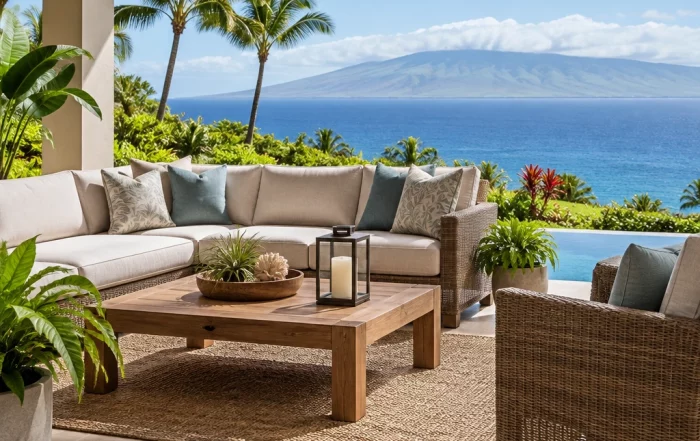
In Maui, the lanai is often an extension of the home rather than an occasional outdoor room. It may serve as a dining area, lounge, entertaining zone, or quiet place to enjoy the view. Select outdoor sofas, dining tables, lounge chairs, lighting, and accessories with the same care used indoors.
Arrange outdoor furniture to support conversation and movement while preserving sightlines. Consider shade, wind direction, drainage, and proximity to the kitchen. Quality outdoor collections from experienced manufacturers can provide more dependable construction and replacement support than generic pieces chosen only for a low initial price. When the lanai is comfortable and cohesive, the entire home feels larger and more connected to the landscape.
Blend Styles Room by Room Without Losing Cohesion
Blending styles in home decor works best when each room has a clear purpose and the entire property shares a visual thread. That thread might be a repeated wood tone, a consistent metal finish, a coordinated color family, or a mix of textures that appears in different forms throughout the house.
Living and dining areas
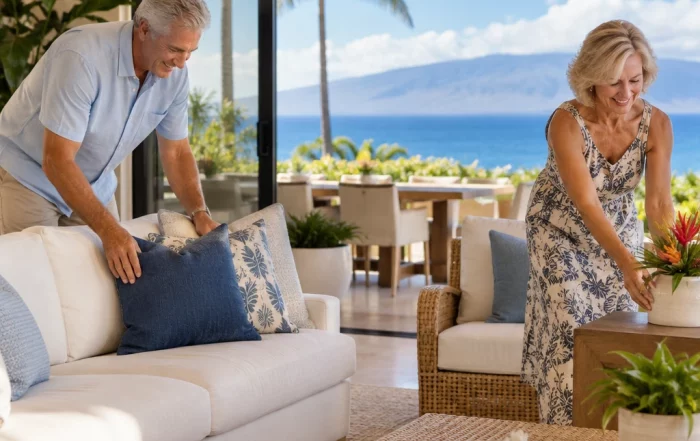
In the living room, begin with the largest pieces: sectional, sofa, chairs, cocktail table, and rug. These establish the room’s scale and comfort. A contemporary sectional can be softened with a carved side table, woven accent chair, or organic accessory. Alternatively, a more traditional sofa can look fresh when paired with modern lamps, simple art, and an uncluttered arrangement.
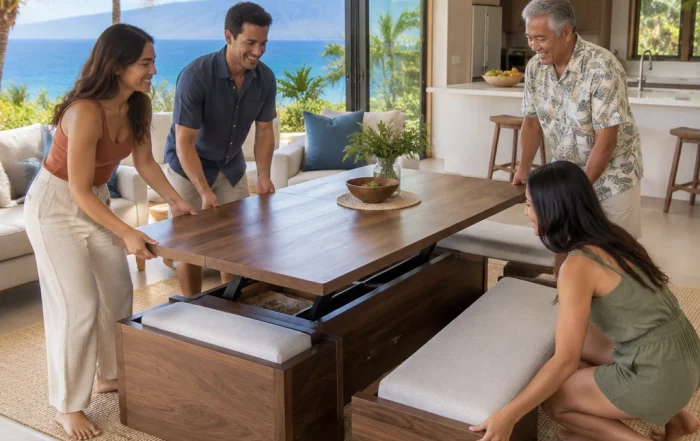
Dining rooms benefit from contrast. A traditional or reclaimed-looking table can be paired with tailored upholstered chairs, or a clean-lined table can gain personality from sculptural seating and a distinctive light fixture. Sideboards and display cabinets provide useful storage while creating opportunities to showcase collected objects with intention.
Bedrooms and guest suites
Bedrooms should feel restful, especially in a second home or vacation rental. Upholstered beds, custom bedding, layered window treatments, and carefully selected lamps can create a comfortable retreat without excessive ornamentation. Natural colors and tactile fabrics often work well, but adding one deeper accent color can prevent the room from feeling washed out in bright daylight.
For guest suites, prioritize durable finishes, generous storage, convenient charging, and easy circulation. Nightstands, benches, dressers, mirrors, and lighting should be selected as a coordinated group. In a rental property, a distinctive headboard or art piece can give the room personality while durable upholstery and made-to-order replacement options support long-term maintenance.
Across the home, repetition creates cohesion. You do not need matching furniture in every room. Instead, repeat related forms, finishes, textures, or colors so the design feels collected rather than assembled all at once.
Work with a Maui Interior Design Team That Understands Place
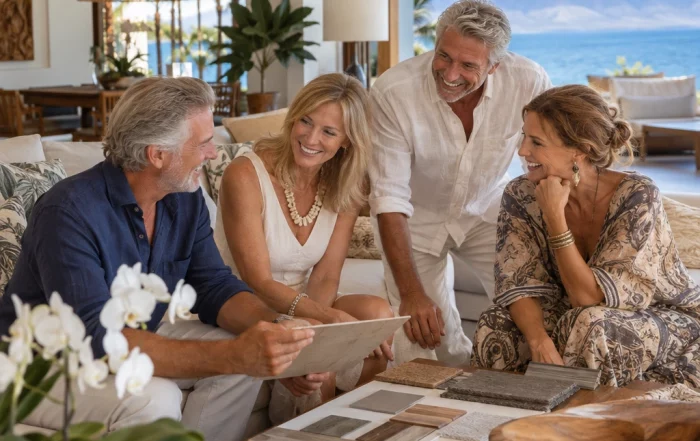
Furniture sourcing in Hawaii involves more than choosing from a catalog. Lead times, freight, cubic-foot pricing, damage claims, installation, and climate suitability all affect the final project. An experienced local design team can coordinate these details and help prevent costly mistakes.
IDS Maui has served Hawaii for 27 years, since 1999, with Hawaii-specific knowledge that goes beyond generic mainland design advice. The showroom offers furniture, lighting, rugs, accessories, custom bedding, and outdoor furnishings from respected lines including Bernhardt, Baker, Kravet, McGuire, Janus et Cie, Global Views, Theodore Alexander, and others. Many are ordered directly from manufacturers and are not otherwise available on Maui.
Made-to-order options can be adjusted for dimensions, fabric, finish, cushions, legs, and arms. Quick Ship items may arrive in approximately two to three weeks, while standard made-to-order pieces commonly take up to eight weeks; custom work may require eight to twelve weeks. Freight to Hawaii is generally about 10–15% of item cost and is priced by cubic footage. IDS also manages freight and damage claims for clients.
For larger projects, services may include space planning, AutoCAD drawings, 3D renderings, cabinet and closet design, lighting and plumbing selections, purchasing, shipping, and installation. Whether you are furnishing one bedroom or coordinating a full home, professional guidance can help align the design with your budget, timeline, property type, and intended use.
Bring Your Maui Home’s Story Together
A successful Maui interior does not have to choose between modern comfort and cultural connection. By combining durable materials, thoughtful color, meaningful natural references, and well-scaled furniture, you can create a home that feels polished, personal, and appropriate to its setting.
IDS Maui can help you select furniture, lighting, rugs, fabrics, accessories, and outdoor pieces for a cohesive whole-home look. Visit the showroom at 3031 Old Haleakala Highway in Makawao, open Monday through Friday from 10 a.m. to 6 p.m., or call 808-891-8800 to discuss your project, request a quote, or arrange a design consultation. IDS Maui serves Maui, Lanai, Molokai, Oahu, the Big Island, and the continental United States, with freight billed separately.
Need Help With Your Space?
Ask us anything — furniture, design, or where to start.