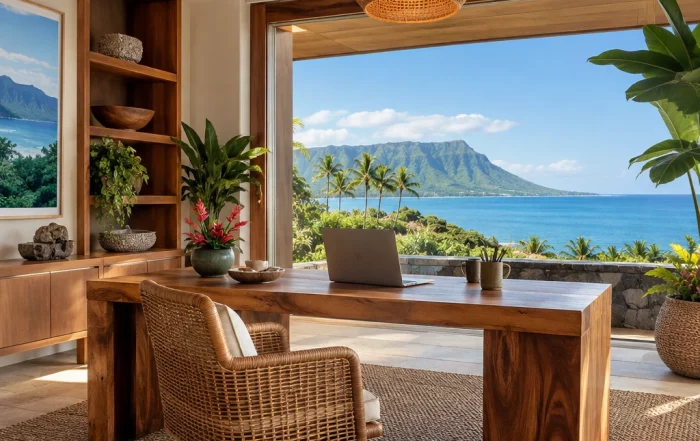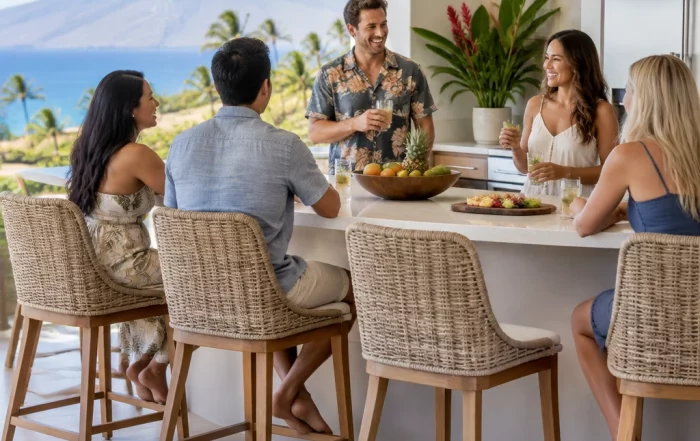
Selecting the Right Furniture Accessories for Maui’s Unique Climate requires more than choosing attractive pillows, tables, lamps, or decorative objects. Maui’s salt air, intense sunlight, trade winds, humidity, and year-round indoor-outdoor lifestyle can affect fabrics, finishes, wood, metals, and even the way colors appear in a room. An accessory that performs beautifully in a mainland home may fade, corrode, warp, or feel out of place in a Maui residence.
Whether you are furnishing a new home, updating a vacation rental, or completing a second home from a distance, the right selections should balance beauty, durability, comfort, and maintenance. This guide explains the most important climate considerations for furniture, how to select durable accessories for Hawaii, and where professional guidance can prevent expensive replacements. At IDS Maui, our team brings 27 years of Hawaii-specific experience to furniture, lighting, rugs, custom bedding, and accessory selection for homes throughout Maui and beyond.
Selecting the Right Furniture Accessories for Maui’s Unique Climate
Maui’s climate creates design opportunities as well as challenges. Natural light is abundant, lanais can function as additional living rooms, and breezes encourage an open connection between indoor and outdoor spaces. However, those same conditions place greater demands on the materials used throughout the home.
Start with exposure, location, and lifestyle
Before purchasing an accessory, consider exactly where it will be placed. A console table beside a sunny window faces different conditions from a side table in a shaded bedroom. A rug near an open lanai door may encounter windblown sand, moisture, and heavy foot traffic, while a decorative object on a protected shelf may need little more than occasional dusting.
Take note of:
- Direct sunlight: UV exposure can fade fabrics, rugs, artwork, wood stains, and painted finishes.
- Salt air: Coastal air can accelerate corrosion on unprotected metal hardware, lamp bases, and decorative accents.
- Humidity and moisture: Materials that absorb moisture may swell, mildew, or develop surface changes if they are not properly finished.
- Wind and airflow: Lightweight lamps, accessories, and outdoor pieces may need stable bases or more substantial construction.
- Traffic patterns: Homes with children, pets, guests, or vacation renters benefit from resilient, easy-care surfaces.
These considerations should also guide scale and placement. Oversized accessories can block airflow or make a breezy room feel crowded. Conversely, lightweight objects may not be practical in an exposed area. Thoughtful Maui home design combines visual ease with materials selected for the conditions of each room.
Remember that color reads differently in Hawaii
Maui’s proximity to the equator changes how color is experienced indoors. Strong natural light can intensify warm tones, reveal undertones, and make highly saturated colors appear brighter than expected. A fabric or paint color that feels balanced in a mainland showroom may look significantly warmer, cooler, or more vivid under Hawaiian light.
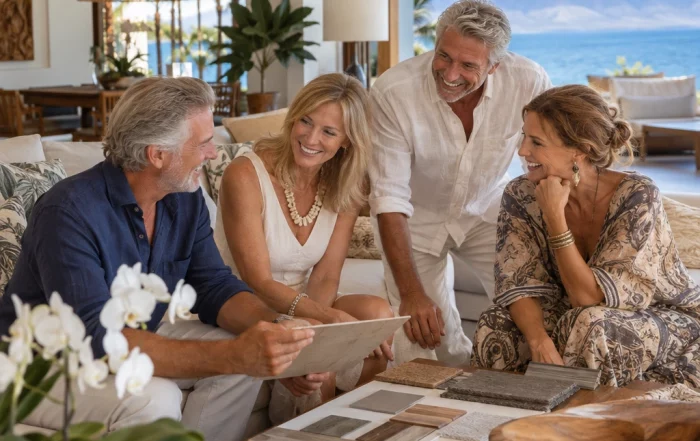
For that reason, evaluate samples in the actual room whenever possible. Look at them in morning, midday, and afternoon light. Layering neutrals with carefully chosen blues, greens, corals, terracottas, or natural textures can create a sophisticated palette without overwhelming the space. IDS Maui’s expertise in color and fabric helps homeowners make selections that remain attractive in real Maui conditions—not only under showroom lighting.
Choose Fabrics and Rugs That Can Handle Sun, Salt, and Use
Soft goods often show the effects of Maui’s climate first. Upholstery, pillows, window treatments, and rugs can fade or deteriorate when exposed to direct sun, salt air, humidity, and frequent use. That does not mean every room must look utilitarian. Instead, it means fiber content, weave, performance treatments, and placement should be considered before choosing a pattern or color.
Prioritize performance where exposure is highest
For lanai furnishings and rooms that open frequently to the outdoors, look for solution-dyed performance fabrics, tightly woven textiles, and materials designed to resist fading and moisture. These fabrics can provide a more practical choice for accent chairs, sofas, dining chairs, and cushions, especially in vacation rentals or homes used for entertaining.
Indoors, natural fibers can still be beautiful and appropriate when used selectively. Linen, cotton, wool, and blends each offer distinct advantages, but their performance depends on construction, finish, and location. A delicate textile may be suitable for a shaded bedroom bench but not for a sunlit sectional beside an open lanai.
When comparing upholstery and accessory fabrics, ask:
- How quickly is the material expected to fade in direct sunlight?
- Will the fabric tolerate frequent cleaning and spot treatment?
- Does the weave resist snagging from pets or rough use?
- Is the cushion construction appropriate for indoor or outdoor placement?
- Will the pattern conceal everyday sand, dust, or minor marks?
Select rugs for traffic flow and maintenance
Rugs define seating areas and add comfort to hard flooring, but the wrong rug can become difficult to maintain in a Maui home. Consider low-pile or tightly woven styles in high-traffic areas, particularly at entries and near doors leading to the lanai. Natural fibers may provide beautiful texture, while performance fibers can offer easier cleaning and better resistance to everyday wear.
Always use a suitable rug pad. It can improve comfort, prevent shifting, protect the floor, and reduce premature wear. In a vacation rental, choose patterns and colors that remain attractive between professional cleanings. In a primary residence, the best option may be a more luxurious design in a lower-traffic room.
At IDS Maui, rugs and custom bedding can be coordinated with furniture, lighting, and upholstery so the entire room works as a system. That approach is especially helpful when a home must feel relaxed, refined, and durable at the same time.
Select Wood, Metal, and Finishes for Long-Term Performance
Furniture accessories include more than decorative objects. Chests, consoles, side tables, mirrors, lamps, stools, benches, and display cabinets all contribute to a room’s function and visual character. In Maui, their construction and finish deserve careful attention because salt air, sunlight, temperature changes, and humidity can affect surfaces over time.
Use finishes suited to the room
Wood species, veneer construction, stains, and protective finishes should be matched to the level of exposure. Pieces in a bright coastal room may need finishes that are less likely to show gradual UV change. Furniture placed near an open window or lanai door should be protected from repeated moisture and should not be pressed directly against damp walls.
Solid wood and high-quality veneers can both be excellent choices when properly constructed and finished. The key is not simply choosing one material over another; it is selecting a piece from a manufacturer with dependable construction and a finish appropriate for the intended environment. Use coasters, avoid standing water, and follow the manufacturer’s cleaning recommendations rather than applying a generic polish.
Be selective with metals and reflective surfaces
Metal accessories can introduce a crisp, contemporary accent or a warm, collected look. However, unprotected metal may tarnish or corrode faster in coastal environments. For exposed locations, consider finishes designed for greater resistance, and inspect hardware periodically for early signs of change.
Mirrors and glass can help reflect Maui’s beautiful light, but placement matters. Direct sunlight reflected into upholstery or flooring may intensify fading. Glass tabletops also require thoughtful positioning in homes with heavy traffic, children, or frequent guests. Substantial bases, rounded edges, and stable proportions generally offer better everyday performance than delicate, easily shifted pieces.
Interior design Maui projects should also account for flooring, paint, and finish choices. An accessory may be durable on its own but still create problems if it scratches a soft floor, traps moisture, or receives more sun than anticipated. Coordinating these decisions early leads to a more cohesive and resilient result.
Create a Flexible Indoor-Outdoor Accessory Plan
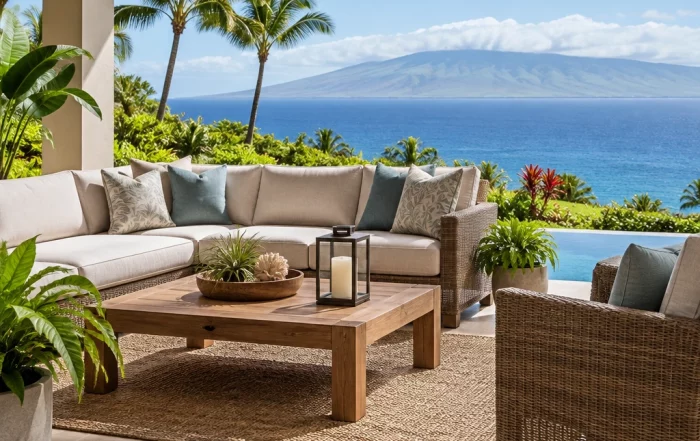
In Maui, the boundary between interior and exterior living is often fluid. A lanai may serve as a dining room, lounge, office, or gathering space throughout the year. That flexibility makes furniture and accessories more important, because each piece must support the way the household actually lives rather than simply fill an empty corner.
Design for movement and practical storage
Choose tables with enough surface area for drinks and books, but avoid creating obstacles in circulation paths. Outdoor stools, ottomans, and occasional tables can offer flexibility when guests arrive. For wind-prone locations, heavier pieces or weighted bases may be preferable to lightweight accessories.
Storage is equally valuable. A console, chest, or cabinet can hold extra throws, outdoor cushions, games, or serving pieces while keeping the room orderly. In a vacation rental, closed storage protects supplies from dust and makes turnover easier. In a second home, it reduces the need to transport items each time you visit.
Coordinate, but do not duplicate, indoor and outdoor styles
Indoor and outdoor areas should feel connected without becoming visually identical. Repeat a color, texture, or silhouette across the spaces, then vary the materials according to exposure. For example, an indoor woven accent chair might coordinate with a performance-fabric lanai cushion, while a wood console inside echoes the tone of a durable outdoor side table.
Accessories should also support wellness and biophilic design. Natural textures, views, plants, organic shapes, and calming color palettes can make a home feel more connected to Maui’s landscape. Yet natural materials should still be chosen with climate considerations in mind. Some are best reserved for protected interiors, while others are specifically engineered for outdoor use.
Custom and made-to-order furniture can be particularly helpful when standard dimensions do not suit a lanai, narrow hallway, or unusual room. IDS Maui can coordinate options such as dimensions, legs, arms, fabrics, finishes, and cushion construction. Standard made-to-order pieces may take up to eight weeks, while Quick Ship items can arrive in approximately two to three weeks, depending on availability.
Work With Maui Experts Before You Purchase
Climate-appropriate selections are easier and more cost-effective when planned as part of the complete room. Buying accessories one at a time can result in mismatched finishes, unsuitable fabrics, incorrect scale, or pieces that are difficult to replace later. A professional can review sunlight, traffic, furniture proportions, flooring, paint, and the intended use of each space before recommendations are made.
IDS Maui works with leading furniture and accessory manufacturers, including Bernhardt, Baker, Caracole, Global Views, Janus et Cie, Kravet, McGuire, Phillips Collection, and Theodore Alexander. Many of these lines are ordered directly from the manufacturer and are not otherwise available on Maui. Custom selections can be developed for a single bedroom or coordinated throughout a whole home.
With 27 years of Hawaii-specific experience, IDS Maui understands the practical realities of island furnishing, including freight, installation, and damage claims. Freight to Hawaii is typically about 10–15% of item cost and is priced by cubic footage. The team manages freight and damage claims for clients, helping simplify the process for Maui homeowners and those furnishing remotely from the mainland.
Conclusion: Build a Beautiful, Durable Maui Interior
The best furniture accessories for Maui are selected with both atmosphere and performance in mind. Evaluate sun exposure, salt air, humidity, wind, traffic, and indoor-outdoor movement before choosing fabrics, rugs, wood finishes, metals, lighting, or decorative accents. Then layer in the colors, textures, and forms that make the home feel personal.
IDS Maui can help you develop a cohesive plan for furniture accessories Maui homeowners can enjoy for years. Visit the showroom at 3031 Old Haleakala Highway in Makawao, open Monday through Friday from 10 a.m. to 6 p.m., or call 808-891-8800 to discuss your project. Whether you need a few durable accessories, a fully furnished vacation rental, or a whole-home furniture and lighting package, contact IDS Maui for a design consultation, product recommendations, or a quote.
Need Help With Your Space?
Ask us anything — furniture, design, or where to start.